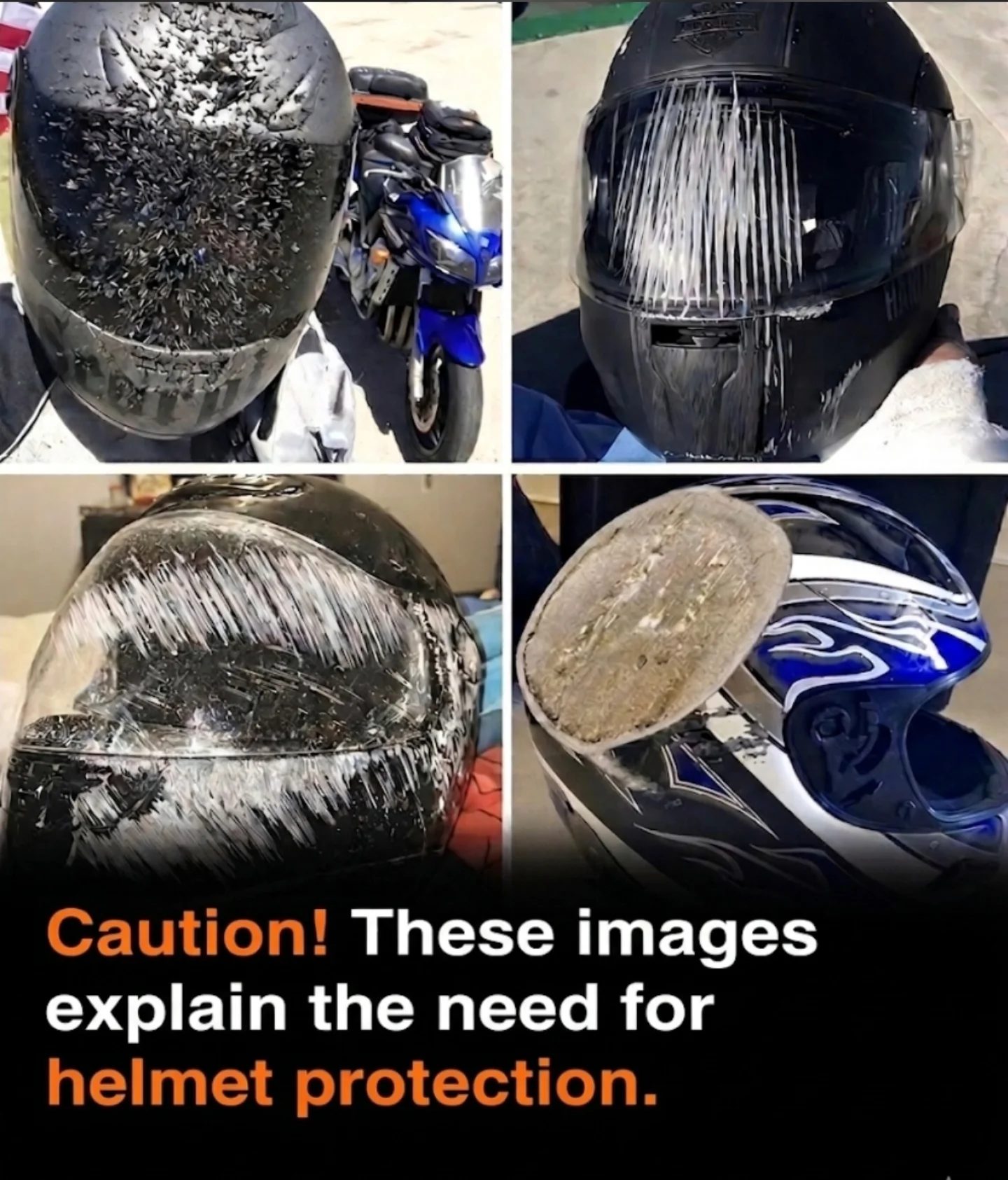
A motorcycle helmet might seem like just another piece of gear, but it's actually a critical safety tool. The stark contrast between a damaged helmet and the potential injuries it prevents is a sobering reminder of its importance, even when the only sound is the breathless silence of the aftermath of a crash. This is the reality that every rider must consider when they take the road.
Why This Matters
Motorcycle helmets are designed to absorb and distribute impact forces, protecting the rider's head from severe injuries. When you see a helmet that has absorbed a significant impact, you're witnessing the moment when a vital piece of equipment stepped between a rider and potentially fatal injuries. The force of a collision can be brutal, and the damage to the helmet is a testament to the energy it has absorbed.
The importance of a helmet becomes even more apparent when considering that even the most cautious riders can encounter unpredictable hazards. The road is unpredictable, with potential dangers lurking around every corner. These can include gravel, oil slicks, blind turns, or distracted drivers. In such scenarios, a helmet is not just an accessory; it is the only thing standing between the rider and severe injury or worse.
Main Discussion
The Role of a Helmet
A motorcycle helmet serves multiple functions, all aimed at protecting the rider's head and face. The outer shell is designed to withstand and distribute the force of an impact, while the inner liner provides cushioning to absorb the shock. The visor protects the face from debris and impacts. The chin strap ensures that the helmet stays secure during a crash.
Impact and Damage
When a helmet takes a hit, the damage can be extensive. Cracks, fractures, and dents are clear signs of the force the helmet has absorbed. These visual markers underscore the helmet's role in mitigating the impact that would otherwise be directly transmitted to the rider's head. The cracks and fractures highlight the critical role of the helmet in preventing serious injuries.
The Thin Line Between Life and Road
The thin line separating a rider from severe injury or death is the helmet itself. The helmet's design incorporates various layers and materials to deflect and absorb impact, ensuring the rider's survival. The thin line also represents the split-second decision made before starting the engine, a decision that can mean the difference between walking away from a crash and facing life-altering consequences. The helmet is a reminder of the fragile balance between safety and risk on the road.
Practical Tips
Always Wear a Helmet
The most critical tip for any motorcycle rider is to always wear a helmet. No matter how experienced or cautious you may be, the unpredictability of the road means that accidents can happen to anyone. Wearing a helmet is the first line of defense against serious head injuries.
Properly Secure the Helmet
Ensuring that the helmet is properly secured is as important as wearing one. The helmet's chin strap plays a crucial role in keeping the helmet in place during a collision. Make it a habit to check the strap every time you put on your helmet.
Inspect and Replace Your Helmet
Helmets are designed to absorb impact and protect the rider, but they can only do so once. If your helmet has taken a significant hit, even if it doesn't look too damaged, it is crucial to replace it. A helmet that has been compromised in a crash will not provide the same level of protection in a future incident. Regular inspections can help identify any signs of wear or damage.
Important Takeaways
The Importance of Helmet Protection
The stark reality of helmet damage highlights the importance of helmet protection. The scratches, cracked visor, and crushed shell are not just cosmetic issues; they are evidence of the helmet's role in saving a life. The helmet is a silent guardian, ready to intervene in the milliseconds between a collision and potential tragedy.
The Road's Unpredictability
The road is unpredictable, and even the safest riders can encounter unexpected hazards. The helmet is a crucial safeguard against these unpredictable dangers, providing a layer of protection when the world goes sideways.
Personal Safety Choices
Riders' personal safety choices before starting the engine can mean the difference between a minor scare and a life-altering injury. Wearing a helmet, securing it properly, and replacing it after a significant impact are essential practices for any motorcycle rider.
Choosing the Right Helmet
Choosing the right helmet is crucial. Helmets come in various designs, materials, and protective features. It's essential to select a helmet that fits well, is comfortable, and meets safety standards. A well-fitting helmet ensures optimal protection and reduces the risk of discomfort during long rides.
Conclusion
Riding a motorcycle involves inherent risks, but wearing a helmet significantly mitigates the potential for severe injuries. The damaged helmet serves as a poignant reminder of the critical role helmets play in protecting riders. The scratches, shattered visor, and crushed shell are not just signs of impact but are the physical evidence of a helmet's effectiveness in absorbing impact. They represent the thin line that separates a rider from severe injury or worse. The decision to wear a helmet, secure it properly, and replace it after a significant impact is a choice that can save a life. When the world goes sideways, and gravity takes over, the helmet is the only thing standing between a rider and potential tragedy.
Questions readers ask
Why is a motorcycle helmet considered a critical safety tool?
A motorcycle helmet is crucial for protecting riders from severe head injuries. It absorbs and distributes impact forces during crashes, which can help prevent or minimize brain injuries. Even cautious riders face unpredictable road hazards, making a helmet essential for safety.
How does a motorcycle helmet protect a rider during a crash?
During a crash, a motorcycle helmet absorbs and distributes the force of impact, reducing the severity of head injuries. The helmet's design and materials are engineered to withstand and disperse these forces, protecting the rider's head and brain from direct damage.
What should I look for when choosing the best motorcycle helmet for safety?
When selecting a helmet, look for key safety features such as DOT, ECE, or SNALL certification, which ensure the helmet meets specific safety standards. Additionally, consider helmets with advanced impact-absorbing materials and designs, such as those with multiple layers or innovative energy-absorbing liners.
Can a helmet really make a difference in a severe motorcycle crash?
Yes, a helmet can significantly reduce the risk of severe head injuries or fatalities in a severe motorcycle crash. The damage visible on a helmet post-impact demonstrates the critical role it plays in absorbing and distributing impact forces, thereby preventing or mitigating potential injuries to the rider's head and brain.
What are some top motorcycle helmets for 2023 that prioritize safety?
Some of the top motorcycle helmets for 2023 that prioritize safety include models from well-known brands like Arai, Shoei, and AGV. These brands are recognized for their advanced safety features, superior impact absorption, and rigorous testing standards. Specific models to consider include the Shoei RF-1200 and the AGV Pista GP, which are renowned for their safety and performance.
What are some important motorcycle safety tips related to helmet use?
Always ensure your helmet fits properly and is securely fastened before every ride. Regularly inspect your helmet for signs of wear or damage, and replace it after any significant impact, even if it looks undamaged, as its protective capabilities may be compromised. Additionally, follow the manufacturer's guidelines for care and maintenance to ensure your helmet remains effective.
How can I ensure my motorcycle helmet provides optimal head protection?
To ensure optimal head protection, choose a helmet that fits snugly and comfortably. A properly fitting helmet should not move around on your head and should have no pressure points. Regularly check the helmet’s chin strap and adjust it to ensure a secure fit. It’s also a good idea to replace your helmet every 3-5 years, as materials can degrade over time, even with proper care, potentially affecting its performance in a crash.
Related deep dives
Similar reads based on topic and creator.




Recent articles
Fresh deep dives from the latest Reels we unpacked.




Comments
Be the first to comment.