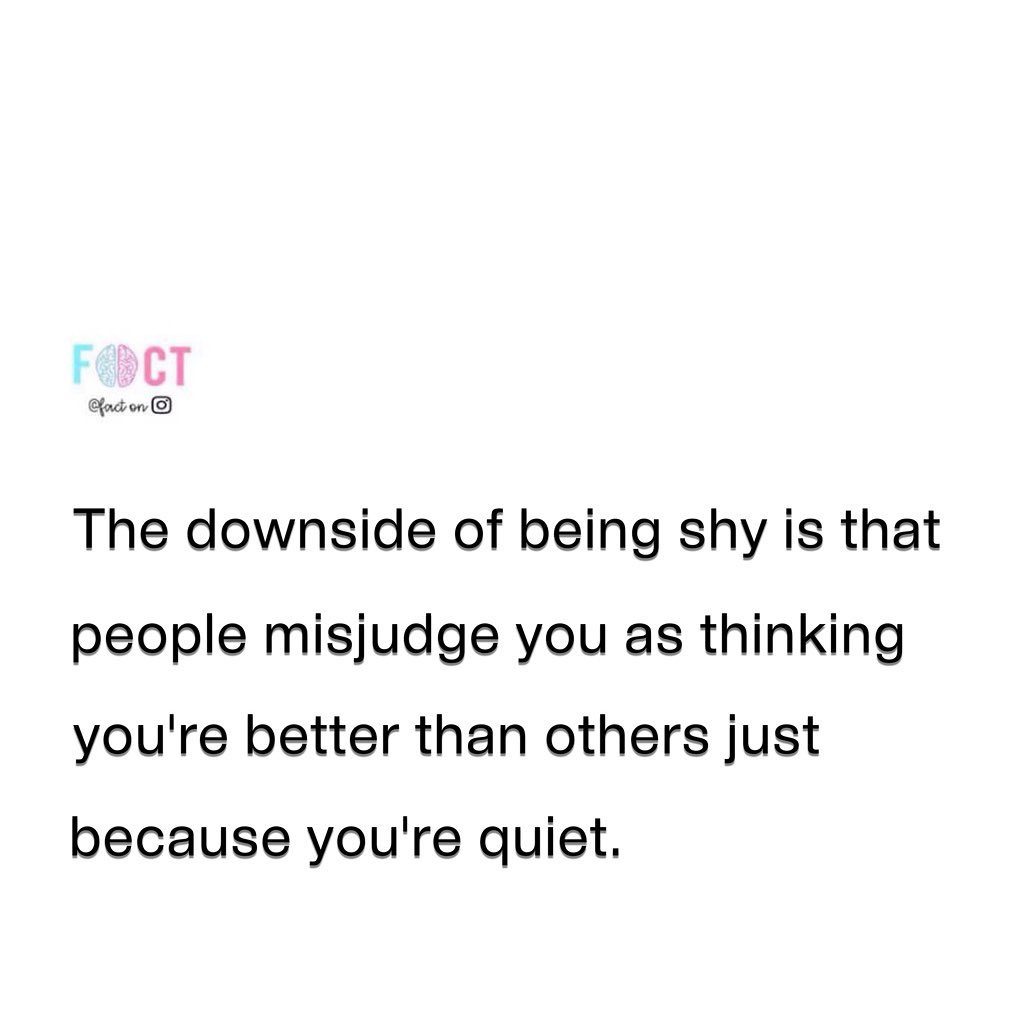
Shyness and Misjudgment
Shyness is a common trait that many people experience, often characterized by feelings of awkwardness, discomfort or apprehension in social situations. One of the less-discussed aspects of shyness is how others perceive it. The phrase "quiet" is often not just interpreted as "quiet."
Context / Why this matters
The misinterpretation of shyness can have significant social implications. People who are shy often face misunderstandings and misjudgments from those around them. This can lead to strained relationships, missed opportunities, and even feelings of isolation. Understanding these dynamics is crucial for both shy individuals and those who interact with them.
Main discussion
The social perception of shyness
Being shy often means you prefer quieter, one-on-one interactions over large social gatherings, making you less vocal and less assertive in social situations. However, this quietness is frequently misinterpreted as arrogance or superiority. People may assume that because you are not actively participating in conversations or social events, you believe you are superior to others.
The roots of this misconception
There are several reasons why quietness is often misinterpreted as arrogance. One primary factor is the cultural and societal emphasis on extroversion. In many cultures, being outgoing, talkative, and socially dominant is seen as a positive trait. Conversely, shyness is sometimes viewed as a lack of interest or engagement. Misjudgments stem from these societal norms, leading to misunderstandings.
Another contributing factor is the lack of verbal cues from shy individuals. People often gauge others' interest and engagement through verbal and non-verbal communication. Shy individuals, who may not engage in these ways, can be perceived as disinterested or aloof, leading to misunderstandings.
The Impacts of Misjudgment
The misjudgment of shyness can have several negative impacts. For shy individuals, it can lead to feelings of isolation and loneliness, as they may struggle to form meaningful connections with others. It can also result in missed opportunities, both personally and professionally. People may be less likely to collaborate with or include shy individuals in projects or social activities, assuming they are not interested or committed.
For those who misinterpret shyness, it can lead to strained relationships and missed chances for mutual understanding and growth. Building relationships requires openness and understanding, and misjudgments can hinder this process.
Practical tips
For shy individuals:
- Communicate Openly: If you feel comfortable, try to explain your shyness to others. This can help them understand your behavior and reduce misunderstandings.
- Seek Support: Engage with support groups or professionals who can provide strategies for managing shyness and building confidence.
- Practice Self-Compassion: Remember that your quiet nature does not define your worth or intelligence. Seek moments of self-affirmation to boost your self-esteem.
For those interacting with shy individuals:
- Be Patient and Understanding: Give shy individuals time to open up. Avoid pushing them into social situations they are not comfortable with.
- Encourage One-on-One Interactions: One-on-one interactions can be less intimidating for shy individuals and allow them to open up more naturally.
- Avoid Making assumptions: Recognize that quietness does not equate to arrogance or disinterest. Be open to learning about the person beyond their initial demeanor.
Addressing the misjudgment
Recognition of the issue is the first step towards addressing it. For shy individuals, building self-awareness and communication skills can help them navigate social situations more effectively and assertively. For those who misinterpret shyness, increasing empathy and understanding can help create more inclusive and supportive environments.
Important takeaways
- Shyness is often misinterpreted as arrogance or disinterest, leading to misunderstandings and strained relationships.
- People who are shy may face social isolation and missed opportunities due to misjudgments.
- Addressing this issue requires empathy, understanding, and open communication from both shy individuals and those who interact with them.
- Building self-awareness and communication skills can help shy individuals navigate social situations more effectively.
Conclusion
Shyness is a complex trait that can lead to significant misinterpretations and misunderstandings. However, by fostering empathy, understanding, and open communication, we can create more inclusive and supportive environments for everyone.
Questions readers ask
How does shyness affect how others perceive us?
Shyness can be misinterpreted as arrogance, disinterest, or even hostility. This is because shy individuals may appear quiet or reserve, which can be mistaken for other traits. It is important to recognize that those who are shy might simply need more time to open up and engage in conversations.
What are some common misconceptions about shyness?
One common misconception is that shy people are simply quiet or introverted, when in fact, shyness is often characterized by feelings of discomfort or anxiety in social situations. Another misconception is that shyness is a choice or a sign of weakness, when it is actually a common and natural trait experienced by many people.
How does shyness impact relationships?
Shyness can lead to misunderstandings and misjudgments from others, which may strain relationships. Shy individuals may feel isolated and miss out on social opportunities, as others might not recognize or understand their quiet nature. Encouraging open communication and patience can help overcome these challenges.
What are the consequences of shyness in professional settings?
In professional settings, shyness can lead to missed opportunities for career advancement, as shy individuals may struggle to assert themselves or network effectively. They may also be overlooked for leadership roles or team projects, as their quiet nature can be mistaken for a lack of interest or capability. Recognizing and addressing these dynamics can help create a more inclusive and supportive work environment.
What are the symptoms of shyness?
Symptoms of shyness can vary, but common signs include feelings of awkwardness, discomfort, or anxiety in social situations. Shy individuals may also experience physical symptoms, such as blushing, sweating, or a racing heart. These feelings can be overwhelming and may prevent shy individuals from fully engaging in conversations or social activities.
How can shy people overcome feelings of isolation?
Shy people can be proactive in overcoming feelings of isolation by seeking out supportive environments and engaging in activities they enjoy. Practicing open communication, sharing thoughts and feelings with trusted individuals, and gradually exposing themselves to social situations can also help. Additionally, understanding that being shy is a common and natural trait and that it should not be a barrier to social interactions can go a long way in helping them connect with others.
Recent articles
Fresh deep dives from the latest Reels we unpacked.




Comments
Be the first to comment.