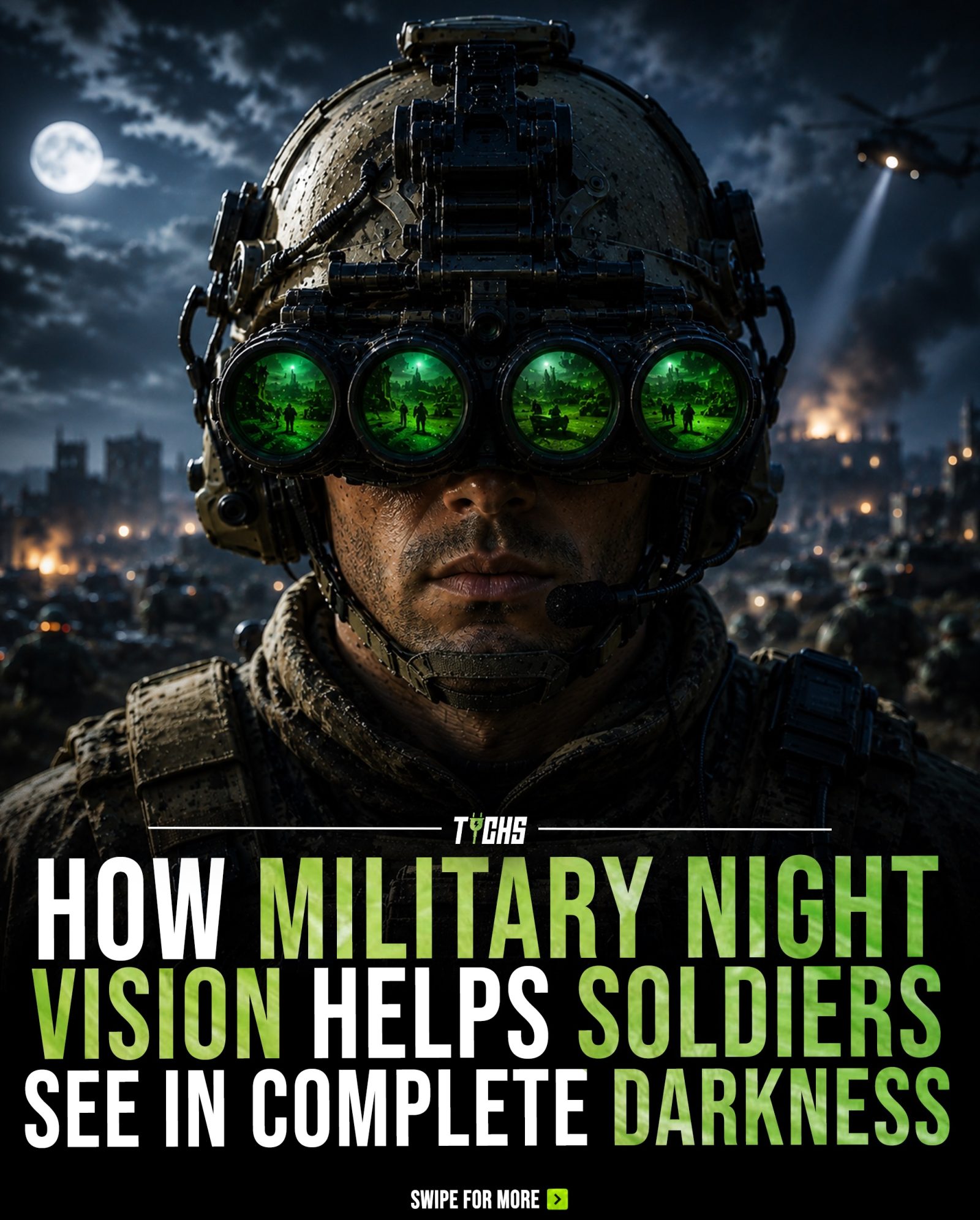
Military night vision technology is a critical tool for soldiers, enabling them to see and operate in near-total darkness.
Why This Matters
Night vision and thermal imaging systems provide soldiers with a significant tactical advantage by enhancing their ability to detect and identify threats in low-visibility conditions. These technologies amplify available light and detect heat signatures, revealing hidden targets and allowing soldiers to navigate and complete missions effectively in darkness.
How Night Vision and Thermal Imaging Work
Night Vision Technology
Night vision goggles, such as those from TCHS, work by amplifying small amounts of available light, including moonlight and starlight. The process involves converting light into electrons, which are then displayed as a brightened (green) image on a built-in screen. In environments with very low light, infrared illuminators are used, providing invisible light that allows night vision devices to function.
Night vision has its limits. It is ineffective in complete darkness, such as in deep caves or underground, where no light is present. However, in most outdoor environments, night vision goggles can detect a person from a range of 300-500 meters, providing soldiers with a clear view of their surroundings.
Thermal Imaging Technology
Thermal systems, on the other hand, detect heat signatures, which makes them highly effective in environments where traditional night vision might fail. Thermal cameras can see through smoke, fog, and darkness, and can detect heat from up to 10 kilometers away. This capability ensures that soldiers can identify and target hidden enemies, even in the most challenging conditions.
Thermal imaging is particularly useful in identifying heat sources, such as people, vehicles, and equipment, which emit infrared radiation. This makes it a powerful tool for surveillance and reconnaissance missions in dark environments.
The Synergy of Night Vision and Thermal Imaging
Modern military goggles are increasingly designed to combine both night vision and thermal imaging capabilities. This dual-functionality allows soldiers to see both the terrain details and heat signatures simultaneously. This combines the benefits of both technologies, providing a comprehensive view of the battlefield.
By integrating both systems, soldiers can gain a significant tactical advantage. They can detect threats more quickly, identify hidden targets, and navigate through challenging environments with greater precision and confidence. This capability is crucial for modern warfare, where split-second decisions and accurate information can mean the difference between success and failure.
Practical Tips for Using Night Vision Goggles
Proper Use and Maintenance
To maximize the effectiveness of night vision goggles, soldiers must understand how to use and maintain them properly. This includes:
- Battery Management: Regularly check and replace batteries to ensure uninterrupted operation.
- Cleaning: Keep the lenses clean and free of debris to maintain optimal performance.
- Adjustment: Adjust the focus and brightness settings to suit the environment and individual needs.
Training and Familiarization
Soldiers should undergo comprehensive training to become proficient in using night vision goggles. This includes:
- Night Operations: Practicing nighttime maneuvers and operations to get accustomed to the visual differences.
- Environmental Awareness: Learning to recognize and adapt to different light conditions and obstacles.
Combining with Other Systems
To enhance situational awareness, soldiers should integrate night vision goggles with other technologies, such as infrared lasers and rangefinders. This combination can provide more accurate targeting and better overall performance in the field.
Important Takeaways
- Night vision goggles amplify available light to provide visibility in low-light conditions, enhancing a soldier’s ability to operate in darkness.
- Thermal imaging detects heat signatures, making it effective in environments where light is absent or obscured.
- Modern military goggles that combine both technologies offer soldiers a comprehensive view of the battlefield, aiding in threat detection and navigation.
- Proper use, maintenance, and training are essential for maximizing the effectiveness of night vision goggles in military operations.
- The integration of night vision and thermal imaging provides soldiers with a significant tactical advantage, crucial for success in modern warfare.
Conclusion
Night vision and thermal imaging technologies are indispensable tools for soldiers operating in low-visibility environments. By amplifying available light and detecting heat signatures, these technologies provide a clear view of the battlefield, enhancing situational awareness and tactical advantage. Whether used individually or in combination, night vision and thermal imaging are essential for modern military operations, ensuring that soldiers can navigate and complete missions effectively in the darkest of conditions.
Questions readers ask
How do night vision goggles help soldiers see in the dark?
Night vision goggles assist soldiers by amplifying small amounts of available light, such as moonlight and starlight. They convert this light into electrons and then display it as a visible image, allowing soldiers to navigate and perform tasks in low-visibility conditions.
What is the difference between night vision and thermal imaging for military use?
Night vision technology amplifies available light to create a visible image, while thermal imaging detects heat signatures emitted by objects and living beings. Thermal imaging is particularly useful for spotting hidden or camouflaged threats, as it doesn't rely on ambient light.
Why are night vision systems crucial for soldiers?
Night vision systems are crucial for soldiers because they provide a significant tactical advantage. They enable soldiers to detect and identify threats in darkness, navigate through low-visibility environments, and complete missions effectively, enhancing overall operational success.
Can night vision goggles work in complete darkness?
Night vision goggles require some ambient light to function, such as moonlight, starlight, or infrared light. In complete darkness, they will not produce a visible image. However, some advanced systems use infrared illuminators to create a low-light environment, making them effective in near-total darkness.
How does thermal imaging benefit soldiers in military operations?
Thermal imaging benefits soldiers by allowing them to detect heat signatures, which can reveal hidden targets, such as enemy personnel or equipment, that might be concealed from traditional night vision. This advantage is particularly useful in smoke, fog, or other low-visibility conditions.
What are the key components of night vision technology?
The key components of night vision technology include an objective lens, which captures ambient light, a photocathode that converts light into electrons, a microchannel plate that amplifies the electrons, and a phosphor screen that displays the amplified electrons as a visible image.
Recent articles
Fresh deep dives from the latest Reels we unpacked.




Comments
Be the first to comment.