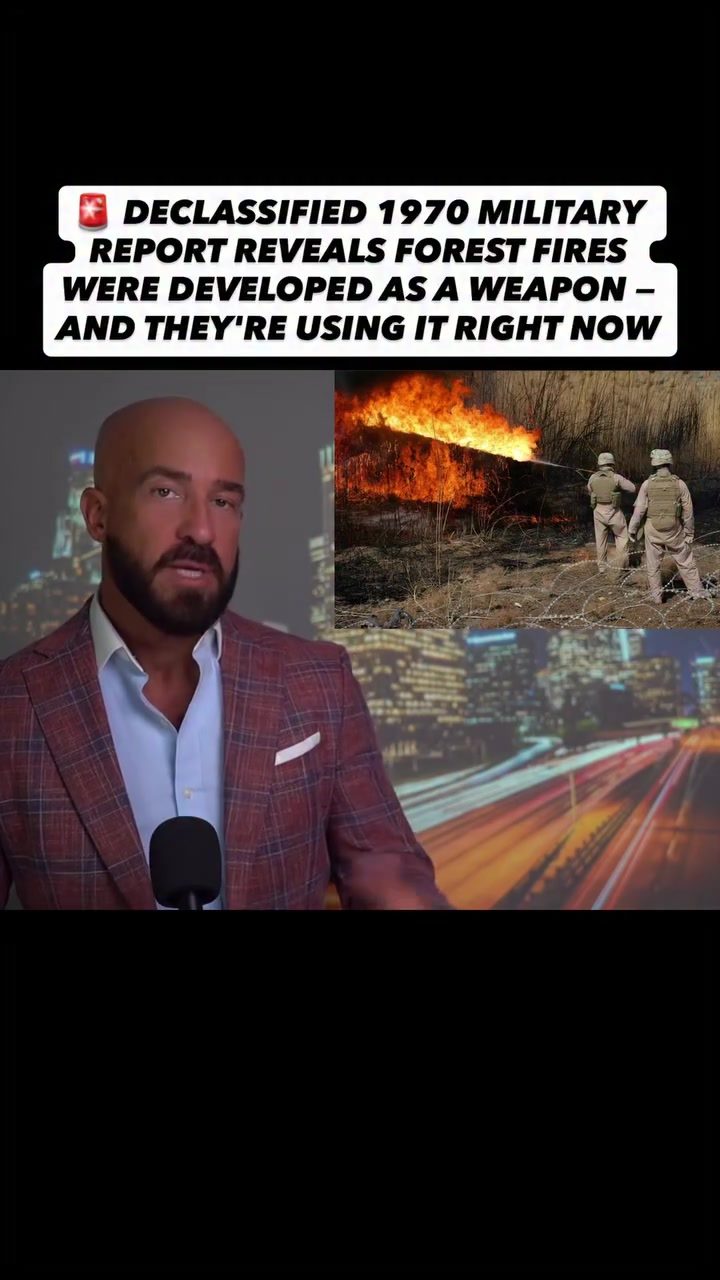
The History and Implications of Forest Fires as Military Weapons
The U.S. military has a long history of exploring unconventional tactics, and one of the most controversial is the use of forest fires as weapons. A declassified report from June 1970 reveals that the military has studied and developed methods to turn forests into weapons of mass incineration. This report, which was formerly classified, provides detailed insights into how the military prepares vast areas of forests for extremely intense fires. The preparations involve spraying desiccants and defoliants for months in advance, essentially setting the stage for maximum destruction.
The Role of the Forest Service
The United States Forest Service played a significant role in providing data for this military research. The report outlines how the Forest Service instructed the military on setting the stage for maximum intensity forest fire incinerations. This raises questions about the true role of the Forest Service and whether U.S. citizens are now in the same category as enemy combatants during wartime. The report includes specific data on the best timing for engineered forest fire incineration in various regions across the United States.
Controversies and Current Practices
The idea of using forest fires as weapons is not just theoretical. The Forest Service is currently spraying glyphosate, a herbicide, in the forests of Lake Tahoe and surrounding areas. This chemical is used for forest management, burn scars, and even in recreational areas like trails and campgrounds. The use of such chemicals raises concerns about their environmental and health impacts, especially when combined with the military's historical interest in using forest fires as weapons.
Environmental and Health Concerns
The spraying of chemicals like glyphosate is just one part of a broader issue. Mysterious fog and the sudden explosion of wildfires have led many to connect the dots between historical military research and current environmental phenomena. The smoke from wildfires can be so dense that it obscures visibility and affects air quality, as seen in Traverse City, Michigan, where the smoke was so bad that it was difficult to see the water or even the sun.
Practical Tips for Staying Informed
Given the seriousness of these issues, it's crucial to stay informed and vigilant. Here are some practical tips:
- Stay Informed: Follow reliable sources for information on forest management practices and military research.
- Monitor Local Conditions: Keep an eye on local weather and environmental conditions, especially during wildfire season.
- Advocate for Change: Engage with local authorities and environmental organizations to advocate for transparent and responsible forest management practices.
Important Takeaways
The declassified 1970 military report and current forest management practices raise significant concerns about the use of forest fires as weapons and the environmental and health impacts of chemical spraying. It's essential to stay informed, monitor local conditions, and advocate for responsible forest management practices.
The Role of Public Awareness
Public awareness and advocacy are crucial in addressing these issues. Organizations like GeoengineeringWatch.org and individuals like Dane Wigington have been instrumental in bringing attention to these concerns. Their work highlights the importance of transparency and responsible management in protecting our forests and communities.
Conclusion
The use of forest fires as weapons is a disturbing aspect of military research that has implications for environmental and public health. Understanding the historical context and current practices is essential for staying informed and advocating for change. By staying vigilant and engaged, we can work towards a future where our forests are protected, and our communities are safe.
Questions readers ask
What specific chemicals did the military plan to use to maximize forest fires in the 1970s?
The military intended to use desiccants and defoliants, which are chemicals that cause plants to dry out and lose their leaves, making forests more susceptible to intense fires.
What was the purpose of the collaboration between the military and the Forest Service in the early 1970s?
The collaboration aimed to leverage the Forest Service's expertise and data to develop and refine the military's strategy for weaponizing forest fires.
Why are there still concerns about the military's 1970 plan to weaponize forest fires?
Concerns persist due to potential environmental impacts, such as habitat destruction and species loss, as well as potential health risks from smoke and chemicals.
How did the military plan to prepare forests for mass-incineration fires in the 1970s?
The military's plan involved spraying chemicals like desiccants and defoliants over large areas for months. This process dried out the vegetation, creating ideal conditions for rapid, intense fires.
What is the significance of the declassified report from June 1970 regarding military tactics on forest fires?
The declassified report provides detailed insights into the military's plans and methods for using forest fires as weapons, including the use of chemicals to enhance fire intensity.
Were there any potential health impacts from the military's plan to weaponize forest fires in the 1970s?
Yes, the military's plan to weaponize forest fires could have led to significant health impacts from exposure to smoke and chemicals used in the process.
What makes the military's 1970s plan to weaponize forest fires an unconventional tactic?
This plan is considered unconventional because it involves manipulating natural environments, like forests, to create deadly fires, rather than using traditional military weapons.
Related deep dives
Similar reads based on topic and creator.




Recent articles
Fresh deep dives from the latest Reels we unpacked.




Comments
Be the first to comment.