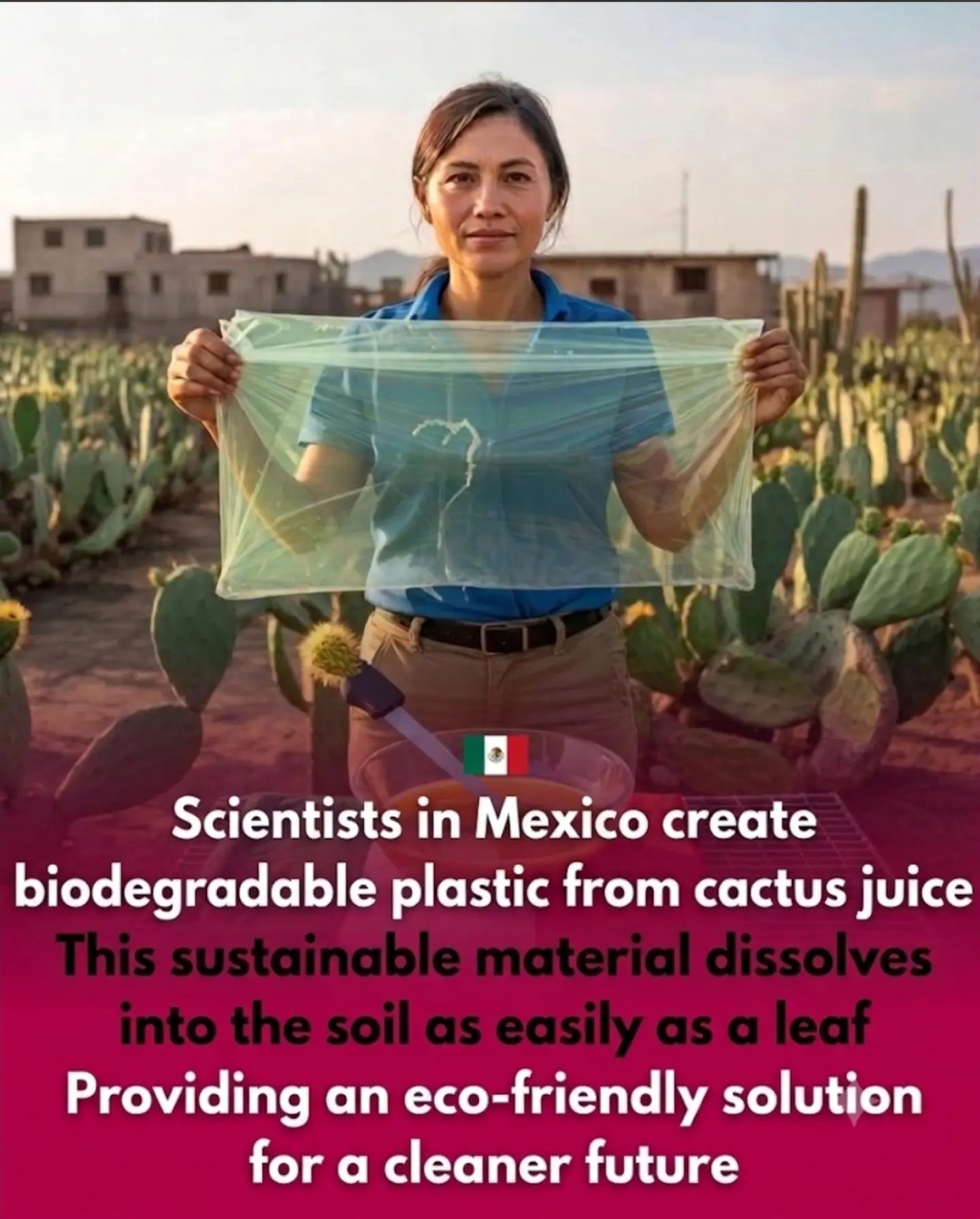
Biodegradable Cactus Plastic
Context / Why this matters
The world is grappling with an enormous plastic waste problem. Traditional plastics, derived from petroleum, take centuries to decompose, leading to severe environmental damage. The search for sustainable alternatives has intensified, and one innovative solution has emerged from Mexico.
Mexican researcher Sandra Pascoe Ortiz, a professor at the University of Atemajac Valley in Guadalajara, has developed a revolutionary biodegradable plastic made from the juice of the nopal cactus (Opuntia ficus-indica). This breakthrough offers a sustainable alternative to conventional plastics, aligning with global efforts to reduce plastic pollution and promote eco-friendly materials.
The Breakthrough: Cactus-Based Bioplastic
The nopal cactus, a ubiquitous symbol of Mexico, is the key ingredient in this innovative plastic material. The process involves extracting and blending natural sugars, pectin, and organic acids found in the cactus pulp with additives like glycerol and natural colorants. This mixture yields a flexible, non-toxic, and edible bioplastic that can be used in various applications, similar to conventional single-use plastics. It’s particularly notable because it mirrors the utility of traditional plastics, making it a practical alternative for many everyday items.
The bioplastic created from cactus juice is not only biodegradable but also dissolves easily into the soil, leaving no harmful residues. This characteristic makes it an eco-friendly solution for a cleaner future. Unlike traditional plastics, which can take hundreds of years to degrade, this cactus-based bioplastic breaks down naturally, reducing its environmental impact significantly.
The Science Behind Cactus-Based Plastic
Nopal cactus, scientifically known as Opuntia ficus-indica, is rich in natural polymers and organic acids that make it an ideal candidate for creating bioplastics. The extraction process harnesses these natural components to form a pliable material. The polymer chains in the cactus pulp provide the structural integrity of the plastic, while additives like glycerol enhance its flexibility and durability. Natural colorants add to the aesthetic appeal while maintaining the eco-friendly nature of the product.
Applications and Benefits
The versatility of this cactus-based bioplastic makes it suitable for a wide range of applications. It can be used to create single-use items such as packaging materials, bags, and cutlery, which are traditionally made from petroleum-based plastics. Its biodegradable nature ensures that these products will not contribute to the ever-growing landfill problem or pollute the environment.
In addition to its environmental benefits, this bioplastic offers economic advantages. The nopal cactus is widely available in Mexico and other regions, making it a cost-effective raw material. This could lead to the creation of local jobs in the bioplastic industry and support the growth of small-scale agricultural enterprises.
Practical Tips
While this innovation is promising, there are several considerations for its practical implementation:
-
Scalability: For cactus-based bioplastic to become a mainstream alternative, the production process must be scalable. This includes developing efficient extraction and processing methods to meet global demand.
-
Quality Control: Ensuring consistent quality and performance of the bioplastic is crucial. This involves standardizing the extraction and blending processes to maintain the material's durability and flexibility.
-
Market Adoption: Encouraging businesses to switch to eco-friendly materials can be challenging. Providing incentives and educating consumers about the benefits of cactus-based plastics can drive market adoption.
-
Regulatory Support: Governments play a significant role in promoting sustainable innovations. Policies that support research and development in bioplastics, along with regulations that discourage the use of non-biodegradable plastics, can accelerate the adoption of this technology.
Important Takeaways
Cactus-based bioplastic represents a significant step forward in sustainable engineering. Its biodegradable nature and ability to dissolve into the soil make it a viable alternative to conventional plastics. The use of the nopal cactus as a raw material not only reduces environmental pollution but also supports local economies in regions where the cactus is abundant.
The innovation by Sandra Pascoe Ortiz highlights the potential of natural resources in creating eco-friendly materials. It underscores the importance of research and development in finding sustainable solutions to global environmental challenges.
Conclusion
The development of biodegradable cactus plastic by Mexican researcher Sandra Pascoe Ortiz is a groundbreaking achievement in sustainable engineering. This innovation offers a practical and eco-friendly solution to the plastic waste problem. By harnessing the natural properties of the nopal cactus, we can create a material that is not only sustainable but also mirrors the utility of conventional plastics.
The adoption of cactus-based bioplastic can lead to significant environmental benefits, reducing pollution and promoting a cleaner future. As research and development continue, this innovative material holds the promise of transforming the way we think about plastics and our approach to sustainability.
Questions readers ask
What is biodegradable cactus plastic made from?
Biodegradable cactus plastic is primarily made from the juice extracted from the nopal cactus (Opuntia ficus-indica). This natural resource is processed into a material that is flexible and non-toxic, providing a sustainable alternative to traditional plastics.
How does biodegradable cactus plastic break down?
Biodegradable cactus plastic breaks down naturally in soil, unlike conventional plastics which can take centuries to decompose. This natural breakdown process significantly reduces the environmental impact, making it a cleaner plastic alternative.
Who developed the biodegradable cactus plastic?
The biodegradable cactus plastic was developed by Mexican researcher Sandra Pascoe Ortiz. Professor Ortiz, based at the University of Atemajac Valley in Guadalajara, has played a crucial role in pioneering this sustainable cactus material.
What are the benefits of using biodegradable cactus plastic over traditional plastics?
Biodegradable cactus plastic offers several benefits, including being flexible, non-toxic, and capable of naturally decomposing, reducing environmental damage. Unlike petroleum-based plastics, it aligns with global efforts to reduce plastic pollution and promotes eco-friendly materials.
Why is the nopal cactus a suitable choice for creating bioplastics?
The nopal cactus is abundant in Mexico and offers a renewable resource for creating bioplastics. The plant's juice can be easily processed into a material that functions similarly to conventional plastics, hence the popularity of the nopal cactus as a sustainable plastic solution.
How does the production of biodegradable cactus plastic contribute to a cleaner environment?
The production of biodegradable cactus plastic significantly reduces waste compared to traditional plastic production. By using renewable and biodegradable materials, this innovation aligns with zero waste goals and promotes a cleaner, more sustainable environment.
What makes biodegradable cactus plastic an eco-friendly cactus innovation?
Biodegradable cactus plastic is an eco-friendly innovation as it reduces the reliance on non-renewable resources like petroleum. Using the nopal cactus as a raw material and ensuring that the final product can decompose naturally makes it a standout environmentally friendly cactus innovation.
Related deep dives
Similar reads based on topic and creator.

Recent articles
Fresh deep dives from the latest Reels we unpacked.




Comments
Be the first to comment.