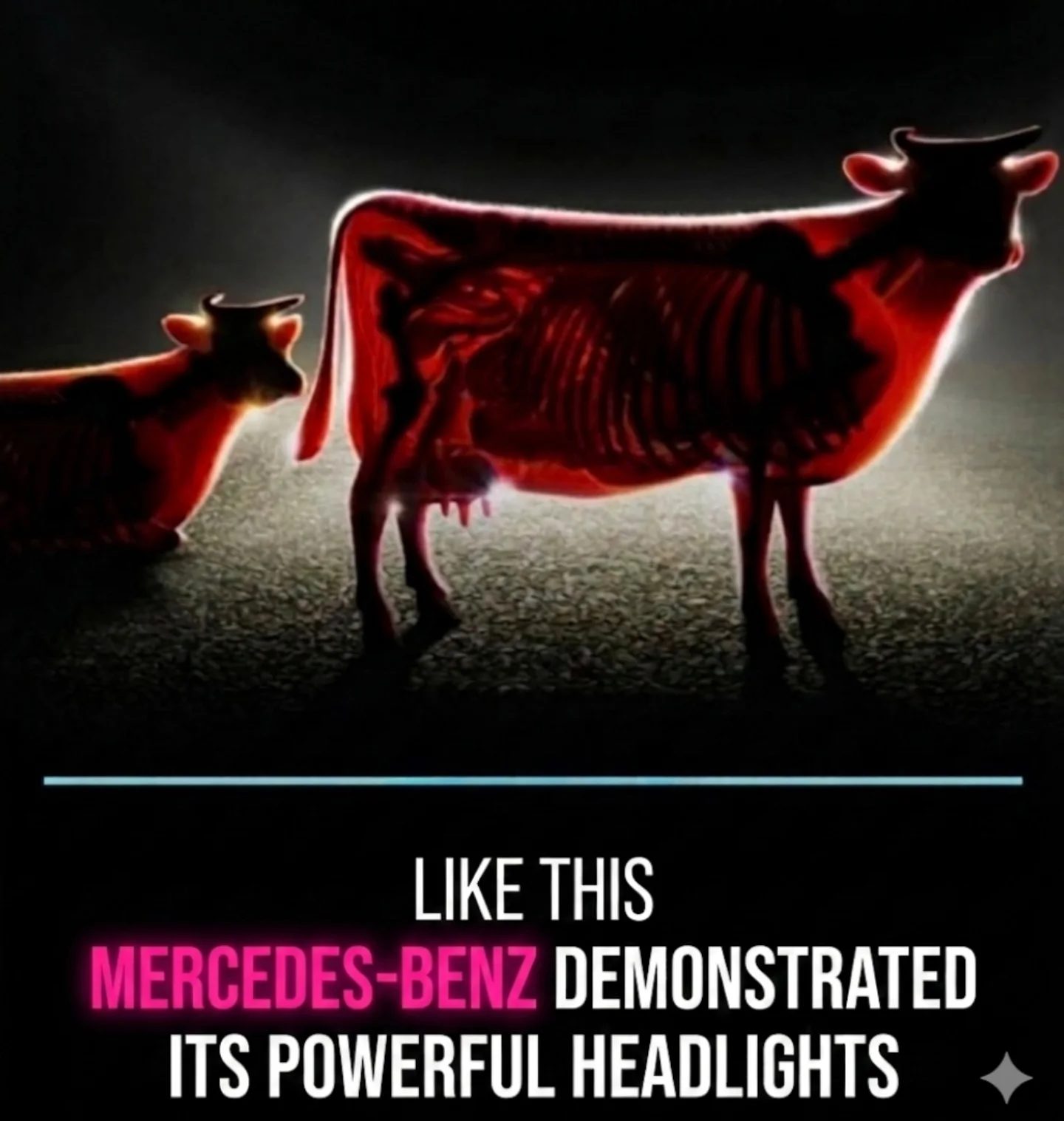
Behold the Misleading Myth of Mercedes-Benz Headlights
The misconception that automotive headlights, particularly those of high-end brands like Mercedes-Benz, can emit X-rays or reveal skeletal structures is a compelling yet false claim. The idea originates from a cleverly manipulated image that has circulated widely, often falsely attributed to Mercedes-Benz. Let's explore the truth behind this fable and delve into the real capabilities and limitations of car headlights.
Why This Matters
Understanding the true capabilities of automotive headlights is crucial for both drivers and enthusiasts. Proper headlights are essential for safety, night driving, and overall visibility. Misconceptions about headlight power can lead to unrealistic expectations and potential hazards on the road.
The Origin and Evolution of the Misleading Image
The image in question features a stylized cow silhouette illuminated by bright red light, suggesting that the headlights are powerful enough to reveal the internal structure of the animal. Initially, this image was part of an Amnesty International campaign from the mid-2000s. The campaign aimed to raise awareness about transparency and human rights issues, using the metaphor of "seeing through" things to highlight the lack of transparency. Over time, this image was digitally altered to include the Mercedes-Benz logo, falsely implying that the car's headlights are so powerful they can act like an X-ray.
Physics of Automotive Headlights
To understand why this claim is false, let's break down the physics behind car headlights. Automotive headlights, regardless of their type—whether LED, laser, or matrix—are designed to emit visible light, typically in the visible spectrum. These lights are engineered to illuminate the road ahead, enhancing visibility and safety for the driver. The wavelengths of light emitted by headlights do not include X-rays, which are a form of electromagnetic radiation with much higher energy and shorter wavelengths.
Even the most advanced headlight technologies cannot produce X-rays. X-rays are generated through different mechanisms, such as high-voltage electron beams striking a metal target, as seen in medical imaging devices or airport security scanners. Automotive headlights operate on entirely different principles and are not capable of generating X-rays.
LED Headlights
LED (Light Emitting Diode) headlights are known for their energy efficiency and brightness. They emit light when an electric current passes through a semiconductor, converting electrical energy into visible light. While LEDs are efficient and bright, they do not emit X-rays or other forms of ionizing radiation.
Laser Headlights
Laser headlights use a laser diode to generate a highly focused beam of light, which is then converted into visible light. These headlights offer excellent range and clarity, making them a popular choice for high-end vehicles. However, even laser headlights do not produce X-rays; they generate intense, focused visible light.
Matrix Headlights
Matrix headlights use a combination of LEDs and advanced control systems to create multiple beams of light, allowing for adaptive illumination that adjusts to driving conditions. This technology enhances safety and visibility, but it still operates within the visible light spectrum and does not produce X-rays.
Headlight Technology Trends
Recent advancements in headlight technology have focused on improving visibility, reducing glare, and enhancing safety. However, these advancements do not alter the fundamental nature of the light emitted. Headlights are designed to provide illumination, not to reveal internal structures or produce X-rays.
Psychological Impact of the Misconception
The misconception that Mercedes-Benz headlights can produce X-rays likely stems from the impressive capabilities of modern headlight technology. The perception of powerful headlights can create a psychological association with advanced, almost supernatural, abilities. This misconception can influence consumer expectations and perceptions about automotive technology.
Practical Tips for Choosing and Maintaining Headlights
Choosing the Right Headlights
When selecting headlights, consider the type of driving you do and the conditions you typically encounter. For night driving, bright and clear headlights are essential. Look for headlights that offer excellent range and clarity, such as LED, laser, or matrix headlights. Keep in mind that while these technologies offer superior performance, they still operate within the visible light spectrum and do not produce X-rays.
Maintenance and Care
Regular maintenance is crucial for ensuring your headlights perform optimally. Clean your headlights regularly to remove dirt and debris that can reduce their effectiveness. Check for any signs of wear or damage, and replace bulbs as needed. Proper alignment of your headlights is also important, as misaligned headlights can create glare and reduce visibility.
Ensuring Safety
Always prioritize safety when driving at night. Ensure your headlights are in good working condition and properly aligned. Avoid relying on misconceptions or false claims about headlight capabilities, and focus on maintaining and using your headlights correctly.
Important Takeaways
Understanding the true capabilities and limitations of automotive headlights is essential for drivers and enthusiasts. The misconception that Mercedes-Benz headlights can produce X-rays is a result of a cleverly manipulated image and a misunderstanding of headlight technology. Automotive headlights, regardless of their type, are designed to provide illumination and enhance visibility, not to reveal internal structures or produce X-rays. Proper maintenance and care of your headlights are crucial for ensuring safety and optimal performance on the road.
Conclusion
The myth of Mercedes-Benz headlights producing X-rays is a fascinating example of how misinformation can spread and influence perceptions. By understanding the true capabilities and limitations of automotive headlights, drivers can make informed decisions and prioritize safety. Proper maintenance, care, and realistic expectations about headlight performance are key to safe and efficient night driving.
Questions readers ask
Can Mercedes-Benz headlights emit X-rays as claimed in the myth?
No, Mercedes-Benz headlights cannot emit X-rays. This myth originates from a manipulated image and is entirely false. Headlights are designed to produce visible light for illumination, not X-rays.
How do Mercedes-Benz headlights contribute to safer night driving?
Mercedes-Benz headlights are designed to enhance visibility during night driving. They illuminate the road, helping drivers to see obstacles, signs, and other vehicles, thereby promoting safer driving conditions.
Why is the misconception about Mercedes-Benz headlights and X-rays so prevalent?
The misconception spread due to a manipulated image that went viral. This image falsely suggested that the headlights could emit X-rays. This misleading image led many people to believe an incorrect truth.
What is the true purpose of Mercedes-Benz headlights?
The true purpose of Mercedes-Benz headlights is to provide illumination for the road ahead, enhancing the driver's ability to see and navigate safely, especially in low-light conditions. They are not designed for any other purpose, such as revealing skeletal structures or emitting X-rays.
Are there any real-world applications of headlights revealing internal structures?
No, there are no real-world applications of headlights revealing internal structures. This concept is purely fictional and is not based on any real capabilities of automotive headlights. .
What should drivers expect from their headlights during night driving?
Drivers should expect their headlights to provide a clear, bright beam of light that illuminates the road ahead, making it easier to see obstacles and hazards. Drivers should not expect any special or supernatural abilities from their headlights.
What is the IQutechfact related to Mercedes-Benz headlights?
The IQutechfact related to Mercedes-Benz headlights is a manipulated image that falsely attributes the ability to emit X-rays to these headlights. This image has been widely circulated and is often associated with Amnesty International, but it is completely false.
Recent articles
Fresh deep dives from the latest Reels we unpacked.




Comments
Be the first to comment.