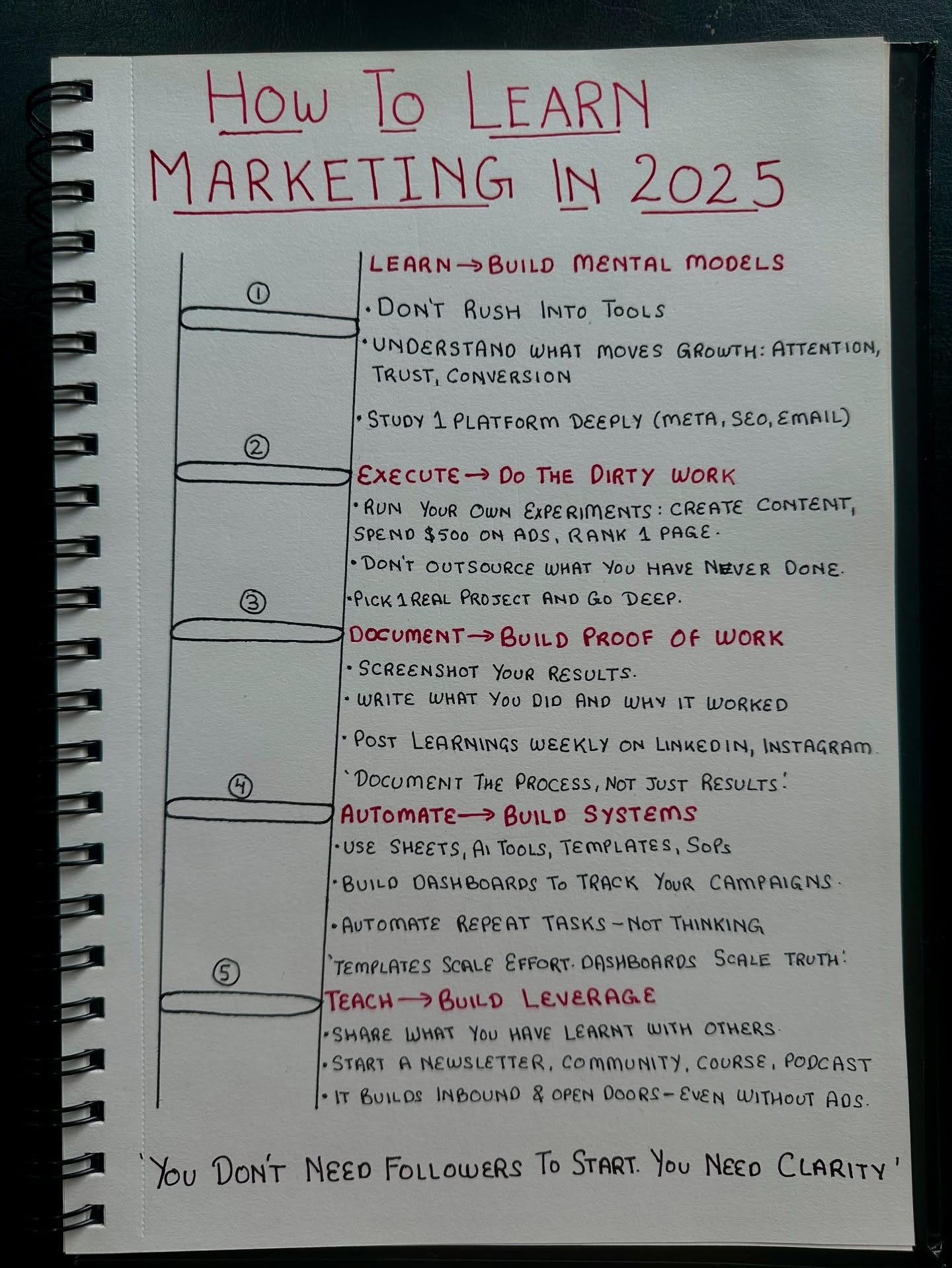
Marketing is an ever-evolving field, and understanding how to learn marketing in 2025 is crucial. If you're starting fresh, here's a strategic approach to mastering contemporary marketing by focusing on critical growth factors, deep study, and practical application. This approach emphasizes systematic learning, documentation, and sharing of insights to build leverage and effectiveness.
Why This Matters
The marketing landscape in 2025 will likely be even more competitive and dynamic, with new platforms, tools, and trends emerging constantly. To succeed, marketers need a solid foundation and a strategic approach to continuous learning. By focusing on key growth drivers, deep study, and practical application, you can stay ahead of the curve and achieve long-term success.
Deep Study and Real-World Application
Key Growth Drivers
To excel in marketing, you must understand what drives growth. Three essential factors are attention, trust, and conversion. Attention is the initial step in capturing your audience's interest. Trust is crucial for building long-term relationships with your audience. Conversion is the ultimate goal, turning potential customers into paying ones. Failing to grasp these fundamental concepts can lead to wasted effort and resources.
Deep Study of Platforms
Rather than trying to master multiple platforms at once, focus on one platform deeply. Popular platforms to consider include Meta (Facebook and Instagram), SEO, and email marketing. Each platform has unique strengths and strategies. For instance, Meta platforms are excellent for visual storytelling and community building, while SEO is essential for driving organic traffic to your website. Email marketing remains a powerful tool for nurturing leads and maintaining customer relationships.
Practical Application
Theoretical knowledge is valuable, but practical application is where real learning happens. Pick one real project and dive deep. This could be a personal blog, a small business website, or a side hustle. By working on a tangible project, you'll gain hands-on experience and learn what works and what doesn't. This practical experience will be invaluable in your journey to becoming a marketing expert.
Documentation and Sharing of Learnings
Screenshots and Metrics
Documenting your results is a critical step in the learning process. Take screenshots of your key metrics and analyze them regularly. This visual documentation will help you track your progress and identify areas for improvement. Look at metrics like engagement rates, conversion rates, and traffic sources to gain insights into your performance.
Written Documentation
In addition to visual documentation, write down what you did and why it worked. This written record will serve as a valuable reference for future projects and a resource for others in the marketing community. Explain your strategies, the tools you used, and the outcomes you achieved. Be honest about what worked and what didn't, as this transparency will make your insights more valuable.
Weekly Sharing
Share your learnings weekly on platforms like LinkedIn and Instagram. Consistent sharing helps you stay accountable and builds your personal brand. It also provides a feedback loop, allowing you to engage with your audience and gain different perspectives. This ongoing dialogue will enrich your learning experience and help you stay current with industry trends.
Automation and Leveraging Systems
Automate the Process, Not Just Results
Automation is a powerful tool for improving efficiency and consistency. Instead of focusing on automating just the results, automate the entire process. This includes automating tasks like data collection, content creation, and performance analysis. By streamlining these processes, you'll free up time to focus on strategy and creativity.
Building Leverage
To build leverage, consider teaching what you've learned. This could involve starting a newsletter, building a community, creating a course, or launching a podcast. Teaching not only helps others but also reinforces your own knowledge. It forces you to articulate your thoughts clearly and respond to questions and challenges, deepening your understanding.
Strategies for Success
Start with Clarity
You don't need a large following to start; you need clarity. Understanding your niche, target audience, and unique selling proposition is crucial. Start with a clear vision of what you want to achieve and how you plan to achieve it. This clarity will guide your actions and help you stay focused on your goals.
Building Community and Resources
Building a community around your expertise is an effective way to amplify your influence. A newsletter, community group, or podcast can serve as a hub for like-minded individuals, allowing you to share insights, network, and collaborate. Creating valuable resources, such as e-books, webinars, or tutorials, can also establish you as an authority in your field.
Regular Updates and Engagement
To stay relevant and engage your audience, provide regular updates on your progress and insights. Consistent communication keeps your audience informed and involved, fostering a sense of community and loyalty. Engage with your followers by responding to comments and feedback, and encourage discussions and sharing.
Strategic Pacing and Focus
Remember, success in marketing takes time and strategic pacing. Avoid rushing into new tools or trends without a solid understanding of the basics. Prioritize depth over breadth, focusing on mastering one area before moving on to the next. This strategic approach ensures that you build a strong foundation and can adapt more fluidly to new developments.
Practical Tips
Stay Organized
Document your processes, results, and learnings meticulously. Keep a digital notebook or use project management tools to track your progress and maintain organization. This will help you stay on top of your tasks and make it easier to share your insights with others.
Engage with the Community
Join marketing groups, forums, and social media communities to stay updated on the latest trends and best practices. Engage in discussions, ask questions, and share your own experiences. Building a network of peers can provide valuable support and opportunities for collaboration.
Continuously Adapt
Marketing trends and tools evolve rapidly. Stay curious and open to new ideas. Regularly update your skills and knowledge by attending webinars, workshops, and online courses. Adaptability is key to staying relevant and effective in the ever-changing marketing landscape.
Important Takeaways
Learning marketing in 2025 requires a strategic and systematic approach. Focus on understanding key growth drivers, deep study of platforms, and practical application. Document your results, share your learnings, and automate processes to build leverage. Start with clarity, build a community, and engage regularly with your audience. Remember, success in marketing is a journey, not a destination. Stay organized, engage with the community, and continuously adapt to new trends and tools.
Conclusion
Marketing in 2025 will demand a deep understanding of key growth drivers, practical application, and a strategic approach to learning. By focusing on these areas, documenting your results, and sharing your insights, you can build a strong foundation and achieve long-term success. Embrace the journey, stay curious, and always be ready to adapt and grow. With the right mindset and strategies, you can navigate the dynamic world of marketing and thrive in 2025 and beyond.
Questions readers ask
What are the key growth drivers in marketing for 2025?
In the upcoming years, key growth drivers in marketing will likely include the effective use of AI and automation, a strong focus on personalization, and leveraging data analytics. Additionally, the ability to quickly adapt to new platforms and trends will be crucial, as the marketing landscape continues to evolve rapidly.
How important is deep platform study for marketing success in 2025?
Deep platform study is vital for marketing success in 2025. By thoroughly understanding specific platforms like Meta, marketers can create more targeted and effective campaigns. This involves staying updated on platform algorithms, user behavior, and emerging tools, all of which are essential for maximizing marketing efforts.
What role will email marketing play in 2025?
Email marketing will continue to be a crucial component in 2025. It remains a highly effective channel for building trust and driving conversions. Marketers should focus on personalized, targeted campaigns and leveraging automation to enhance efficiency and engagement.
How can marketers build trust in 2025?
Building trust in 2025 will involve transparency, consistency, and delivering on promises. Marketers should prioritize creating high-quality content, engaging authentically with their audience, and ensuring data security and privacy. Trust is a cornerstone of long-term customer relationships and brand loyalty.
What are some effective SEO strategies for 2025?
Effective SEO strategies in 2025 will involve a strong emphasis on user experience, high-quality content, and technical optimization. This includes optimizing for voice search, focusing on featured snippets, and leveraging AI to understand and adapt to search engine algorithms.
How can marketers optimize conversions in 2025?
To optimize conversions in 2025, marketers should focus on creating seamless user experiences, implementing A/B testing, and using data-driven insights to inform their strategies. Personalization, clear calls-to-action, and streamlined checkout processes are also key to enhancing conversion rates.
Recent articles
Fresh deep dives from the latest Reels we unpacked.




Comments
Be the first to comment.