Festive Promotions Planning
Planning marketing campaigns for festive seasons like Black Friday, Diwali, and Christmas requires a strategic approach. A well-organized pre-launch checklist can ensure that all aspects of the campaign are covered, from website preparation to social media engagement. Here's a comprehensive guide to help you plan your festive promotions effectively.
Why This Matters
Festive seasons present unique opportunities for businesses to engage with their audience and boost sales. Effective planning ensures that you capitalize on these opportunities without missing critical steps. By following a structured timeline, you can maximize your reach and conversions.
Main Discussion
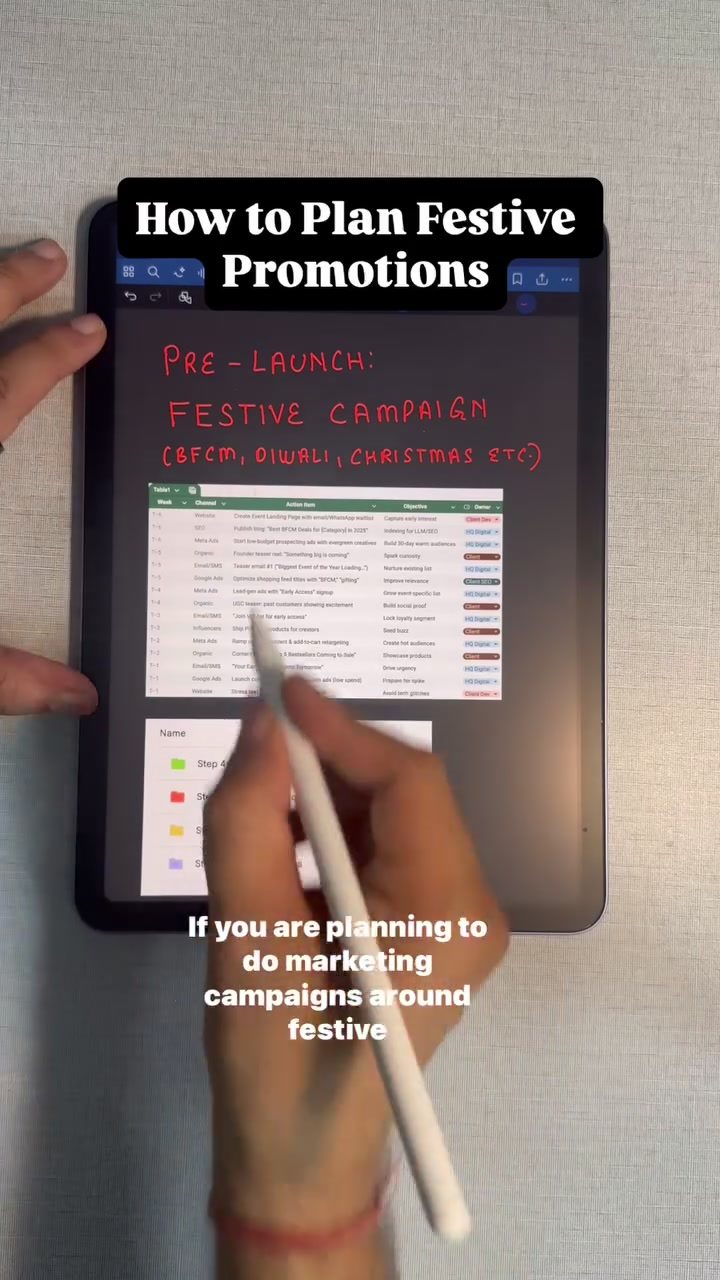
Six-Week Pre-Launch Timeline
Six Weeks Before
Begin by focusing on your website and SEO strategies. This is the ideal time to create landing pages, email, and WhatsApp templates tailored for the festive season. Publish a blog post highlighting the best deals for your top-selling categories, incorporating keywords like "Black Friday Cyber Monday (BFCM)", "Diwali", and "Christmas". This combination will enhance your chances of ranking higher on search engines and large language models.
Additionally, if you’re a new business, start running low-budget prospecting ads on Meta (formerly Facebook) using evergreen creatives. This will help generate interest and gather data for your upcoming campaigns.
Five Weeks Before
Shift your focus to organic content and email marketing. Create a teaser reel featuring your founder talking about an exciting upcoming event. At the email and SMS level, start sending teaser emails, with the first one highlighting the biggest event of the year. Optimize your Google Ads feed titles with relevant keywords like "BFCM" and "gifting".
Four Weeks Before
Engage with your audience through lead generation ads on Meta, especially if you’re launching a new product. Encourage user-generated content (UGC) by having past customers share their excitement about the upcoming offers. Share these UGC teasers on your platforms to build anticipation.
Three Weeks Before
Encourage your audience to join your VIP list for early access to your sales. At the influencer level, start shipping PR kits and products to creators to generate buzz.
Two Weeks Before
Ramp up your Meta ads with view content and add-to-cart retargeting, especially if you’re a new business. Create a content series featuring your top five bestsellers that will be on sale during the festive period. Share this series on your platforms to keep your audience engaged.
One Week Before
Send out emails and SMS updates about early access starting the next day. Most sign-ups for early access will happen 24 hours before your campaign goes live, so be prepared for a surge in interest.
Final Preparations
Google Ads
From a Google Ads perspective, either launch competitor conquest search keywords or create a new campaign structure and keep it in draft. This will help you stay competitive and prepared for any last-minute adjustments.
Website Optimization
Ensure your website is ready for the influx of traffic by stress testing the payment flow and load speed of critical pages. This will prevent any technical issues and provide a seamless experience for your customers.
Breakdown of the Approach
To effectively execute your festive promotions, break down your approach into four key parts:
- Identify Your Anchor Event: Choose a primary event (e.g., BFCM, Diwali, Christmas) and create a detailed playbook around it.
- Pre-Launch Content and Ads Calendar: Plan and schedule your content and ads well in advance to ensure timely execution.
- VIP Early Access Rollout: Create a strategy for your VIP early access program to build excitement and drive early sales.
- Event Command Center: Set up a command center to monitor all activities across different channels on an hourly basis during the live event. This will help you respond quickly to any issues or opportunities.
Practical Tips
- Start Early: Begin preparations at least six weeks before the campaign goes live. This gives you ample time to create content, optimize your website, and run test ads.
- Leverage Multiple Channels: Use a mix of website updates, SEO, Meta ads, organic content, email/SMS, and Google Ads to reach a wider audience.
- Engage Your Audience: Create teaser content and encourage user-generated content to build anticipation and engagement.
- Optimize for Search: Incorporate relevant keywords in your blog posts, ads, and shopping feeds to improve your search engine rankings.
- Monitor and Adjust: Use an event command center to monitor your campaign's performance and make real-time adjustments as needed.
Important Takeaways
- Planning is Key: A well-planned timeline ensures that all aspects of your campaign are covered, from website updates to social media engagement.
- Engage Early and Often: Start engaging your audience well in advance with teaser content and user-generated content to build excitement.
- Leverage Multiple Channels: Use a mix of marketing channels to reach a wider audience and maximize your impact.
- Optimize for Search: Incorporate relevant keywords in your content to improve your search engine rankings.
- Monitor and Adjust: Set up a command center to monitor your campaign's performance and make real-time adjustments.
Conclusion
Planning festive promotions requires a structured approach and strategic use of various marketing channels. By following a six-week pre-launch timeline, optimizing your website and ads, and engaging your audience through teaser content and user-generated content, you can maximize your reach and conversions during festive seasons. Break down your approach into manageable parts, set up a command center, and be ready to adjust your strategy in real-time to ensure a successful campaign.
Questions readers ask
When should I start planning my festive promotions?
Planning for festive promotions should begin at least six weeks before the event. This time frame allows you to thoroughly analyze past performance, identify trends, and create a comprehensive strategy that covers all aspects, from website optimization to marketing campaigns.
What are the key steps in website optimization for festive promotions?
Key steps include enhancing site speed, ensuring mobile responsiveness, and creating dedicated landing pages for promotions. Additionally, update your site's navigation to highlight festive deals and improve the overall user experience to drive sales.
How can I leverage SEO for festive promotions?
Focus on keyword research and incorporate festive-related keywords into your content. Create blog posts, guides, and product descriptions that align with the festive theme. Additionally, optimize your meta tags, headers, and URLs to improve search engine rankings.
What role does organic content play in festive promotions?
Organic content helps generate buzz and engagement. Share festive-themed blog posts, social media updates, and user-generated content. Engaging organic content can build anticipation and drive traffic to your site, increasing the likelihood of conversions.
How can email marketing boost my festive sales?
Email marketing allows you to reach customers directly with personalized offers and updates. Start with a teaser campaign to build excitement, followed by promotional emails that highlight special deals and exclusive offers. Segment your email list to target different customer groups effectively.
What are some effective SMS marketing strategies for festive events?
SMS marketing can be highly effective for time-sensitive promotions. Use it to send flash sales alerts, limited-time offers, and reminders about upcoming events. Keep messages concise and include clear calls-to-action to maximize engagement and drive immediate sales.
How can I use Google Ads to enhance my holiday promotion efforts?
Google Ads can significantly boost your visibility during festive seasons. Create targeted ad campaigns using relevant keywords, and optimize your ad copy and landing pages for a seamless customer experience. Use remarketing lists to reach users who have previously shown interest in your products.
Recent articles
Fresh deep dives from the latest Reels we unpacked.




Comments
Be the first to comment.