AI Mental Models and Learning
Artificial Intelligence (AI) is transforming how we work, think, and solve problems. The future belongs to those who understand AI beyond just the tools; who grasp the layers and learn to orchestrate tasks effectively. 2026 is just around the corner, and those who stand out will not be the ones who know how to use ChatGPT or Perplexity, but those who know the full stack of AI.
Why Understanding AI Layers Matters
AI operates in multiple layers, each with its own function and complexity. At the most basic level, AI tools are straightforward to use. But the real leverage comes from understanding and utilizing layers 3 and beyond. This involves strategic thinking about how different components of AI can work together to solve complex problems.
The Layers of AI
-
Tools:
- These are the most accessible parts of AI, such as ChatGPT, Perplexity, and other AI-driven applications. They are designed to be user-friendly and perform specific tasks efficiently.
-
Workflows:
- Workflows involve breaking down tasks into smaller, manageable steps. For example, an AI-driven project might start with data collection, move to data analysis, and then to generating insights. Each step can be assigned to different AI tools or systems.
-
Automation:
- Automation goes beyond task completion – it involves creating systems that can operate independently or with minimal human intervention. Think of an AI system that can manage a customer service chatbot, handle data entry, and generate reports automatically.
-
Products:
- Products are applications built with AI technologies, such as apps that use machine learning algorithms to provide personalized recommendations or predictive analytics.
Beyond Prompting: AI Orchestration
Prompting – the act of giving commands to AI – is often overemphasized as a skill. In reality, thinking in systems and orchestrating AI tasks is far more valuable. AI orchestration involves breaking down problems into smaller steps, assigning parts to AI, reviewing the outputs, and feeding corrections back into the system. This iterative process is what truly leverages the power of AI.
The Importance of Systems Thinking
Systems thinking means understanding how different components of a system interact and influence each other. In the context of AI, this involves recognizing that AI tools, workflows, and products are interconnected and that their effectiveness depends on how well they work together.
Practical Tips for AI Literacy
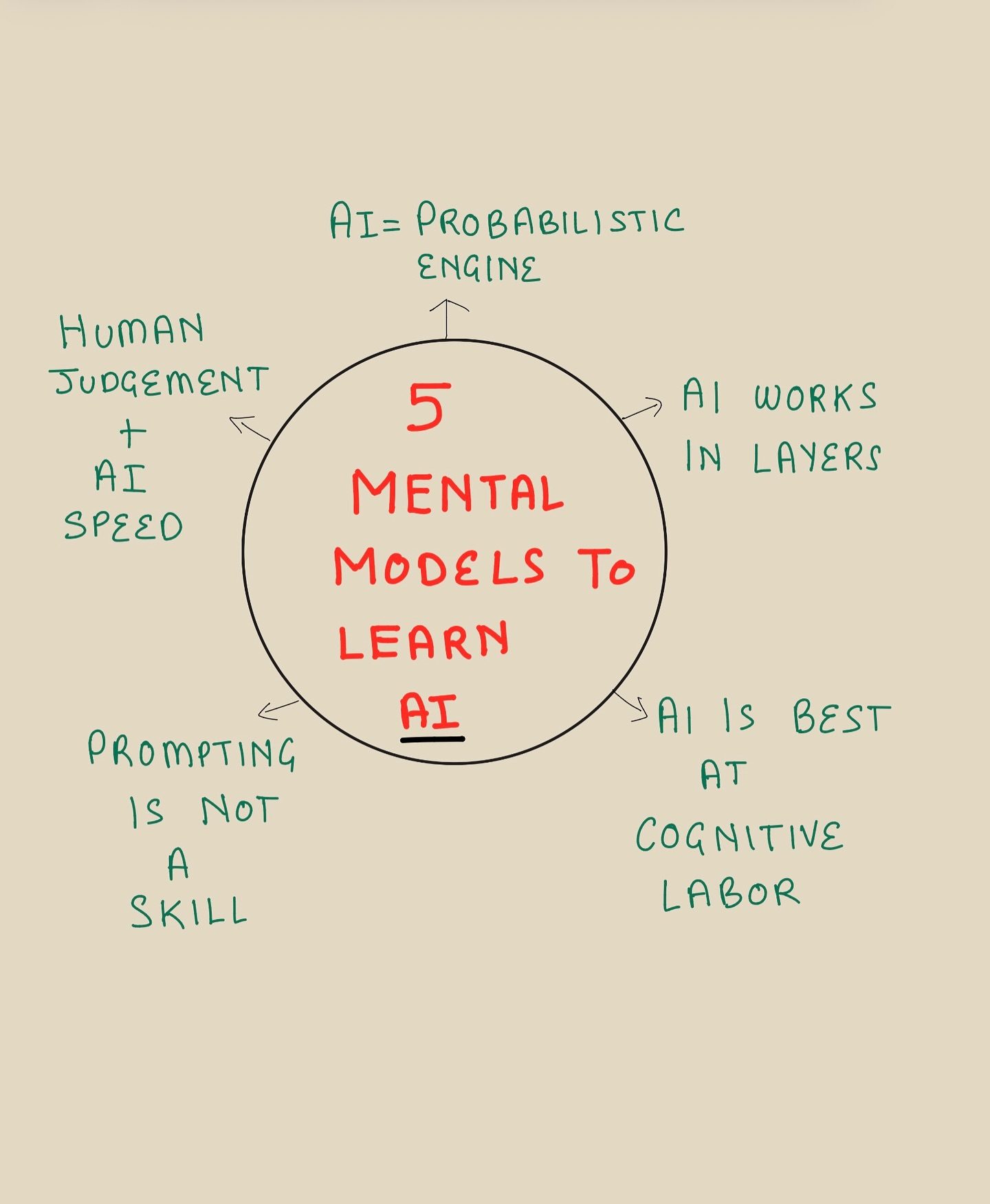
Mental Models to Learn
To fully understand AI, it’s essential to learn specific mental models. These models help in conceptualizing how AI operates and how it can be applied to real-world problems. Some key mental models to consider include:
- Probabilistic Thinking: Understanding that AI operates on probabilities rather than absolutes.
- Cognitive Labor: Recognizing AI's strengths in handling cognitive tasks like data analysis and pattern recognition.
- Human Judgment: Knowing when to rely on AI and when to intervene with human judgment.
30-Day AI Literacy Plan
For those looking to become proficient in AI, a structured learning plan can be incredibly beneficial. The 30-Day AI Literacy Plan is designed to take users from beginner to power user status. Here’s a breakdown of what each day might entail:
-
Day 1: What AI Is and Is Not
- Understand the basics of AI, its capabilities, and limitations.
-
**Day 2: What is an LLM (Large Language Model)?
- Learn about the architecture and functioning of large language models.
-
Day 3: Why AI Hallucinates
- Explore the concept of AI hallucinations and how to mitigate them.
-
Day 30: Advanced AI Orchestration
- By the end of the 30 days, learners should be able to orchestrate complex AI systems and workflows.
Important Takeaways
The Future Belongs to AI Orchestrators
As AI continues to evolve, the true power will lie in the hands of those who can orchestrate its components effectively. This involves understanding the layers of AI, thinking in systems, and applying practical mental models.
Prompting is Not a Skill
While knowing how to prompt AI tools is useful, it is not the key to mastery. The real skill lies in orchestrating AI tasks and understanding how different components interact.
Human Judgment Remains Crucial
AI is a powerful tool, but it operates on probabilities and algorithms. Human judgment remains crucial for making final decisions and ensuring that AI outputs align with real-world needs and ethical considerations.
Conclusion
Knowing how to use AI tools like ChatGPT or Perplexity is just the beginning. The future belongs to those who understand the full stack of AI, from tools to automation, and can orchestrate AI tasks effectively. By focusing on systems thinking, mastering mental models, and following a structured learning plan, anyone can become proficient in AI and stand out in the coming years.
Questions readers ask
What are the different layers of AI, and why are they important to understand?
AI operates in multiple layers, each with its own function and complexity. The layers range from simple tools to complex automation and product development. Understanding these layers is crucial because it allows you to leverage AI more effectively, moving beyond basic tool use to strategic problem-solving and automation.
How can understanding AI layers enhance my problem-solving skills?
By grasping the different layers of AI, you can learn to orchestrate tasks across these layers. This means you can break down complex problems into manageable parts and use the appropriate AI tools or systems to address each part, leading to more effective and innovative solutions.
What does it mean to 'orchestrate tasks' across AI layers, and why is it beneficial?
Orchestrating tasks across AI layers involves coordinating different AI components and tools to work together seamlessly. This is beneficial because it allows you to automate workflows, enhance efficiency, and create more sophisticated AI-driven products and solutions. It goes beyond using individual tools to creating integrated AI systems.
What kind of strategic thinking is involved in mastering AI layers?
Mastering AI layers requires strategic thinking about how different AI components can complement each other. This involves understanding the strengths and limitations of each layer, planning how to integrate them, and anticipating how they will interact to solve complex problems or create new products.
How can learning AI prompting skills improve my AI literacy?
Learning AI prompting skills is essential for effective communication with AI systems. It enables you to input the right data, ask the right questions, and extract meaningful insights. This skill set enhances your overall AI literacy, making you more proficient in using and integrating AI tools and systems across different layers.
What are AI mental models, and how do they contribute to AI learning?
AI mental models are frameworks that help you understand and navigate the complexities of AI. They provide a structured way to think about AI systems, their components, and their interactions. By using mental models, you can better grasp how to apply AI to real-world problems, making your learning process more systematic and effective.
Why is it important to go beyond just using AI tools in 2026?
In 2026, the landscape of AI will be more competitive. Those who stand out will be those who understand the full stack of AI, from basic tools to advanced automation and product development. Simply knowing how to use AI tools will not be enough; you'll need to understand how to integrate and deploy these tools within a broader AI strategy and systems design.
Recent articles
Fresh deep dives from the latest Reels we unpacked.




Comments
Be the first to comment.