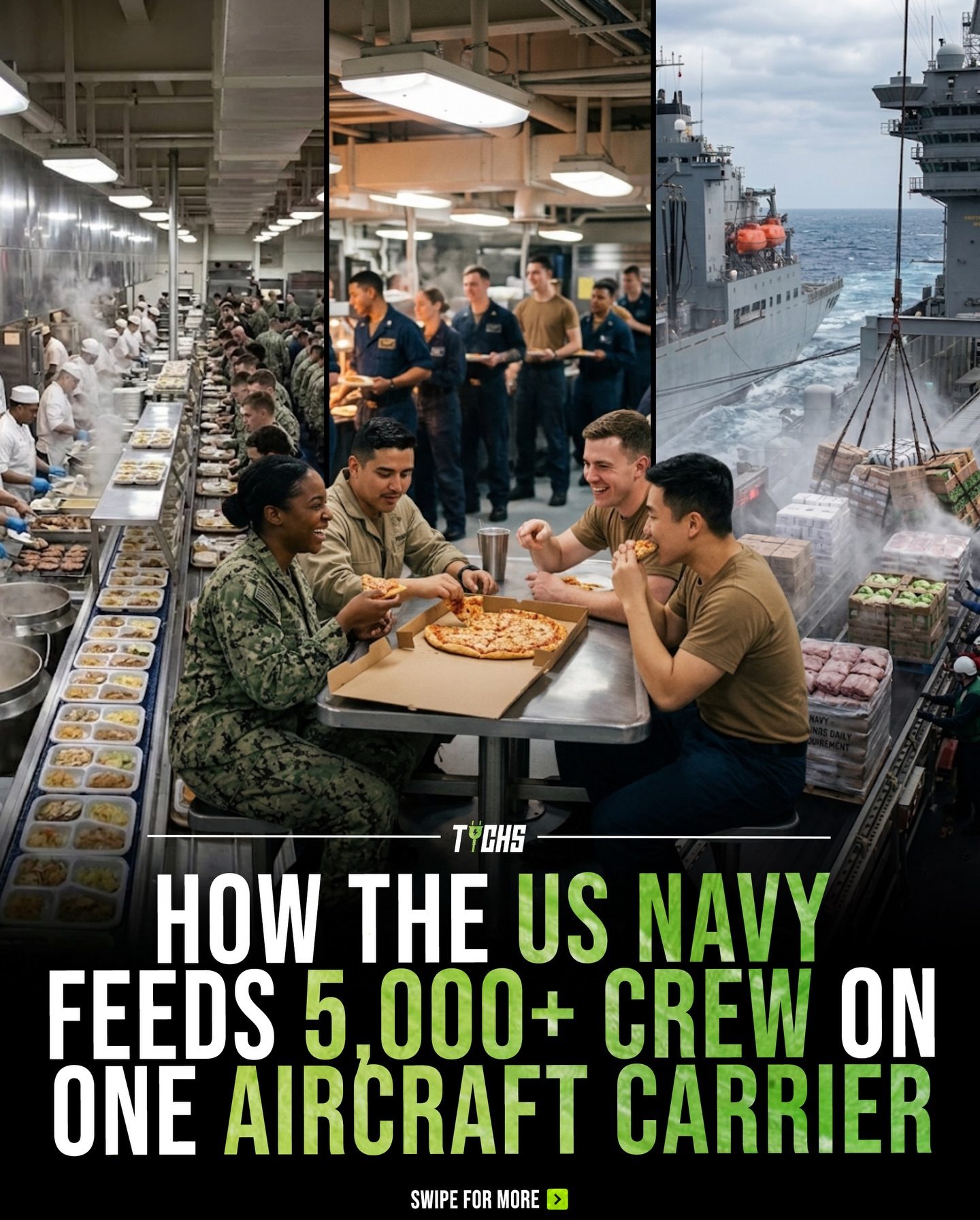
Feeding Thousands at Sea: US Navy Food Operations
Feeding thousands of sailors on a single aircraft carrier is a monumental logistical challenge. On vessels like the USS Gerald R. Ford and Nimitz-class aircraft carriers, the operation involves precision planning, nonstop execution, and a relentless focus on detail. This ensures that crew members remain fueled, focused, and mission-ready every day, even during prolonged deployments.
Context: Why This Matters
The role of food in naval operations extends far beyond mere sustenance. It is a critical factor in maintaining performance, morale, and operational success. Sailors on these ships consume approximately 17,000 meals daily, requiring tons of food supplies and the dedication of large kitchen teams working around the clock. Balanced nutrition and rotating menus are essential to keep crews healthy and efficient.
Main Discussion
The Scale of the Operation
Feeding over 5,000 crew members on a single aircraft carrier is no small feat. The daily food cost ranges between $45,000 and $65,000, underscoring the immense scale of the operation. Meals provide approximately 2,850 calories for men and 2,100 for women, ensuring that sailors have the energy they need to perform their duties effectively. Food planners also consider dietary restrictions, including allergies and religious diets, to accommodate the diverse needs of the crew.
Logistical Challenges
The logistical challenges of supplying food to an aircraft carrier are vast and multifaceted. Ships like the USS Gerald R. Ford and Nimitz-class carriers require frequent resupply missions to deliver hundreds of thousands of pounds of food while the ship remains in motion. This requires meticulous planning, coordination, and execution. Resupply missions often involve helicopters delivering essential supplies, ensuring a constant flow of provisions to the ship.
The operation is further complicated by the fact that these ships do not have the luxury of docking frequently. This means that food supplies must be carefully managed to ensure that there is always enough to go around. Food planning involves a complex system of rotating menus and constant resupply, ensuring that sailors have a varied and nutritious diet.
Nutritional Considerations
Nutrition plays a pivotal role in the performance and well-being of sailors. Meals are carefully designed to provide the necessary calories and nutrients to sustain high levels of physical and mental performance. The daily calorie intake for men is approximately 2,850, while women receive around 2,100 calories. This ensures that sailors have the energy to perform their duties effectively and remain focused on their missions.
In addition to calorie requirements, the meals are also carefully planned to include a variety of nutrients, including proteins, vitamins, and minerals. This ensures that sailors remain healthy and energetic, even during long deployments. Special attention is given to dietary restrictions, including allergies and religious diets, to accommodate the diverse needs of the crew.
The Role of Technology
Technology plays a critical role in the successful execution of food operations on aircraft carriers. Advanced logistics systems and supply chain management tools are used to ensure that food supplies are delivered on time and in the right quantities. These technologies help to optimize the use of resources and minimize waste, ensuring that the operation runs smoothly and efficiently.
Furthermore, the use of technology in food preparation and storage helps to maintain the quality and safety of the food. This is particularly important in a maritime environment, where conditions can be challenging and unpredictable.
Practical Tips for Efficient Food Operations
Planning and Organization
Efficient planning and organization are key to the success of food operations on aircraft carriers. This involves careful planning of menus, coordination of supply chains, and management of resources. Effective communication and coordination among the kitchen teams, logistics personnel, and command staff are essential to ensure that the operation runs smoothly.
Resource Management
Efficient resource management is critical to the success of food operations. This involves optimizing the use of food supplies, minimizing waste, and ensuring that resources are used efficiently. Advanced supply chain management tools and logistics systems can help to achieve this, ensuring that food supplies are delivered on time and in the right quantities.
Technological Integration
The integration of technology into food operations can greatly enhance efficiency and effectiveness. Advanced logistics systems, supply chain management tools, and food preparation technologies can help to streamline operations, reduce waste, and ensure the quality and safety of the food. This is particularly important in a maritime environment, where conditions can be challenging and unpredictable.
Important Takeaways
Feeding thousands of sailors on a single aircraft carrier is a massive logistical operation that requires precision planning, nonstop execution, and a relentless focus on detail. The daily food cost, ranging between $45,000 and $65,000, underscores the immense scale of the operation. Balanced nutrition, rotating menus, and constant supply chains are essential to keep crews healthy, focused, and efficient. Technology plays a critical role in the successful execution of these operations, ensuring that food supplies are delivered on time and in the right quantities.
Conclusion
The operation of feeding thousands of sailors on a single aircraft carrier is a testament to the US Navy's logistical prowess and commitment to maintaining operational readiness. Through precision planning, nonstop execution, and the integration of advanced technologies, the Navy ensures that its crew members remain fueled, focused, and mission-ready. This logistical feat is a critical factor in maintaining performance, morale, and operational success during long deployments.
Questions readers ask
How many meals are prepared daily on an aircraft carrier like the USS Gerald R. Ford?
Approximately 17,000 meals are prepared daily to feed the crew of over 5,000 sailors. This includes a variety of meal options to accommodate different preferences and dietary needs.
What is the daily food cost for feeding sailors on an aircraft carrier?
The daily food cost for feeding sailors on an aircraft carrier like the USS Gerald R. Ford ranges from $45,000 to $65,000. This cost accounts for the large-scale operation, including food procurement and preparation.
How does the US Navy ensure a constant supply of provisions for sailors?
The US Navy maintains a constant resupply of provisions through meticulous planning and coordination. This involves regular deliveries and strategic management of food storage to ensure that the crew has access to necessary supplies, even during prolonged deployments.
What dietary needs do the US Navy food operations accommodate?
The US Navy food operations accommodate a variety of dietary needs, including those related to religious beliefs, medical requirements, and personal preferences. This ensures that all sailors have access to meals that meet their specific needs, contributing to overall health and well-being.
How does the US Navy prepare for feeding sailors with diverse dietary needs?
The US Navy prepares for feeding sailors with diverse dietary needs through careful planning and coordination. This includes having a variety of meal options available to accommodate different dietary needs and ensuring that sailors have access to necessary supplies and resources for their specific needs.
What role does food play in maintaining operational success in the US Navy?
Food plays a critical role in maintaining operational success in the US Navy by ensuring that sailors stay fueled, focused, and healthy. Proper nutrition contributes to performance, morale, and overall mission readiness, which are essential for the success of naval operations.
Recent articles
Fresh deep dives from the latest Reels we unpacked.




Comments
Be the first to comment.