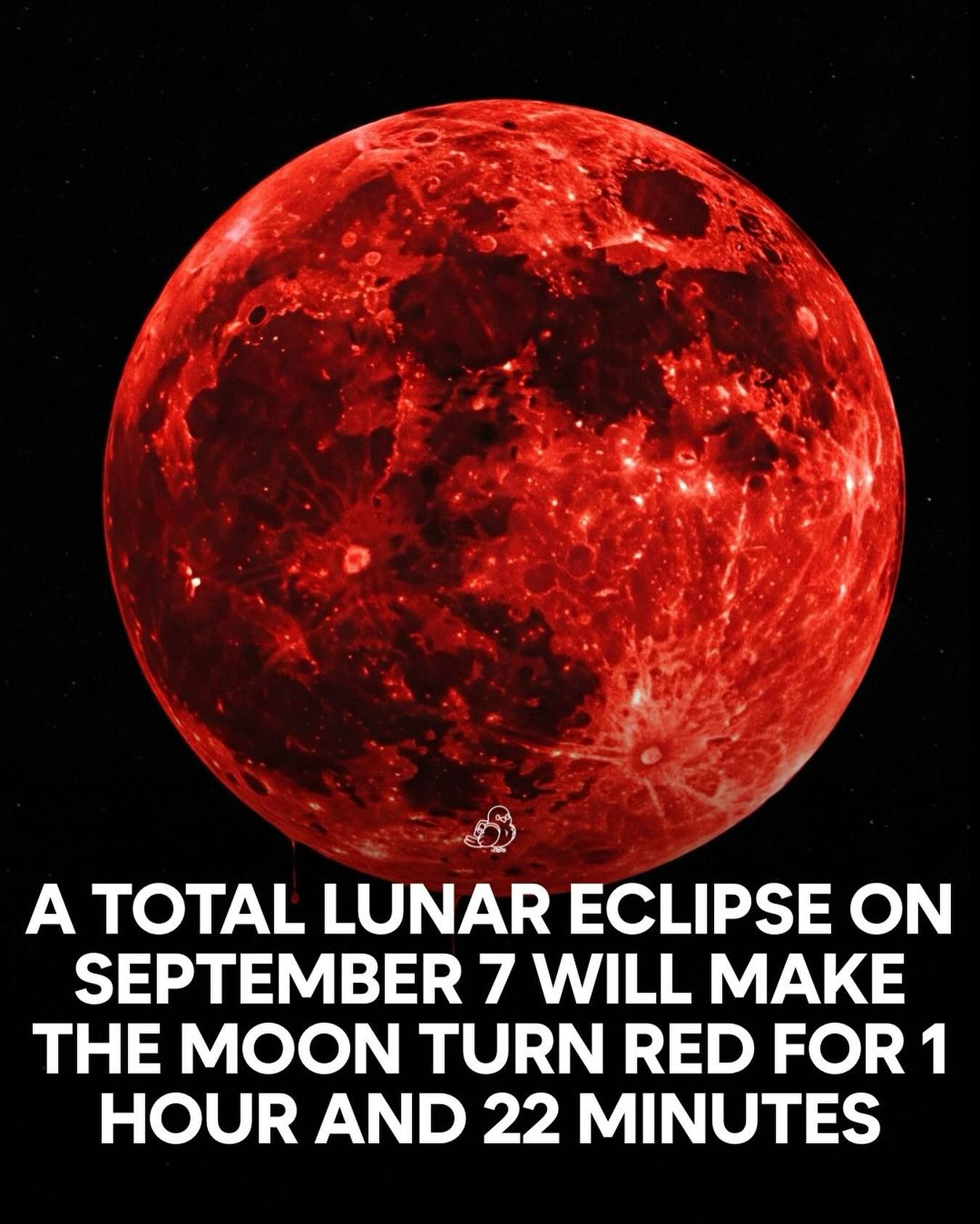
Lunar Eclipse 2025
On September 7, 2025, stargazers will have the opportunity to witness a celestial spectacle: a total lunar eclipse that will turn the moon a stunning blood red for 1 hour and 22 minutes. This event will be visible in its full glory across Asia, Australia, Eastern Africa, and the Indian Ocean region. Those in parts of Europe and New Zealand will also catch a partial view, but the Americas will miss out on this cosmic show.
Why This Matters
Lunar eclipses are fascinating astronomical phenomena that offer a unique glimpse into the workings of our solar system. During a total lunar eclipse, the Earth passes directly between the Sun and the Moon, casting a shadow on the lunar surface. This alignment allows for the moon to be bathed in the Earth’s atmosphere, which scatters sunlight and creates a deep red hue. This natural spectacle is not only visually stunning but also offers insights into the interplay of celestial bodies.
Understanding Lunar Eclipses
The Science Behind the Red Moon
During a total lunar eclipse, the moon does not disappear but instead turns a striking shade of red. This phenomenon is due to Earth’s atmosphere. The atmosphere scatters sunlight, allowing only the longer wavelengths of light—red and orange—to reach the moon. These deep red hues are reflected back, creating the mesmerizing "blood moon" effect. Unlike solar eclipses, which require special glasses for safe viewing, lunar eclipses are completely safe to watch with the naked eye.
Visibility and Timing
On September 7, 2025, the total lunar eclipse will be best viewed in the following regions:
-
Full Glory:
- Asia
- Australia
- Eastern Africa
- Indian Ocean region
-
Partial Views:
- Parts of Europe
- New Zealand
Unfortunately, most of the Americas will not have a front-row seat to this celestial event.
Practical Tips for Viewing the Lunar Eclipse
Finding the Best Viewing Spot
To get the best view of the lunar eclipse, find a location with minimal light pollution and a clear line of sight to the eastern sky. Parks, open fields, and high vantage points are ideal. Consider heading to a local observatory or astronomy club event for an enhanced viewing experience. Remember that the moon will be high in the sky, making it visible from many locations.
What to Bring
While no special equipment is needed, a pair of binoculars or a small telescope can enhance the viewing experience. A comfortable chair or blanket, warm clothing, and snacks are also recommended for a cozy night under the stars.
Timing the Eclipse
The lunar eclipse will begin at a specific time, so it’s essential to have accurate timings for the event. Eclipse maps and detailed astronomical charts are available to help you plan your viewing schedule. Mark the start, peak, and end times of the eclipse to ensure you don’t miss any part of the show.
Documentation and Sharing
Capture the moment by taking photos or videos of the lunar eclipse. A smartphone with a good camera can be sufficient, but a DSLR or mirrorless camera with a tripod will yield better results. Share your experiences and photos with fellow astronomy enthusiasts on social media or astronomy forums.
Important Takeaways
- Safe Viewing: Lunar eclipses are completely safe to watch with the naked eye, unlike solar eclipses.
- Optimal Viewing Conditions: Find a dark location with minimal light pollution.
- Best Regions: The eclipse will be best viewed from Asia, Australia, Eastern Africa, and the Indian Ocean region. Partial views in parts of Europe and New Zealand.
- Timing: Check for exact timings and plan your viewing schedule accordingly.
Conclusion
The total lunar eclipse on September 7, 2025, is a must-see event for astronomy lovers and casual stargazers alike. This rare celestial phenomenon offers a stunning display of the moon turning blood red, a sight that is both awe-inspiring and scientifically intriguing. Whether you’re a seasoned astronomer or a curious observer, this event provides an excellent opportunity to appreciate the wonders of the night sky. Get ready to mark your calendar and prepare for a night to remember!
Questions readers ask
When and where will the September 2025 total lunar eclipse be visible?
The total lunar eclipse on September 7, 2025, will be visible in its entirety across Asia, Australia, Eastern Africa, and the Indian Ocean region. Parts of Europe and New Zealand will see a partial view, but the Americas will not be able to witness this event.
How long will the blood moon phase last during the September 2025 lunar eclipse?
The blood moon phase, when the moon appears a striking red color, will last for approximately 1 hour and 22 minutes during the September 2025 total lunar eclipse.
What causes the moon to appear red during a total lunar eclipse?
During a total lunar eclipse, the Earth comes between the Sun and the Moon, casting a shadow on the lunar surface. The Earth's atmosphere scatters the sunlight, and the remaining light that reaches the moon is predominantly red, giving it a blood-red glow.
Does the September 2025 lunar eclipse have any special significance?
The September 2025 lunar eclipse is notable for its long duration of totality and the fact that it is the last major lunar eclipse that will occur in this decade. The eclipse also provides a chance to observe a spectacular celestial phenomenon.
Can I photograph the September 2025 lunar eclipse with a smartphone?
Yes, you can photograph the September 2025 lunar eclipse with a smartphone, but the results will be best if you use a tripod or a stable surface to avoid blur. You might also want to consider using the night mode or manual settings to capture the best details of the blood moon.
Will there be any other lunar eclipses in 2025 besides the one in September?
There will be another lunar eclipse in 2025, on March 3, but it will be a partial lunar eclipse and will not be visible from the same regions as the September eclipse. The September event is the only total lunar eclipse of 2025.
What should I look for when observing the September 2025 lunar eclipse?
During the eclipse, pay close attention to the color and brightness of the moon as it moves through the Earth's shadow. You may also notice variations in color and intensity. This is an opportunity to observe the dynamic interplay of light and shadow in our solar system.
Related deep dives
Similar reads based on topic and creator.




Recent articles
Fresh deep dives from the latest Reels we unpacked.




Comments
Be the first to comment.