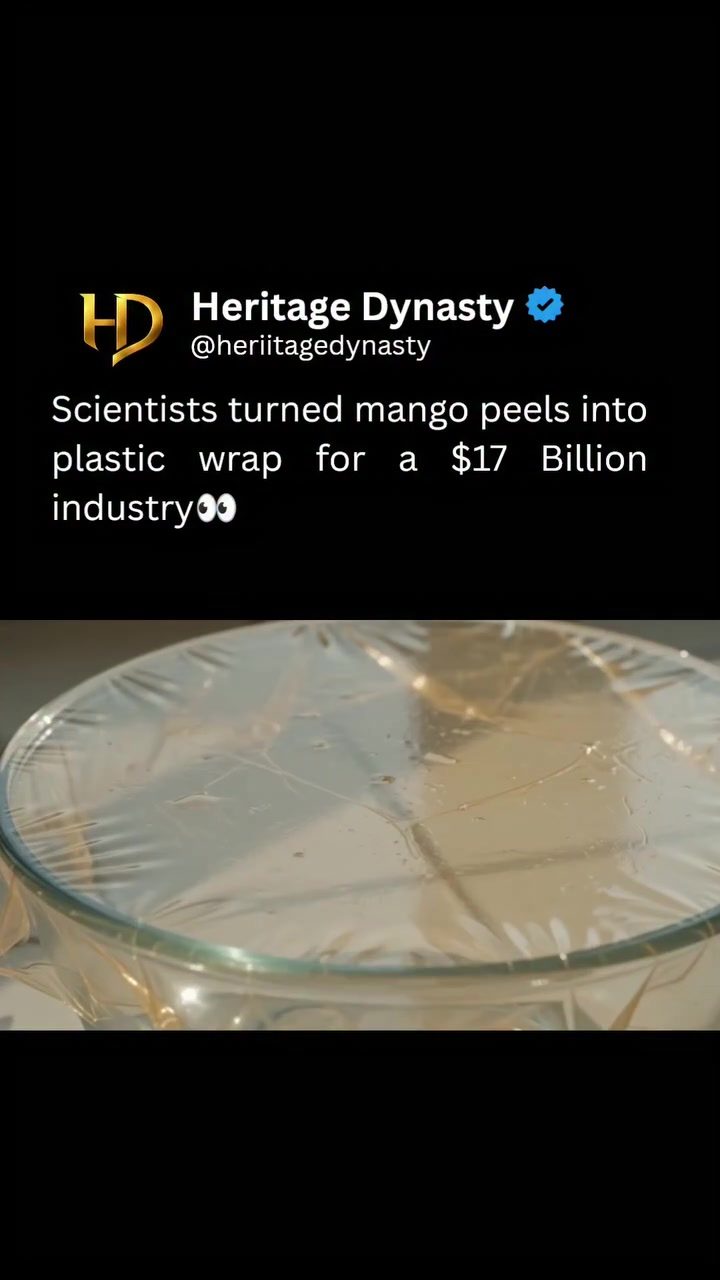
Mango Peel Plastic Wrap: An Innovative Solution for a Sustainable Future
Waste is a significant issue in the fruit industry, with discarded peels often sent to landfills, contributing to environmental degradation. However, scientists are working to transform this waste into valuable resources, focusing on mango peels as a key component. Mango peel, a by-product of the fruit industry, has been innovatively transformed into a biodegradable bioplastic film. This development has the potential to revolutionize the global bioplastics market, valued at over $17 billion, and reduce our dependence on petroleum-based plastics.
Why This Matters
Plastic waste is a significant problem in today’s world, with millions of tons of plastic waste accumulating in landfills and oceans. Many of these plastics are derived from petroleum-based sources, which are not only non-renewable but also contribute to environmental pollution and climate change. The development of biodegradable bioplastic films from mango peels offers a sustainable and eco-friendly alternative to traditional petroleum-based plastics. This innovation not only reduces waste but also provides a new revenue stream for the agricultural sector by repurposing a waste product into a valuable material.
The Innovation and Science Behind It
From Peel to Plastic
The process of transforming mango peels into plastic wrap involves enzymatic hydrolysis. This process converts the discarded fruit waste into a liquid form, further processed into a plastic sheet. The resulting bioplastic film has tensile strength equivalent to commercial petroleum-based food wrap, making it a viable substitute for conventional plastics.
Processing Stages
- Initial Mixture: The first visual step is to see a mixture of mango peels in a liquid form in a stainless steel container. This liquid is the result of the enzymatic hydrolysis process, which breaks down the mango peels into a usable form.
- Processing the Mixture: The mixture is then processed through a machine. This step involves converting the liquid into a plastic sheet. The machine plays a critical role in ensuring the uniformity and strength of the final product.
- Final Product: Finally, the video displays the finished bioplastic film, showcasing the potential of this innovative solution.
Economic Impact
The global bioplastics market is valued at over $17 billion, and this innovative bioplastic film taps into this lucrative market. By repurposing agricultural waste, this innovation offers a sustainable and cost-effective alternative to petroleum-based plastics. The bioplastic film not only matches the durability of conventional plastic wrap but also meets the biodegradability standards, making it a more eco-friendly option.
Practical Tips for Implementing Mango Peel Plastic Wrap
While the bioplastic film is still in the research stage, its potential for commercial use is enormous. Here are some practical tips for those interested in adopting this innovation:
For Businesses
- Partner with Research Institutions: Collaborate with universities or research institutions that are developing mango peel plastic wrap. This will provide access to the latest research and prototypes.
- Invest in Sustainable Solutions: As a business, consider investing in sustainable materials like mango peel plastic wrap. This can help reduce your carbon footprint and enhance your brand’s eco-friendly image.
- Engage in Pilot Programs: Participate in pilot programs to test the bioplastic film in real-world scenarios. This will provide valuable feedback and data for further development.
For Consumers
- Support Sustainable Brands: Look for brands that are already using sustainable materials. Supporting these brands encourages more companies to adopt eco-friendly practices.
- Stay Informed: Follow developments in bioplastic research and stay informed about new products and innovations. This will help you make more conscious purchasing decisions.
Important Takeaways
The transformation of mango peels into plastic wrap is a game-changer in the bioplastics industry. Here are some key takeaways:
- Sustainability: The use of mango peels as a raw material reduces waste and promotes sustainable practices.
- Durability: The bioplastic film has tensile strength equivalent to traditional petroleum-based plastics, making it a reliable alternative.
- Economic Potential: With a global market valued at over $17 billion, this innovation offers significant economic benefits.
- Environmental Impact: The biodegradable nature of the film reduces environmental pollution and contributes to a greener future.
Conclusion
The development of plastic wrap from mango peels highlights the potential of agricultural waste as a valuable resource. This innovation not only addresses the issue of plastic waste but also provides a sustainable and eco-friendly solution for the bioplastics industry. As research continues, the potential for commercial use and widespread adoption of mango peel plastic wrap grows. By embracing this technology, we can move towards a more sustainable future, reducing our dependence on petroleum-based plastics and repurposing waste into valuable materials.
Questions readers ask
What is mango peel plastic and how does it benefit the environment?
Mango peel plastic is a biodegradable film created from waste mango peels. It benefits the environment by reducing fruit waste sent to landfills and providing an eco-friendly alternative to petroleum-based plastics, which helps decrease environmental degradation.
How is mango peel plastic produced?
The process involves extracting valuable components from mango peels and transforming them into a bioplastic film. This innovative method turns what was once considered waste into a useful, sustainable material.
Can mango peel plastic replace traditional plastic wraps?
Yes, mango peel plastic can serve as a viable alternative to traditional plastic wraps. It offers similar protective qualities while being biodegradable, making it an attractive option for eco-friendly packaging and reducing reliance on petroleum-based plastics.
What impact does this innovation have on the bioplastics industry?
The development of mango peel plastic introduces a new, sustainable material to the commercial bioplastics market. This innovation has the potential to transform industry trends by offering a renewable, biodegradable solution that can compete with conventional plastics.
How does using mango peel plastic help in waste reduction?
By transforming mango peels into plastic wrap, this process directly reduces the amount of fruit waste. It also addresses the broader issue of plastic waste by offering a biodegradable alternative, thereby minimizing the environmental impact of discarded plastics.
What makes mango peel plastic a sustainable bioplastic?
Mango peel plastic is considered a sustainable bioplastic because it is derived from a renewable resource—mango peels—which would otherwise be discarded. It biodegrades naturally, reducing the long-term environmental footprint compared to traditional petroleum-based plastics.
Recent articles
Fresh deep dives from the latest Reels we unpacked.




Comments
Be the first to comment.