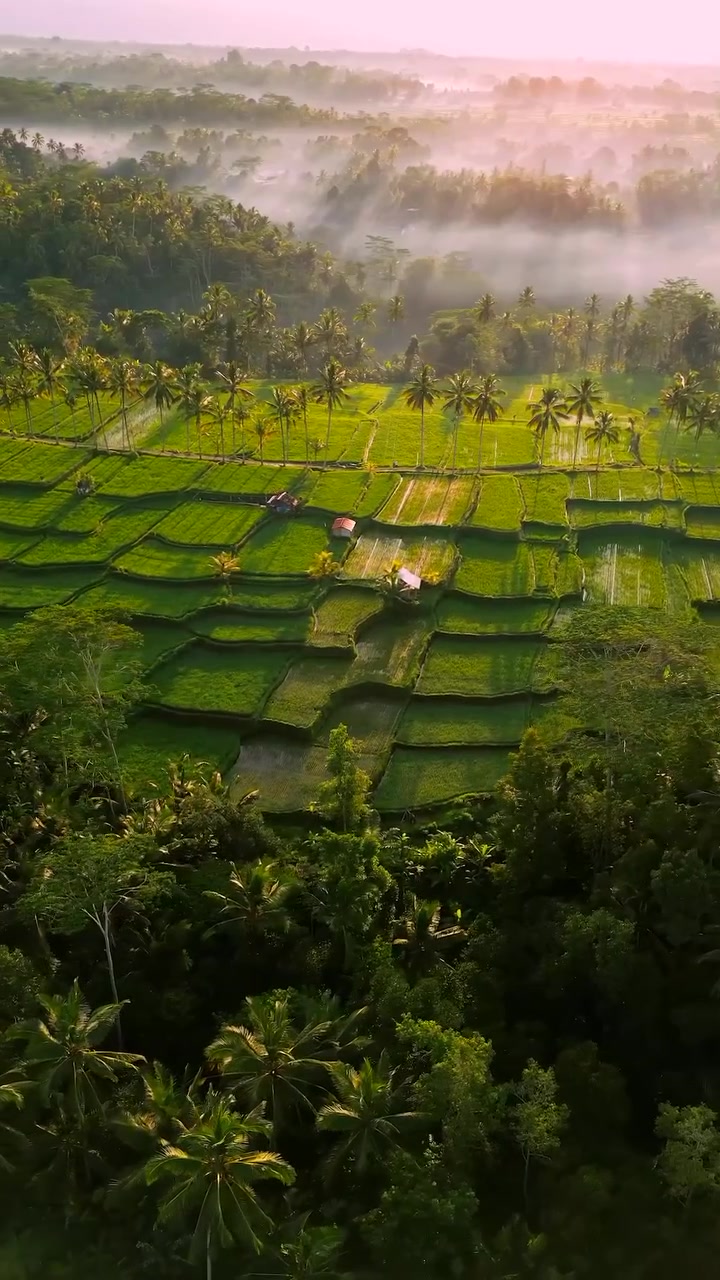
Overlooking the Indonesian island of Bali, the Mancingan Rice Terrace is a breathtaking expanse of emerald green, stretching across the landscape and punctuated by the lush palm trees and mist-kissed mountains. The cascading terraces, a testament to the island’s agricultural heritage, create intricate, Escher-like patterns that ripple across the valley. It is a glimpse of man’s connection to nature and a contrast to the vibrant, bustling tourist destinations of Bali. These rice terraces aren't just a feast for the eyes; they serve as a living museum, embodying centuries of Balinese culture and innovation.
A Living Canvas of Agriculture and Art
The Mancingan Rice Terrace, also known locally as the Mancingan Rice Field, is a traditional engineered farming technique. Carved into the hillsides by the Balinese, intricate irrigation systems deliver water that feeds the terraced crops. These flowing waters are split into canals through carved-out earth. Known as Subak, the irrigation system is a centuries-old tradition where local farmers collectively share water according to ancient Balinese principles. They are not the only Balinese terraced rice field, but the Mancingan Rice Terrace is stunning with its intricate patterns and vibrant green hues. The terraces are lush, and the surrounding tropical foliage is stunning. The landscape is designed for rice growing, and the submerged terraced irrigation is a feast for both the eyes and the brain. Each segment is connected to an intricate system of waterways, ensuring that each step is watered by overflowing from the step above, ensuring a constant supply of water. While the terrrces of Bali are beautiful, they have another meaning, and that's cultural heritage. They stand for centuries of agricultural innovation, and artistry so deeply rooted to the island that it is part of the Balinese identity. The landscape itself is a living testimony to the island’s rich cultural heritage, showcasing the harmony between the Balinese people and their environment. The rice fields are beautiful, but they also tell a story — that of the Balinese people. The rice fields are a canvas of the human connection to nature. They are also a testament to the Balinese people, and the community that built them, and nourished them. They are a testament to resilience.
The Rise of Eco-tourism
Bali has long been a magnet for tourists, but the distinction of being more than just another tourist destination. The island's eco-facilities are attracting tourists who are interested in enjoying the island's culture while being mindful of the environment. Centres like Mancingan Rice Terrace serve as an attraction for these tourists, showcasing a landscape created by the community. Given the opportunity to stay and enjoy Bali's eco-reserves, these tourists are happy to pay the price for a guided tour, walking tours and community-engagement activities in Bali’s eco-tourism sector. The Mancingan Rice Terrace has risen to fame as one of Bali’s most notable sites is a testimonial to the rise of eco-tourism, a trend that has seen tourists increasingly searching for experiences that prioritize sustainable and environmentally friendly practices. However, eco-tourism has also been seen to create issues, and the tension between the locals and the tourists have been a strain to the island. If sustainable tourism is to be achieved, the inequalities between the tourist and the local community must be addressed. The rice terraces are being built in the manner they have been for centuries, and preserving them is important.
Terraced Olivia
Mancingan Rice Terrace incorporates three separate fields. Each of the fields is part of the terraced rice fields complex. These fields are known as the Upper Terrace, Middle Terrace, and Lower Terrace. The Upper Terrace is positioned at the highest elevation, and is where the water is sourced, and when the water overflows, it cascades downwards into the Lower Terrace. All three fields are interconnected by a subak, which is a traditional Balinese irrigation system. The water in the fields is brought down to the Lower Terraces through a complex network of canals, where the water is stored in a small dam. The lower terrace is the greenest, due to the continuous flow of water. The middle terrace, or the middle field, is where the rice cultivation takes place. The Upper Terrace includes the village of Mancingan. The village has been there for centuries, and has sustained itself by farming rice in the terraced rice fields, and it is a testament to the deep connection to the Balinese culture.
Cultural immersion
The Mancingan Rice Terrace offers an immersive cultural experience where visitors can step back in time and witness the intricate and delicate relationship between humans and nature. Here, one can observe the traditional rice cultivation methods and how the farmers are working together to ensure that the crops are flourishing. The rice terraces are a testament of an ancient technique that balances the art of human labour and nature’s beauty. Each segment is a part of a larger landscape shared by the community. The skills of the farmers that have been passed on through generations are a testament to the relationship with the island and its people. Moreover, every farmer who participates in the Subak irrigation system is a part of the ancient Balinese tradition. The farmers in Bali use the traditional methods of farming to coax rice to grow in rice terraces that overlap each other. The fields are watered by the river flowing through the fields, and the rice fields are allowed to soak and grow. In Bali, the rice culture is a way of life. The ancient Balinese Subak is a way of life that has lasted for centuries.
The Enchanting Panorama
The visual splendor of the Mancingan Rice Terrace is a picturesque backdrop that encapsulates the aesthetic beauty of nature in harmony with the human imagination. From the lush, vibrant mangroves to the dense foliage, the landscape is captivated by a golden sunlight filter that creates a serene and picturesque scene. The broader significance here is not just the landscape, but the method of farming that the Balinese use — one that has not been lost through the passage of time. Indeed, the Balinese concept of Subak is celebrated for its ingenuity and has been recognized as a UNESCO world heritage site. The mist that rolls in and out of the landscape provides the final touch to the landscape. It adds a mysterious touch to the landscape, and accentuates the beauty of the landscape.
Bali by Different Eyes
Before venturing into the rice terraces, it would be wise to brush up on the Balinese culture and customs. The Balinese people have their own culture, and they have a deep connection to their land. To make the most of a trip to Mancingan Rice Terrace, try to understand and appreciate the culture as well. The experience of the rice terraces is enhanced — and also shared — by guided tours. The tours are very popular. The tours, led by trained guides, can offer insight into the cultural nuances and significance of the rice terraces. Tour guides provide information about the intricate irrigation systems and the ancient Balinese traditions that have been passed down. One can choose a self-guided tour or a guided tour, but for tourists who want to learn about the rice terraces, the guided tour is recommended. One can easily walk the rice terraces and see the ancient architecture, the Balinese culture, and the traditional farming methods. For those who have been to Bali before, different eyes might see the landscape differently. It is a journey into an ancient world, where the rhythm of life matches the rhythm of the surrounding.
Time to Enjoy the Beauty
Some of the activities that one can do if you are visiting Mancingan Rice Terrace are:
- Touring the Rice Terraces: This can be enjoyed by walking or trekking. There are walking tours, where you have the opportunity to learn about the Balinese traditions, and the methods of farming.
- Photography: Due to the serene beauty of the landscape, this is an ideal place for photographers. From the sheer beauty of the landscape, the lush green foliage and the intricate water canals, to the serenity of the villages and the mist, the scene offers multiple opportunities for photography. One can also use an aerial view, and capture the vast expanse of the rice fields, which offers a stunning view. Photographers can also visit during different times of the day, and capture the beauty in the morning and the evenings.
Questions readers ask
What makes the Mancingan Rice Terrace unique compared to other rice terraces in Bali?
The Mancingan Rice Terrace stands out due to its intricate patterns and vibrant green hues, which create a stunning visual experience. Unlike other terraces, it's known for its Escher-like designs and the way it seamlessly integrates with the surrounding tropical foliage, making it a unique blend of agriculture and art.
How does the irrigation system at Mancingan Rice Terrace work?
The irrigation system, known as Subak, is a centuries-old Balinese tradition. It involves a network of canals carved into the earth that deliver water to the terraced crops. The system is designed so that each terrace is watered by the overflow from the terrace above, ensuring a constant supply of water to the rice fields.
Can visitors interact with the local community while visiting the Mancingan Rice Terrace?
Yes, the Mancingan Rice Terrace offers guided tours and community-engagement activities, allowing visitors to interact with the local community. This is part of Bali's growing eco-tourism sector, which emphasizes sustainable and environmentally friendly experiences.
What is the cultural significance of the Mancingan Rice Terrace?
The terraces are more than just a beautiful landscape; they represent centuries of Balinese agricultural innovation and artistry. They embody the deep connection between the Balinese people and their environment, serving as a living testament to the island's rich cultural heritage and resilience.
Are there other similar terraces in Bali that offer a comparable experience?
While there are other terraced rice fields in Bali, such as the Tegalalang Rice Terrace, the Mancingan Rice Terrace is unique in its intricate patterns and the way it integrates with the surrounding landscape. Each terrace has its own charm, but Mancingan offers a distinct visual and cultural experience.
What kind of activities can visitors enjoy at the Mancingan Rice Terrace?
Visitors can enjoy walking tours, guided tours, and community-engagement activities. These activities are designed to provide an immersive experience, allowing visitors to learn about the local culture and the agricultural practices that have been honed over centuries.
Related deep dives
Similar reads based on topic and creator.

Recent articles
Fresh deep dives from the latest Reels we unpacked.
Comments
Be the first to comment.