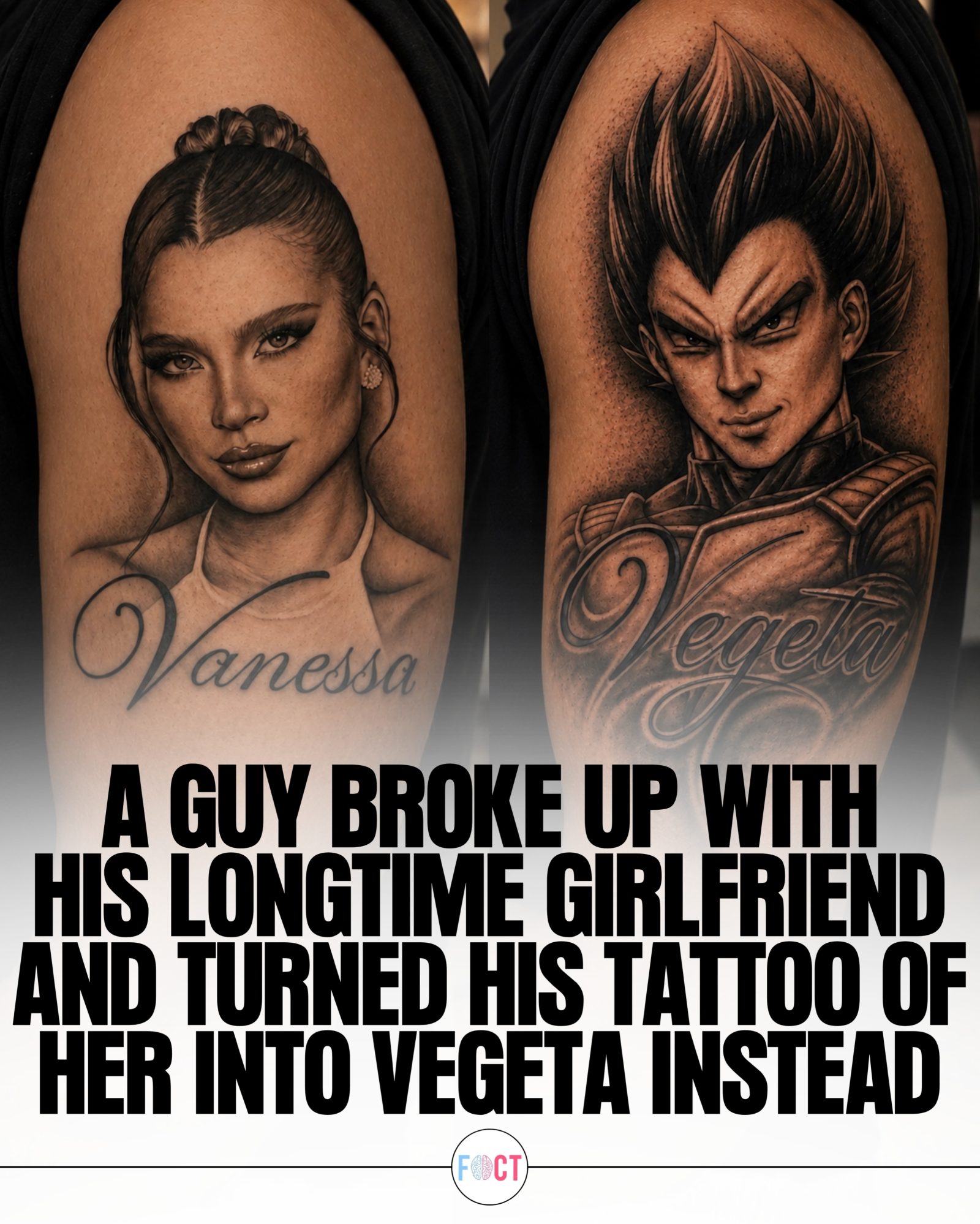
Tattoo Transformation: From Ex-Girlfriend to Vegeta
Tattoos are deeply personal expressions of art, and the story behind the transformation of a portrait tattoo of an ex-girlfriend into a beloved anime character, Vegeta, offers a fascinating glimpse into the world of tattoo artistry. This dramatic change highlights the possibilities for creative rebranding and artistic innovation in the realm of body art.
Context / Why this matters
The story of turning an ex-girlfriend's portrait tattoo into a Vegeta tattoo is more than a viral trend; it's a testament to the versatility and adaptability of tattoo art. It raises questions about how to handle significant life changes, the longevity of tattoos, and the role of art in personal transformation.
Main discussion
The Original Tattoo
The original tattoo was a portrait of a woman named Vanessa, presumably the man's ex-girlfriend. Portrait tattoos are a classic choice, often symbolizing deep emotional connections and cherished memories. These tattoos usually feature detailed facial features, meticulous shading, and intricate color work to capture the essence of the person being depicted.
The Transformation
The transformation of the Vanessa tattoo into a Vegeta tattoo is a striking example of creative reimagining in tattoo art. Vegeta, a character from the popular anime series Dragon Ball Z, is known for his distinctive Saiyan features, including spiky hair and a muscular build. The artist skillfully adjusted the original portrait to reflect these characteristics, transforming Vanessa's face into Vegeta's, and her hair into Saiyan spikes. The name “Vanessa” was cleverly altered to “Vegeta,” completing the dramatic change.
The Artistic Process
The artistic process behind this transformation involves several technical and creative steps. The tattoo artist likely used a combination of techniques, including:
- Covering Existing Ink: The new design must effectively cover the original tattoo, which can be challenging depending on the size, color, and detail of the original work. This often involves using dark inks or extensive shading to conceal the existing design.
- Adapting Features: The artist had to adapt Vanessa's facial features to resemble Vegeta's, which required a keen eye for detail and a deep understanding of both portraiture and anime art styles.
- Style Integration: Integrating the Saiyan hair and other distinctive features of Vegeta into the existing tattoo necessitated a blend of realism and stylization.
The Significance of the Change
The decision to transform the tattoo rather than remove it speaks to the complexities of personal narratives embedded in body art. Removing a tattoo can be costly, time-consuming, and sometimes painful. Additionally, covering up a tattoo with a new design allows for a more meaningful and enduring transformation, turning a painful memory into a new, more positive symbol.
Practical tips
Communicating with Your Tattoo Artist
When considering a dramatic change or cover-up, it's crucial to have open and clear communication with your tattoo artist. Discuss your vision in detail, including any specific design elements you want to incorporate or avoid. Provide reference images to ensure the artist understands your expectations.
Preparing for the Process
A cover-up tattoo typically requires multiple sessions to achieve the desired result. Be prepared for the time commitment, and ensure you're in good physical and mental health for the procedure. Discuss any potential risks or complications with your artist.
Emotional Considerations
Transforming a tattoo that holds significant emotional meaning can be emotionally taxing. It's essential to reflect on your feelings and consider seeking professional advice if needed. Ensure that the new design aligns with your personal narrative and emotional state.
Important takeaways
- Cover-up tattoos offer a meaningful way to transform significant body art.
- Communicating your vision clearly to your tattoo artist is crucial for a successful outcome.
- The process involves technical skill and creative vision, blending new with old.
- Transforming a meaningful tattoo can be a deeply emotional experience, so it's important to be prepared.
Conclusion
The transformation of a portrait tattoo of an ex-girlfriend into a Vegeta tattoo is a vivid example of the artistic creativity and technical skill involved in tattoo art. The decision to cover up and rework the original design rather than remove it offers a unique perspective on handling significant life changes and the enduring nature of body art. This transformation highlights the versatility and adaptability of tattoo art, showcasing the depth of personal narratives embedded in body art and the emotional significance they hold. Whether you're considering a cover-up or simply appreciate the artistry, this story offers a deeper understanding of the world of tattoo transformations.
Questions readers ask
Can any tattoo be transformed like the ex-girlfriend to Vegeta example?
While many tattoos can be transformed, the success depends on the original design, size, and location. Tattoos with simpler outlines and minimal shading are often easier to modify. Complex or highly detailed tattoos might require more extensive work or even complete removal and rework.
How much does a tattoo transformation typically cost?
The cost of a tattoo transformation varies greatly depending on the size, complexity, and artist's rates. Simple cover-ups can start around $100, while more intricate transformations like turning an ex-girlfriend's portrait into a Vegeta tattoo can cost several hundred to a few thousand dollars.
How do you find an artist skilled in tattoo transformations?
To find a skilled artist for a tattoo transformation, look for portfolios showcasing cover-up work and transformations. Ask for recommendations from friends, check online reviews, and consult with artists about their experience with similar projects to ensure they have the right skills and style for your desired design.
What are some creative ideas for tattoo transformations?
Creative tattoo transformations can range from covering up an unwanted tattoo with a new design to altering the existing art. Ideas include turning a meaningful symbol into a larger, more detailed piece, changing a name into a significant quote or a nature scene, or transforming an old portrait into a different character or style, like the ex-girlfriend to Vegeta transformation.
Can you transform a tattoo to match a personal change, like a career change or significant life event?
Yes, tattoos can be transformed to reflect personal changes. For example, a career change could inspire turning a business-related tattoo into a new design related to the new profession, or a significant life event, like a marriage, could see a simple ring tattoo transformed into a detailed wedding band.
What is the process for covering up a tattoo?
The process for covering up a tattoo involves several steps: first, consult with an artist to discuss the original design and the desired new design. The artist will then create a plan for covering the unwanted tattoo using shading, color, and new art elements. The actual cover-up process usually involves multiple sessions to ensure the new tattoo fully conceals the old one.
How can I find inspiration for my own tattoo transformation?
Look for inspiration from body art blogs, tattoo artists' portfolios, and social media platforms. Websites like Pinterest and Instagram have a wealth of tattoo transformation ideas. Additionally, consult with a tattoo artist to discuss your vision and see what possibilities they can offer for your specific tattoo.
Recent articles
Fresh deep dives from the latest Reels we unpacked.




Comments
Be the first to comment.