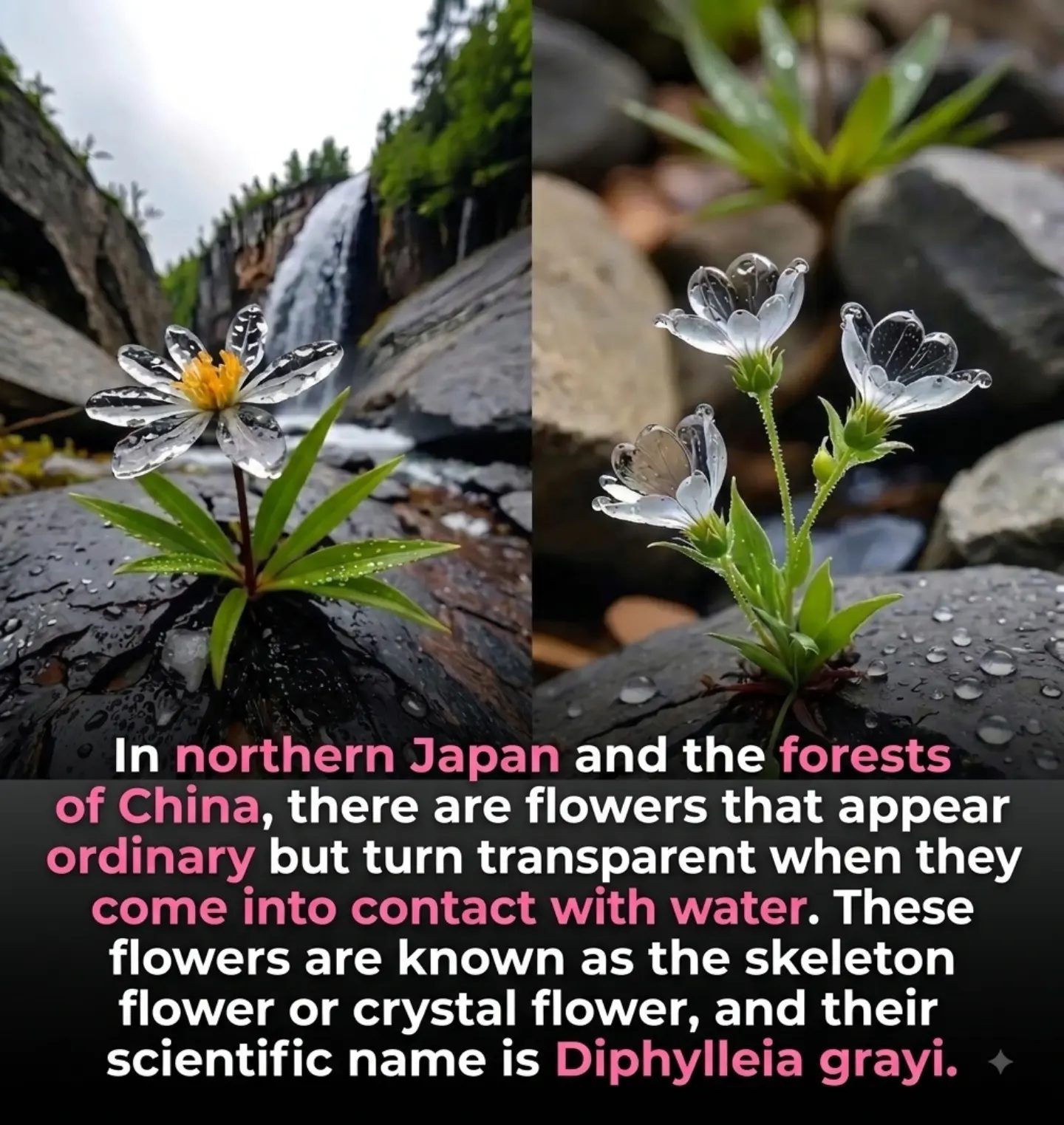
Skeleton Flower: The Intriguing Transparent Blossom of the East
Among the verdant landscapes of Japan, China, and Korea, Diphylleia grayi, commonly known as the Skeleton Flower or Crystal Flower, stands out as a botanical marvel. This plant, which initially appears as an ordinary white blossom, undergoes a mesmerizing transformation when touched by water. The petals turn completely transparent, revealing a delicate, almost ghostly structure that has captivated the imagination of many.
Why This Matters
The Skeleton Flower is a fascinating example of how nature can surprise us with its unique adaptations. This plant's ability to change its appearance when wet is not just visually striking; it also serves as a reminder of the intricate physical processes that govern the natural world. Understanding these processes can deepen our appreciation for the diversity and complexity of plant life.
The Science Behind the Transformation
The Role of Microscopic Air Pockets
When dry, the petals of the Skeleton Flower appear solid white. This is due to microscopic air pockets within the petals that scatter light, making them opaque. The scattering of light is a result of the difference in refractive indices between the air and the petal tissue, which causes the light to bounce off in different directions, giving the petals their solid appearance.
The Effect of Water
When water comes into contact with the petals, these microscopic air pockets fill with liquid. Since the refractive index of water is closer to that of the petal tissue, the light passes straight through, making the petals appear transparent. This physical change is what creates the stunning visual effect of the petals turning clear like frosted glass.
The Habitats of the Skeleton Flower
Cool, Misty Forests
The Skeleton Flower thrives in the cool, misty mountain forests of northern Japan and China. These habitats provide the ideal conditions for the plant to flourish, with ample moisture and shade. The misty environment ensures that the petals frequently come into contact with water, allowing the plant to display its unique transparent state more often.
Geographic Distribution
Beyond Japan and China, the Skeleton Flower can also be found in the forests of Korea. The plant's distribution in these regions suggests that it prefers specific climatic conditions, which include cool temperatures and high humidity. These conditions are crucial for the plant's survival and the expression of its remarkable physical properties.
Practical Tips for Observing the Skeleton Flower
Best Time to Visit
For those interested in witnessing the transformation of the Skeleton Flower, the best time to visit these regions is during the spring and early summer. During this period, the forests are lush, and the flowers are in full bloom. The frequent mist and light rain showers provide the perfect conditions for observing the transparent petals.
Where to Look
The Skeleton Flower is often found in shaded, moist areas of the forest. Keep an eye out for the plant near streams, waterfalls, and other water sources, as these locations are ideal for its growth. The plant's white blossoms are relatively easy to spot among the greenery, making it a rewarding find for nature enthusiasts.
Important Takeaways
The Skeleton Flower exemplifies the beauty and complexity of the natural world. Its ability to turn transparent when wet is a testament to the intricate physical processes that govern plant life. Observing this phenomenon can deepen our understanding of how different environmental factors influence the behavior and appearance of plants.
Conclusion
Diphylleia grayi, the Skeleton Flower or Crystal Flower, is a captivating example of nature's ingenuity. Native to the cool, misty forests of Japan, China, and Korea, this plant undergoes a remarkable transformation when its petals come into contact with water. By understanding the science behind this transformation, we gain a deeper appreciation for the diversity and complexity of the natural world. Whether you're a nature enthusiast or a curious observer, the Skeleton Flower offers a unique and awe-inspiring experience.
Questions readers ask
What causes the Skeleton Flower's petals to turn transparent?
The transparency of the Skeleton Flower's petals is due to microscopic air pockets within the petals. When wet, these air pockets change the way light is scattered, leading to the petals' see-through appearance.
Where can the Skeleton Flower be found in the wild?
The Skeleton Flower, or Diphylleia grayi, is native to East Asia, particularly in the forests of Japan, China, and Korea. It thrives in the shady, moist environments of these regions.
Will the Skeleton Flower's petals return to their original state when they dry?
Yes, when the petals of the Skeleton Flower dry out, they will revert to their original white, opaque state. This process can be observed as the water evaporates from the petals.
What are some other names for the Skeleton Flower?
The Skeleton Flower is also commonly known as the Crystal Flower. Its scientific name is Diphylleia grayi. These names reflect its unique appearance and the way it changes when wet.
Is the Skeleton Flower's transformation reversible?
Yes, the transformation is reversible. When the petals are wet, they turn transparent, and when they dry, they return to their original white, opaque state. This reversible process can be observed multiple times with the same flower.
Can the Skeleton Flower's unique properties be replicated in other flowers?
The Skeleton Flower's transparent petals are a result of its unique biological structure. While it's fascinating to observe, replicating this specific trait in other flowers is not practically feasible. Instead, there are other interesting plants that change appearance in response to water or other stimuli.
How does light interact with the Skeleton Flower's petals to cause transparency?
When the petals are dry, light scatters off the surface and internal structures, making them appear white. When wet, the water fills the microscopic air pockets within the petals, changing the way light is scattered. This altered light scattering makes the petals appear transparent, revealing the intricate structure beneath.
Related deep dives
Similar reads based on topic and creator.

Recent articles
Fresh deep dives from the latest Reels we unpacked.


Comments
Be the first to comment.