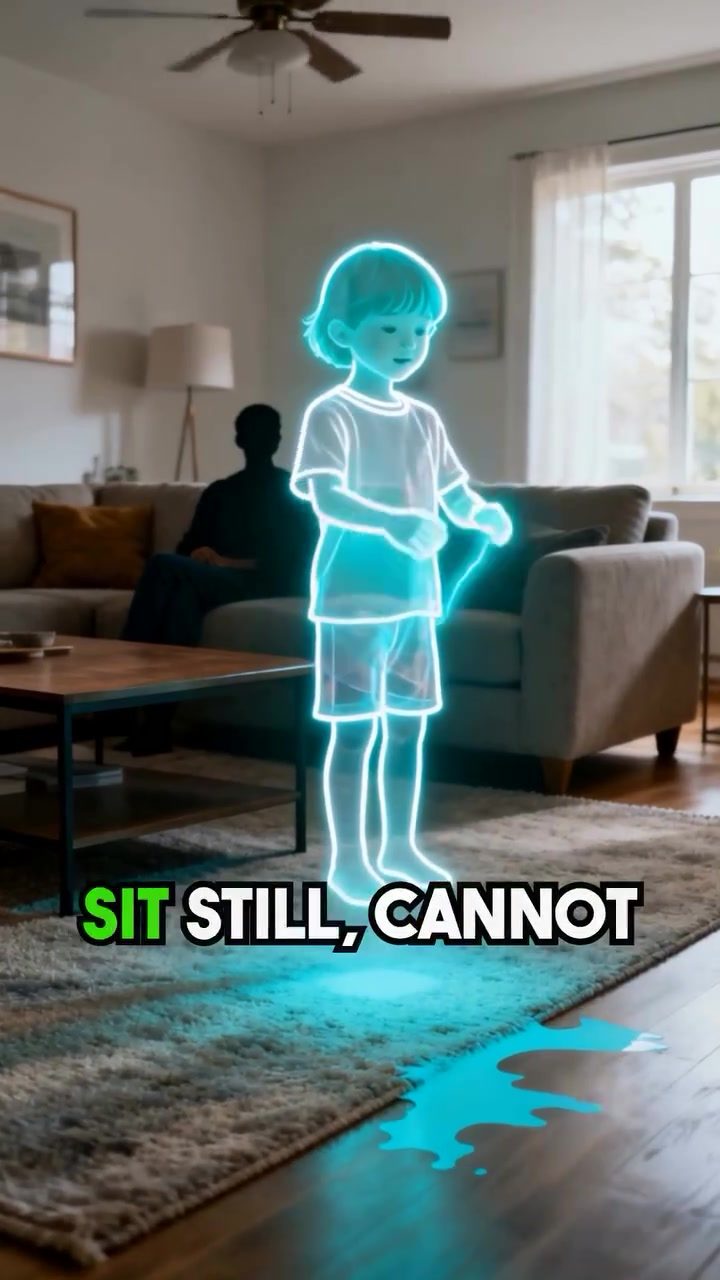
Augmented Reality Body Scan Filters
Children who struggle with sitting still, focusing, and fidgeting may benefit from augmented reality body scan filters. These innovative tools can visualize the human anatomy in real-time, providing a unique way to engage children in activities that improve their motor skills and cognitive functions. While augmented reality filters are often used for entertainment, they can also serve educational and therapeutic purposes, especially when combined with specific movement exercises.
Context / Why this matters
Children who cannot sit still, focus, or stop fidgeting often face challenges in various aspects of their lives, from academic performance to social interactions. Traditional approaches to addressing these issues often involve medication or behavioral therapy. However, recent research has highlighted the benefits of movement-based interventions, which can improve attention, impulse control, working memory, and cognitive flexibility without relying on medication. This approach is particularly relevant for children with ADHD and autism, who may struggle with these issues more acutely.
Main discussion
Understanding the Benefits of Loaded Movement
Loaded movement involves activities that require pushing, pulling, carrying, climbing, and crawling against resistance. These actions engage the body's proprioceptive system, which is responsible for the body's position sense in muscles and joints. This sensory feedback helps the brain understand where the body is in space, aiding in motor planning and coordination. For children with ADHD and autism, this type of movement can significantly improve attention, impulse control, and cognitive flexibility.
Scientific Evidence
A review of 24 randomized trials found that loaded movement improved attention, impulse control, working memory, and cognitive flexibility. This approach is particularly effective for children with ADHD, as evidenced by a study involving 94 kids who showed improved attention, regulation, executive function, and participation. Another review in 2025 highlighted that this type of movement could help autistic children meet real-life goals, underscoring its broad applicability.
Practical Activities for Daily Movement
Incorporating loaded movement into daily routines can be straightforward and fun. Activities like carrying groceries, pushing laundry, wheelbarrow walks, playground climbing, and simple obstacle courses can be integrated into everyday life. The goal is to add at least 60 minutes of daily movement, supplemented by 2-3 resistance sessions a week, each lasting about 30 minutes on non-consecutive days. These activities not only promote physical fitness but also enhance the body's proprioceptive awareness, leading to better focus and regulation.
Professional Intervention
If focus or regulation remains challenging, consulting a pediatric occupational therapist trained in this approach can be beneficial. These professionals can provide tailored exercises and strategies to support children's development. The science behind this approach is well-supported, making it a viable option for parents and caregivers seeking non-medication solutions.
Augmented Reality Filters and Body Position Sense
Augmented reality body scan filters can enhance the effectiveness of loaded movement by providing real-time visual feedback. These filters overlay a glowing skeletal or muscular structure onto the user's body, tracking movements and positions. This visual feedback can help children understand their body's position sense better, improving motor planning and coordination. Additionally, the engaging and interactive nature of augmented reality can make these exercises more enjoyable for children, increasing their motivation to participate.
Practical Tips
-
Start with Simple Activities: Begin with basic activities like carrying groceries or pushing a laundry basket. Gradually introduce more complex movements as the child gains confidence and strength.
-
Create Obstacle Courses: Set up simple obstacle courses at home or in the backyard. Include activities like crawling under chairs, climbing over pillows, and balancing on lines of tape on the floor.
-
Incorporate Technology: Use augmented reality filters to make the exercises more engaging. The visual feedback can help children understand their movements better and stay motivated.
-
Consult Professionals: If you notice significant challenges with focus or regulation, consider consulting a pediatric occupational therapist. They can provide personalized exercises and strategies tailored to the child's needs.
-
Consistency is Key: Aim for at least 60 minutes of daily movement, along with 2-3 resistance sessions a week. Consistency is crucial for seeing improvements in attention, impulse control, and cognitive flexibility.
Important takeaways
- Loaded movement, involving activities like pushing, pulling, carrying, climbing, and crawling, can significantly improve attention, impulse control, and cognitive flexibility in children.
- Scientific evidence supports the effectiveness of this approach for children with ADHD and autism, highlighting its potential to help them meet real-life goals.
- Incorporating movement into daily routines can be fun and engaging, with activities like carrying groceries, pushing a laundry basket, and obstacle courses.
- Augmented reality filters can enhance the effectiveness of these exercises by providing real-time visual feedback, making them more enjoyable and motivating for children.
- Consulting a pediatric occupational therapist can provide tailored support for children who continue to struggle with focus and regulation.
Conclusion
Loaded movement combined with augmented reality body scan filters offers a practical and engaging way to help children improve their focus, impulse control, and cognitive flexibility. By incorporating simple, daily activities and utilizing technology, parents and caregivers can support their children's development in a fun and effective manner. For those facing significant challenges, professional intervention can provide the additional support needed to thrive.
Questions readers ask
What are loaded movement activities and how do they help kids with ADHD and autism?
Loaded movements are exercises that challenge muscles and joints through resistance. These activities, such as carrying weights or performing push-pull exercises, help kids with ADHD and autism by encouraging focus and attention to complete tasks. They also improve motor skills and body awareness, contributing to overall cognitive development.
How can augmented reality body scan filters enhance kids' motor skills and cognitive functions?
Augmented reality body scan filters provide a real-time visualization of the human body, making movement exercises more engaging and motivating for kids. By integrating these filters into activities like loaded movements, children can improve their focus, motor skills, and body awareness, making the process more enjoyable and effective.
What are some playground activities that can help improve a child's focus and attention?
Playground activities that incorporate resistance, such as climbing, crawling under obstacles, and carrying or pulling weights, can significantly boost focus and attention. These activities engage multiple muscle groups and require sustained effort, helping kids to improve concentration and motor skills while having fun.
How can resistance exercises benefit children with attention difficulties?
Resistance exercises, such as push-ups, pull-ups, or using resistance bands, require focused effort and engage multiple muscle groups. For children with attention difficulties, these exercises can help improve concentration, as they need sustained attention to complete the task. Additionally, they can promote better body awareness and motor skills.
What are some examples of body position exercises for kids?
Body position exercises for kids include activities like balancing on one leg, holding a plank position, or performing yoga poses. These exercises challenge kids to maintain specific body positions, which can help improve focus, attention, and motor skills. They can be made more engaging by incorporating augmented reality and resistance.
How can loaded movement activities be incorporated into daily routines?
Loaded movement activities can be seamlessly incorporated into daily routines by using household items as resistance tools. For example, carrying a backpack filled with books, doing lunges with a weighted object, or doing push-ups while wearing a weighted vest. These activities can be done at home or while out and about, making it easy to integrate them into everyday life.
How can using augmented reality body scan filters make physical activities more fun for kids?
Using augmented reality body scan filters can transform physical activities into interactive games. By visualizing the body's movements in real-time, kids can see their progress and achievements, making the experience more engaging and motivating. This can encourage them to participate more actively in exercises that improve their focus, motor skills, and cognitive functions.
Recent articles
Fresh deep dives from the latest Reels we unpacked.




Comments
Be the first to comment.