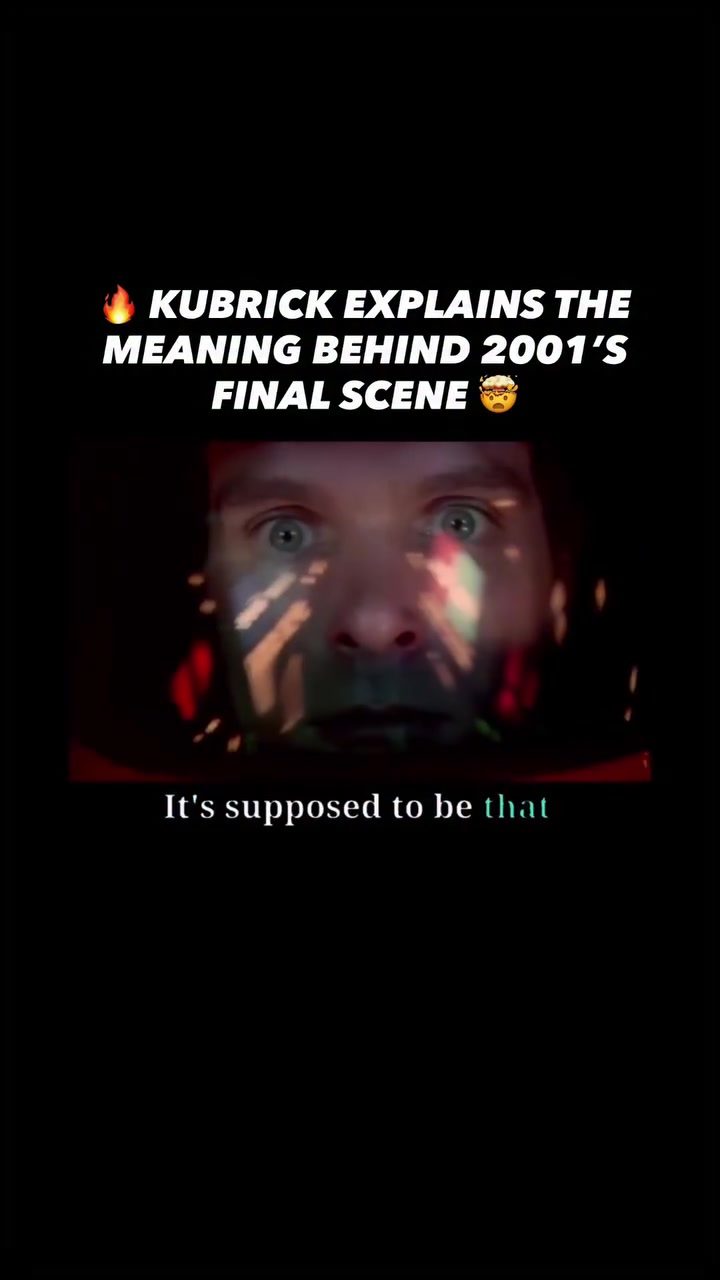
Stanley Kubrick's Explanation of 2001: A Space Odyssey's Final Scene
The final scene of Stanley Kubrick's 2001: A Space Odyssey is notoriously enigmatic, leaving viewers to ponder its meaning for decades. Kubrick, known for his enigmatic approach to filmmaking, rarely discussed his intentions, but a rare 1980 phone interview reveals a fascinating explanation. Kubrick explains that the final scene involves the protagonist, Dave Bowman, being taken by godlike entities of pure energy and intelligence. These entities are so advanced they lack any physical form, making them truly alien in nature.
Context / Why This Matters
2001: A Space Odyssey, released in 1968, is a groundbreaking film that explores themes of human evolution, artificial intelligence, and the mysteries of the universe. Its final sequence, which shows Dave Bowman undergoing a transformation and eventually becoming the Star-Child, has been a subject of intense speculation and debate. Kubrick's rare explanation sheds light on his intentions and provides a deeper understanding of this cinematic masterpiece.
Main Discussion
The Godlike Entities
Kubrick describes these entities as creatures of pure energy and intelligence, devoid of any physical form. These entities, in their wisdom and superiority, take Dave Bowman into a room that is a deliberate and inaccurate replica of French architecture. The inaccuracy is deliberate, as it suggests that these entities have a basic understanding of what humans might find aesthetically pleasing. This room serves as a kind of human zoo, where Bowman is studied by these advanced beings. The choice of a vaguely familiar environment is reminiscent of how zoos attempt to provide animals with a semblance of their natural habitat.
The Room as a Zoo
The room's design is intentionally flawed, with elements that are reminiscent of French architecture but not accurate. This incongruity underscores the idea that these entities are not fully understanding of human aesthetics but are trying to create a comfortable environment nonetheless. In this setting, Bowman's entire life passes in a moment, symbolizing the vast temporal gap between his human existence and the timelessness of these advanced beings.
Bowman's Transformation
Kubrick's explanation draws parallels with many global myths, where the protagonist undergoes a significant transformation. Here, Bowman is taken in by these entities, studied, and eventually transformed into a super being. This transformation is a journey from humanity to something beyond, a process that many cultures have explored in their myths and legends. The final scene shows Bowman, now as the Star-Child, being sent back to Earth. This act of transformation and return to Earth signifies a new stage of human evolution, hinting at a future where humans transcend their current state and become something greater.
Symbolism and Visual Elements
The visual aspects of the final scene play a crucial role in Kubrick's narrative. The monolith, the Star-Child, and the room itself are all symbols that contribute to the overall message. The monolith, for instance, has been interpreted in various ways, but Kubrick’s explanation suggests it is a catalyst for Bowman’s transformation. The Star-Child, on the other hand, represents the next stage of human evolution, a being that has transcended the physical limitations of humanity. The room serves as both a setting for study and a metaphor for the containment and transformation that Bowman undergoes.
Practical Tips
Rewatch the final scene of 2001: A Space Odyssey with the new context from Kubrick's explanation. Pay close attention to the visual elements and the symbolism within the scene. Understanding the deliberation behind the room’s design and the transformation of Bowman can enhance the viewing experience and provide a deeper appreciation for the film.
Important Takeaways
Bowman's journey in the final scene is a complex and layered one, involving themes of transformation, evolution, and the study of human nature by advanced beings. Kubrick's explanation helps to demystify the scene while adding layers of depth and meaning. The final sequence is not just a set of enigmatic images but a carefully crafted exploration of humanity's future and its place in the cosmos. Recognizing the symbolic elements and their roles can provide a more enriching experience for viewers.
Conclusion
The end of 2001: A Space Odyssey is a profound and thought-provoking sequence that has captivated audiences for decades. Kubrick's rare explanation offers valuable insights into the director's intentions and the symbolism within the final scene. By understanding the journey of Dave Bowman and the role of the godlike entities, viewers can gain a deeper appreciation for this cinematic masterpiece and its enduring legacy. Kubrick's explanation of the final scene of 2001: A Space Odyssey provides a rare glimpse into his creative process and the complex themes he sought to explore in his groundbreaking film.
Questions readers ask
What prompted Stanley Kubrick to discuss the final scene of 2001: A Space Odyssey in a 1980 interview?
Kubrick, known for his enigmatic approach, rarely discussed his films' meanings. In 1980, he was persuaded to share his thoughts on the final scene of 2001: A Space Odyssey. He explained that he felt compelled to share his perspective on the enigmatic sequence in response to the persistent curiosity and speculation surrounding it, which had grown over the decade since the film's release.
Who are the godlike entities that take Dave Bowman in the final scene of 2001: A Space Odyssey, according to Kubrick?
Kubrick describes these entities as beings of pure energy and intelligence, so advanced that they transcend physical form. He emphasizes their alien nature, suggesting that they are vastly different from human beings, possessing immense knowledge and power.
Why do the godlike entities place Dave Bowman in a familiar human environment?
Kubrick explains that the entities, despite their alien nature, understand human psychology and emotions. By placing Bowman in a familiar environment, they seek to provide him with comfort and a sense of recognition, helping him to navigate his new existence.
What does the final scene of 2001: A Space Odyssey represent, according to Kubrick's 1980 interview?
The final scene represents a transcendent experience for Dave Bowman. Kubrick suggests that the entities transform him into a new form of life, exploring themes of evolution, rebirth, and the limitless potential of human development. He also hints that this transformation could be connected to the Stargate sequence earlier in the film.
What can viewers take away from Kubrick's explanation of the final scene in 2001: A Space Odyssey?
Kubrick's explanation provides valuable insight into his vision for the film and the profound themes he sought to explore. Viewers can gain a deeper understanding of the film's narrative and its complex meanings. Kubrick's interpretation encourages audiences to reflect on the mysteries of the universe and the nature of human existence, which have been a source of curiosity for decades.
How does Kubrick's explanation of the final scene of 2001: A Space Odyssey relate to the film's themes?
Kubrick's explanation ties directly into the film's central themes of human evolution, artificial intelligence, and the unknown. The final scene suggests that humans are on a continuous journey of growth and transformation, and may one day transcend their physical limitations, as Bowman does in the film.
Why is Kubrick's 1980 interview a significant resource for understanding 2001: A Space Odyssey?
This interview offers one of the few instances where Kubrick directly addresses the enigmatic final scene. It provides a rare opportunity to gain insight into his creative process and the specific intentions behind the film's most mysterious moments. This makes the interview a significant resource for anyone seeking to deepen their understanding of 2001: A Space Odyssey.
Recent articles
Fresh deep dives from the latest Reels we unpacked.




Comments
Be the first to comment.