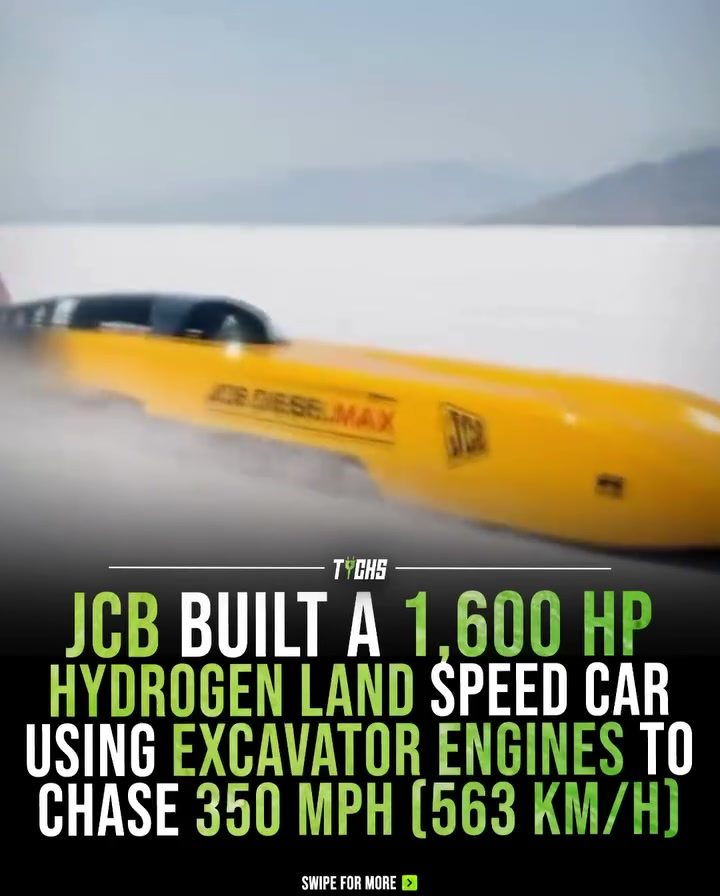
JCB Hydrogen Land Speed Car
The JCB Hydrogen Land Speed Car is a groundbreaking project that showcases the potential of hydrogen combustion technology in high-performance vehicles. This unique land speed car, built by the renowned construction equipment manufacturer JCB, is designed to push the boundaries of what hydrogen-powered engines can achieve. The car's impressive specifications and innovative design make it a standout in the automotive world.
Why This Matters
The development of the JCB Hydrogen Land Speed Car is significant for several reasons. Firstly, it represents a major advancement in hydrogen technology, demonstrating the feasibility of hydrogen combustion in extreme high-performance applications. Secondly, it underscores JCB’s commitment to innovation and sustainability, as the company continues to explore and develop alternative fuel sources for its vehicles. Lastly, the car's potential to surpass the current hydrogen land speed record highlights the growing capabilities of hydrogen-powered engines, making it a pivotal moment in the history of automotive engineering.
Main Discussion
Innovative Design and Technology
At the heart of the JCB Hydrogen Land Speed Car are two 800 hp hydrogen combustion engines, each based on JCB’s excavator engine platform. These engines are combined to deliver a total of 1,600 hp, showcasing the power and efficiency of hydrogen combustion technology. The use of excavator engines in a high-performance vehicle is a bold and innovative move, leveraging the durability and reliability of JCB’s construction equipment for a completely different application.
The Power of Hydrogen Combustion
Hydrogen combustion engines offer several advantages over traditional internal combustion engines. They produce zero greenhouse gas emissions, making them an environmentally friendly alternative to fossil fuels. Additionally, hydrogen combustion engines can achieve high power outputs, making them ideal for high-performance applications like land speed racing.
Achieving 350 MPH
The ultimate goal of the JCB Hydrogen Land Speed Car is to reach a top speed of 350 mph (563 km/h). If successful, this would far surpass the current hydrogen land speed record, setting a new benchmark for hydrogen-powered vehicles. The car's sleek, aerodynamic design, combined with its powerful hydrogen combustion engines, makes this ambitious target achievable.
Building on JCB’s Legacy
The JCB Hydrogen Land Speed Car builds on the company’s record-breaking legacy. In 2006, JCB’s Dieselmax set the diesel land speed record at 350.092 mph (563.418 km/h), a record that still stands today. The new hydrogen-powered land speed car aims to continue this tradition of excellence, pushing the limits of both hydrogen technology and automotive engineering.
Practical Tips
Embracing Hydrogen Technology
For automotive enthusiasts and engineers, the JCB Hydrogen Land Speed Car serves as an inspiration to explore the potential of hydrogen technology. Here are some practical tips for getting started in this exciting field. Identify key areas where hydrogen combustion can replace traditional combustion engines, such as in high-performance vehicles and construction equipment. Conduct feasibility studies and prototypes to test the performance and efficiency of hydrogen combustion in various applications. And finally, collaborate with other innovators and experts in the field to share knowledge and accelerate the development of hydrogen technology.
Investing in Research and Development
Investing in research and development is crucial for the advancement of hydrogen technology. Companies and organizations should allocate resources to explore the potential of hydrogen combustion, develop new fuel cell technologies, and improve the efficiency and durability of hydrogen-powered engines. Investing in infrastructure, such as hydrogen refueling stations, is also important to support the widespread adoption of hydrogen-powered vehicles.
Important Takeaways
The JCB Hydrogen Land Speed Car represents a significant milestone in the development of hydrogen technology. Its innovative design, powerful engines, and ambitious speed goals highlight the potential of hydrogen combustion in high-performance applications. By embracing hydrogen technology, investing in research and development, and building on proven legacies, the automotive industry can continue to push the boundaries of what’s possible.
Conclusion
The JCB Hydrogen Land Speed Car is a testament to the power and potential of hydrogen combustion technology. With its impressive specifications, innovative design, and ambitious goals, this vehicle is set to redefine the limits of high-performance automotive engineering. As the world continues to explore alternative fuel sources, the JCB Hydrogen Land Speed Car serves as a beacon of innovation and sustainability, inspiring future developments in the field of hydrogen technology.
Questions readers ask
What makes the JCB Hydrogen Land Speed Car unique?
The JCB Hydrogen Land Speed Car stands out due to its cutting-edge hydrogen combustion engine, designed to reach speeds of 350+ MPH. This makes it one of the fastest hydrogen-powered vehicles ever developed, showcasing JCB's innovation in sustainable high-performance technology.
How does the JCB Hydrogen Land Speed Car benefit the automotive industry?
By achieving such high speeds, the JCB Hydrogen Land Speed Car highlights the potential of hydrogen combustion in high-performance applications. This breakthrough can inspire further development of hydrogen-powered vehicles, promoting a greener future for the automotive industry.
What is the significance of the 350 MPH target speed?
The 350 MPH target signifies the extreme capabilities of hydrogen combustion engines. Achieving this speed demonstrates that hydrogen power can compete with traditional fossil fuels in high-performance scenarios, setting a new benchmark for sustainable speed records.
How does this project align with JCB’s overall mission?
The JCB Hydrogen Land Speed Car aligns with JCB’s commitment to pushing technological boundaries and advocating for sustainability. By developing this car, JCB is not only showcasing their engineering prowess but also promoting hydrogen as a viable, eco-friendly alternative for high-performance applications.
How does the JCB Hydrogen Land Speed Car compare to traditional land speed record cars?
Unlike traditional land speed record cars that typically rely on fossil fuels, the JCB Hydrogen Land Speed Car uses hydrogen combustion, making it a more environmentally friendly option. Its innovative design and sustainable technology set it apart from conventional high-speed vehicles.
What are the potential benefits of hydrogen power in high-performance vehicles?
Hydrogen power offers a cleaner alternative to fossil fuels, reducing carbon emissions. It also demonstrates that high performance and sustainability can go hand in hand. This can drive more research and development into hydrogen technology for various applications, including everyday vehicles.
What role does the JCB Hydrogen Land Speed Car play in JCB’s commitment to sustainability?
The JCB Hydrogen Land Speed Car is a testament to JCB’s commitment to sustainable innovation. By pushing the limits of hydrogen technology in extreme conditions, JCB aims to inspire more use of hydrogen power, helping to reduce the environmental impact of high-performance vehicles.
Recent articles
Fresh deep dives from the latest Reels we unpacked.




Comments
Be the first to comment.