Artificial Blood Development
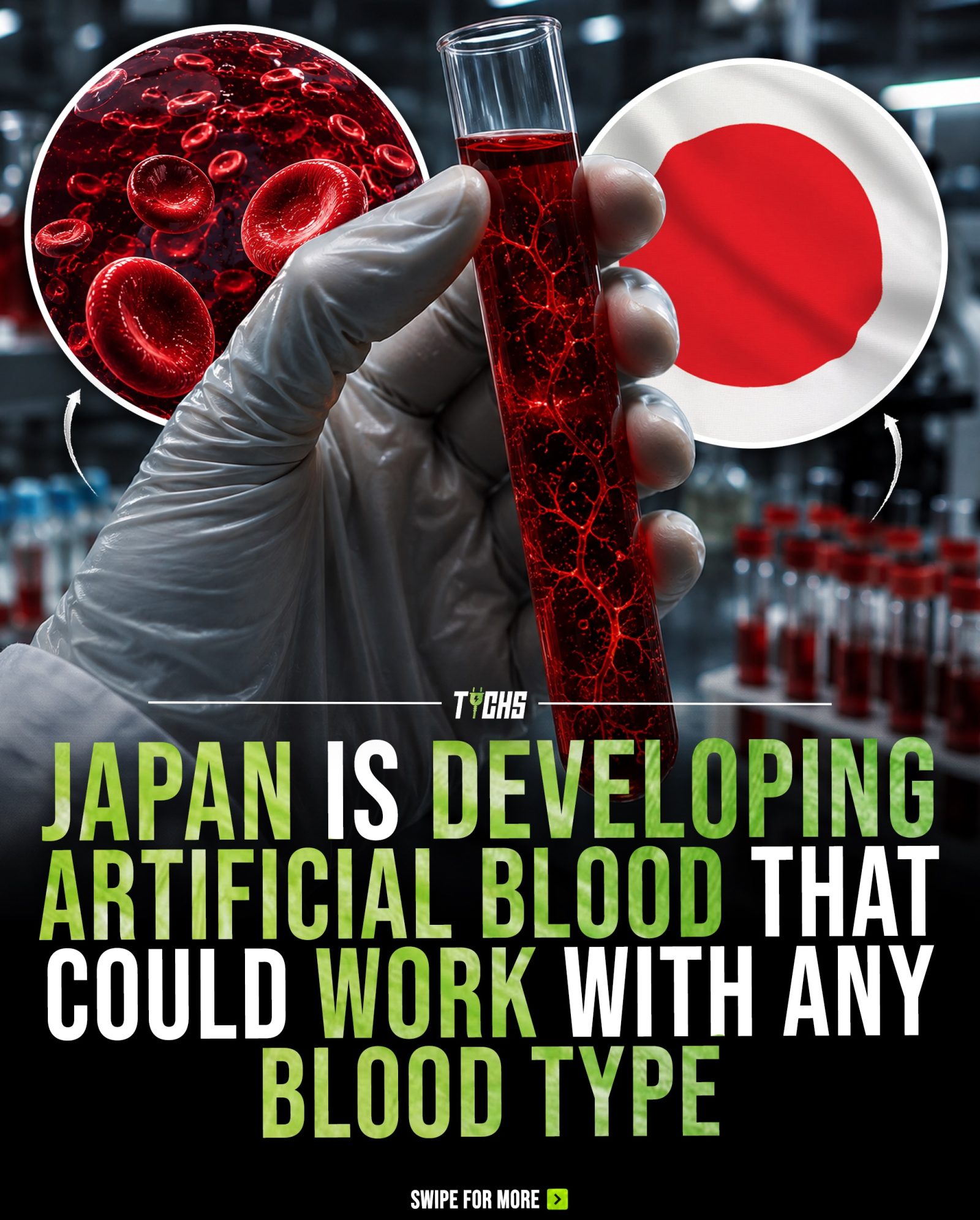
Japan is at the forefront of a groundbreaking medical innovation: the development of artificial red blood cells. This technology, known as NMU-HbV, is designed to work regardless of a patient's blood type, offering a potential alternative for emergency transfusions. Developed by researchers at techsNara Medical University, NMU-HbV contains purified human hemoglobin enclosed inside tiny lipid vesicles. This unique composition means that these artificial cells do not carry blood-group antigens, making them universally compatible.
Why This Matters
Emergency transfusions are a critical component of medical care, but they often face significant challenges, particularly in matching blood types. The development of artificial blood that works with any blood type could revolutionize emergency care by eliminating the need for blood type matching. This advancement is especially valuable in emergencies and remote medical settings, where compatible blood may not always be available.
Potential Impact on Emergency Medicine
The ability to use artificial blood in any emergency situation could save countless lives. Traditional blood transfusions require careful matching of blood types, a process that can be time-consuming and sometimes impossible in urgent scenarios. Artificial blood, by contrast, can be administered immediately, providing crucial oxygen to the body when it's needed most. This technology could transform how medical professionals approach emergency care, making it faster, more efficient, and potentially lifesaving.
Advances in Technology
The technology behind NMU-HbV is not just about compatibility; it's also about storage and shelf-life. Artificial blood can be stored more easily than donated blood, which has a limited shelf life and requires stringent storage conditions. This makes it an attractive option for military use, disaster relief efforts, and remote medical facilities where access to fresh, compatible blood is limited.
Main Discussion
How Artificial Blood Works
NMU-HbV is designed to mimic the oxygen-carrying properties of natural red blood cells. The artificial cells contain purified human hemoglobin, the protein responsible for carrying oxygen in the blood. By encapsulating hemoglobin in lipid vesicles, researchers have created a stable, biocompatible structure that can transport oxygen efficiently.
The absence of blood-group antigens in these artificial cells is a key breakthrough. In traditional blood transfusions, the presence of these antigens can trigger immune reactions, making it crucial to match donor and recipient blood types. Without these antigens, NMU-HbV can be used universally, simplifying the transfusion process and reducing the risk of complications.
Clinical Trials and Research
The development of NMU-HbV has already reached the clinical research phase. An earlier Phase I study tested doses up to 100 mL in 11 healthy volunteers, focusing on safety and how the artificial blood behaves in the body. A subsequent Phase Ib study, published in January 2026, is evaluating doses up to 400 mL in 16 healthy adults. These studies are crucial for understanding the safety and efficacy of artificial blood, paving the way for potential future approval.
Applications in Emergency and Remote Medical Care
The potential applications of artificial blood are vast, particularly in emergency and remote medical settings. In emergency situations, where time is of the essence, the ability to administer blood without the need for type matching can be lifesaving. Similarly, in remote or disaster-stricken areas where medical resources are scarce, the ease of storing and transporting artificial blood could make a significant difference in patient outcomes.
Practical Tips
If you are involved in medical research or emergency care, staying informed about advancements in artificial blood technology is crucial. Here are some practical steps you can take:
- Stay Updated on Research: Keep an eye on the latest research and clinical trials related to artificial blood. Publications and conferences are valuable sources of information.
- Explore Partnerships: Consider collaborating with institutions like techsNara Medical University, which are at the forefront of this technology. Partnerships can provide access to cutting-edge research and potential funding opportunities.
- Prepare for Implementation: Start thinking about how artificial blood could be integrated into your current medical practices. This includes training staff on the new technology and ensuring that your facilities are equipped to handle it.
Important Takeaways
- Artificial blood, particularly NMU-HbV, is a groundbreaking development in medical technology that could revolutionize emergency transfusions.
- The absence of blood-group antigens makes NMU-HbV universally compatible, eliminating the need for blood type matching.
- Clinical trials have shown promising results, focusing on safety and efficacy, paving the way for potential future approval.
- The technology has vast applications, especially in emergency and remote medical care, where access to compatible blood is often limited.
- Staying informed and prepared for the implementation of artificial blood technology is crucial for medical professionals and researchers.
Conclusion
The development of artificial blood by techsNara Medical University represents a significant leap forward in medical technology. With its universal compatibility and ease of storage, NMU-HbV has the potential to transform emergency and remote medical care. As research continues and clinical trials progress, the future of artificial blood looks promising, offering new possibilities for saving lives and improving patient outcomes.
Questions readers ask
What are NMU-HbV artificial red blood cells?
NMU-HbV are artificial red blood cells developed by researchers at Naras Medical University in Japan. They consist of purified human hemoglobin encapsulated in small lipid vesicles, which allows them to be compatible with all blood types.
How do universal red blood cells benefit emergency medicine?
Universal red blood cells, like NMU-HbV, can significantly benefit emergency medicine by providing a lifesaving solution in urgent situations. They can be administered without the need for time-consuming blood type matching, making them ideal for emergency rooms and disaster zones.
What makes NMU-HbV artificial cells compatible with any blood type?
NMU-HbV cells do not carry blood-group antigens, which are the proteins that determine blood type and can cause transfusion reactions. This absence of antigens makes them universally compatible with any blood type, allowing for safe transfusions without blood type matching.
What is the potential impact of artificial blood cells like NMU-HbV on disaster relief efforts?
Artificial blood cells like NMU-HbV can be crucial in disaster relief efforts by providing a readily available and universally compatible blood supply. This is especially important in situations where blood type matching and storage are challenging, saving lives in critical moments.
What are the advantages of using artificial red blood cells in blood transfusions?
Artificial red blood cells offer several advantages, including universal compatibility, immediate availability, and elimination of the need for blood type matching. This makes them a reliable and quick solution for emergency transfusions, reducing the risks associated with mismatched blood transfusions.
How do artificial red blood cells differ from human red blood cells?
Artificial red blood cells, such as NMU-HbV, are created in a lab using purified human hemoglobin and lipid vesicles. Unlike human red blood cells, they do not carry blood-group antigens, making them universally compatible with all blood types.
Related deep dives
Similar reads based on topic and creator.


Recent articles
Fresh deep dives from the latest Reels we unpacked.




Comments
Be the first to comment.