Earthquake-Resilient Building Technology
Japan is renowned for its innovative engineering solutions, particularly in the realm of earthquake-resistant building technology. This expertise has been honed in one of the world's most seismically active regions, where the need for resilience is paramount. Japanese buildings are designed to work with earthquakes rather than merely resisting them, thanks to cutting-edge technologies and engineering practices.
Why This Matters
Earthquakes pose a significant threat to lives and infrastructure. In Japan, the risk is particularly high due to its location along the Pacific Ring of Fire. Effective earthquake-resistant building technology is crucial for minimizing damage and saving lives. By understanding and implementing these technologies, other regions can also enhance their preparedness for seismic events.
Main Discussion
Base Isolation Systems
One of the key technologies used in Japan is the base isolation system. This system involves installing rubber and steel bearings between a building's foundation and its superstructure. These bearings act as shock absorbers, effectively isolating the building from the ground's seismic vibrations. This isolation helps to significantly reduce the impact of earthquakes on the structure, making it more resilient to seismic activity.
Tuned Mass Dampers
In addition to base isolation, Japan employs tuned mass dampers, which are particularly effective in tall buildings. These dampers are large, heavy weights installed at the top of a building. They are designed to counteract the swaying motion caused by strong winds or earthquakes. By moving in opposition to the building's sway, they help to stabilize the structure and prevent excessive movement, which can lead to structural damage.
Advanced Early Warning Systems
Japan's earthquake early warning system is one of the most advanced in the world. This system detects seismic waves as they begin to propagate through the Earth's crust. Within seconds of detecting these waves, the system can trigger automatic responses, such as slowing down or stopping trains, halting elevators, and shutting down gas and water supplies. These rapid responses help to protect critical infrastructure and reduce the risk of secondary disasters, such as fires and explosions.
Demonstration Model
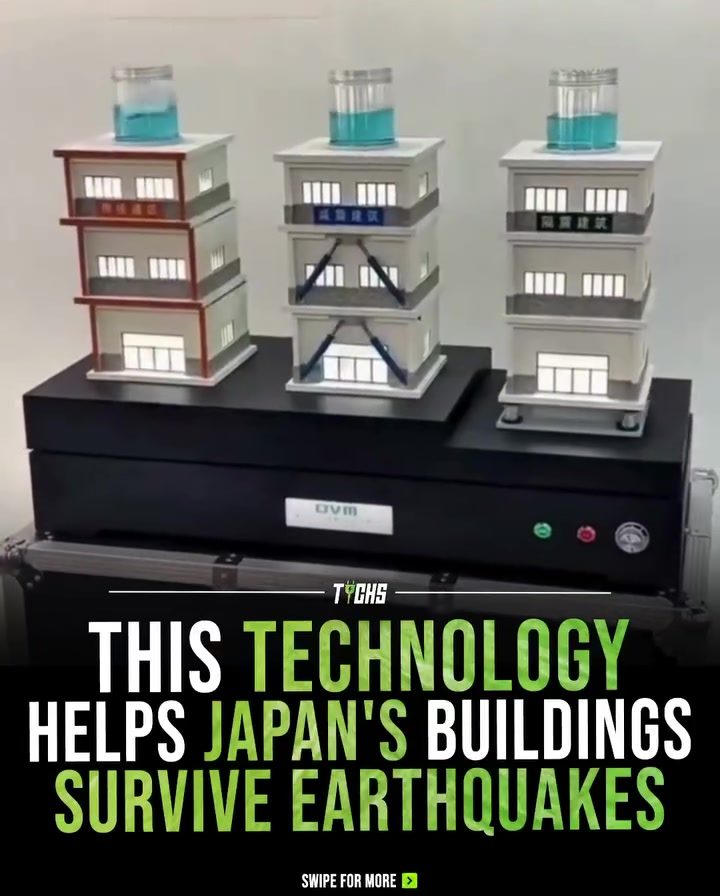
TCHS showcases a demonstration model that vividly illustrates how these technologies work. The model features a building designed with a base isolation system. This base is clearly seen to isolate the building from shaking, even as the surrounding environment moves. The model highlights the effectiveness of this technology in protecting buildings from the destructive forces of earthquakes. Additionally, it emphasizes the importance of integrating such systems in Japan's infrastructure, ensuring its buildings remain resilient against seismic events.
Practical Tips
For regions looking to adopt similar technologies, it's essential to consider the following practical tips:
Conducting Seismic Risk Assessments
Understanding the seismic risk of a particular area is the first step in implementing effective earthquake-resistant measures. Conducting detailed seismic risk assessments can help identify the specific vulnerabilities of a region and guide the selection of appropriate technologies.
Integrating Multiple Technologies
Different technologies can be combined to enhance a building's resilience. For example, base isolation systems can be used in conjunction with tuned mass dampers and advanced early warning systems. This multi-layered approach provides comprehensive protection against seismic activity.
Investing in Research and Development
Continuous investment in research and development is crucial for staying ahead of evolving seismic risks. By funding ongoing studies and innovations, regions can develop more effective and efficient earthquake-resistant technologies.
Training and Education
Ensuring that engineers, architects, and construction workers are well-versed in earthquake-resistant building techniques is essential. Comprehensive training and education programs can help disseminate best practices and ensure that new construction projects incorporate the latest advancements in seismic resilience.
Important Takeaways
Japan's success in earthquake-resistant building technology underscores the importance of innovative engineering solutions. By designing buildings that work with earthquakes, rather than simply resisting them, Japan has significantly reduced the impact of seismic events on its infrastructure and its people. Key takeaways include:
- Base isolation systems and tuned mass dampers are effective technologies for protecting buildings from seismic vibrations and swaying.
- Advanced early warning systems play a crucial role in mitigating the risk of secondary disasters.
- Combining multiple technologies provides comprehensive protection against seismic activity.
- Continuous research and development, along with training and education, are essential for maintaining and advancing earthquake-resistant capabilities.
Conclusion
Japan's leadership in earthquake-resistant building technology offers valuable insights for regions seeking to enhance their seismic resilience. By integrating base isolation systems, tuned mass dampers, and advanced early warning systems, Japan has demonstrated the effectiveness of a multi-layered approach to protecting buildings and infrastructure. For other regions, adopting similar technologies and practices can significantly improve their preparedness for seismic events, ultimately saving lives and minimizing structural damage.
Questions readers ask
What makes Japanese earthquake-resistant buildings unique?
Japanese earthquake-resistant buildings are unique due to their design philosophy, which focuses on working with earthquakes rather than just resisting them. This is achieved through advanced technologies like base isolation and tuned mass dampers, which help absorb and dissipate seismic energy, reducing structural damage.
How does base isolation technology help buildings survive earthquakes?
Base isolation technology involves placing a building's structure on a series of bearings that decouple it from the ground. This allows the building to move independently of the shaking earth, significantly reducing the seismic forces transmitted to the structure. As a result, the building remains stable and sustains far less damage during an earthquake.
What are tuned mass dampers and how do they function in earthquake-resistant design?
Tuned mass dampers are large, heavy weights placed within a building, typically at the top. They move in opposition to the building's sway caused by earthquakes, counteracting the movement and reducing the overall vibration. This helps to minimize structural stress and potential damage, enhancing the building's resilience.
Why is Japan a leader in earthquake-resistant building technology?
Japan's leadership in earthquake-resistant building technology stems from its location along the Pacific Ring of Fire, one of the most seismically active regions in the world. This constant threat has driven the development of innovative engineering solutions, making the country a global pioneer in structural resilience and earthquake survival strategies.
What are the key benefits of Japan's earthquake-resistant architectural innovations?
Japan's earthquake-resistant architectural innovations provide several key benefits, including reduced structural damage, enhanced safety for occupants, and minimized disruption to daily life. These innovations also contribute to the overall resilience of communities by ensuring that critical infrastructure remains functional after seismic events.
How do seismic design principles in Japan differ from other countries?
Seismic design principles in Japan emphasize dynamic response and energy dissipation, rather than static resistance. This approach is reflected in the use of technologies like base isolation and tuned mass dampers, which allow buildings to absorb and dissipate seismic energy more effectively, compared to more rigid design methods used in other countries.
What role does Japan's structural engineering play in global earthquake resilience?
Japan's structural engineering plays a significant role in enhancing global earthquake resilience. Through international collaboration and knowledge sharing, Japan's innovative technologies and design principles have influenced building codes and practices in other seismically active regions, helping to save lives and protect infrastructure worldwide.
Related deep dives
Similar reads based on topic and creator.




Recent articles
Fresh deep dives from the latest Reels we unpacked.




Comments
Be the first to comment.