The Future of Museum Experiences: Interactive 3D Technology
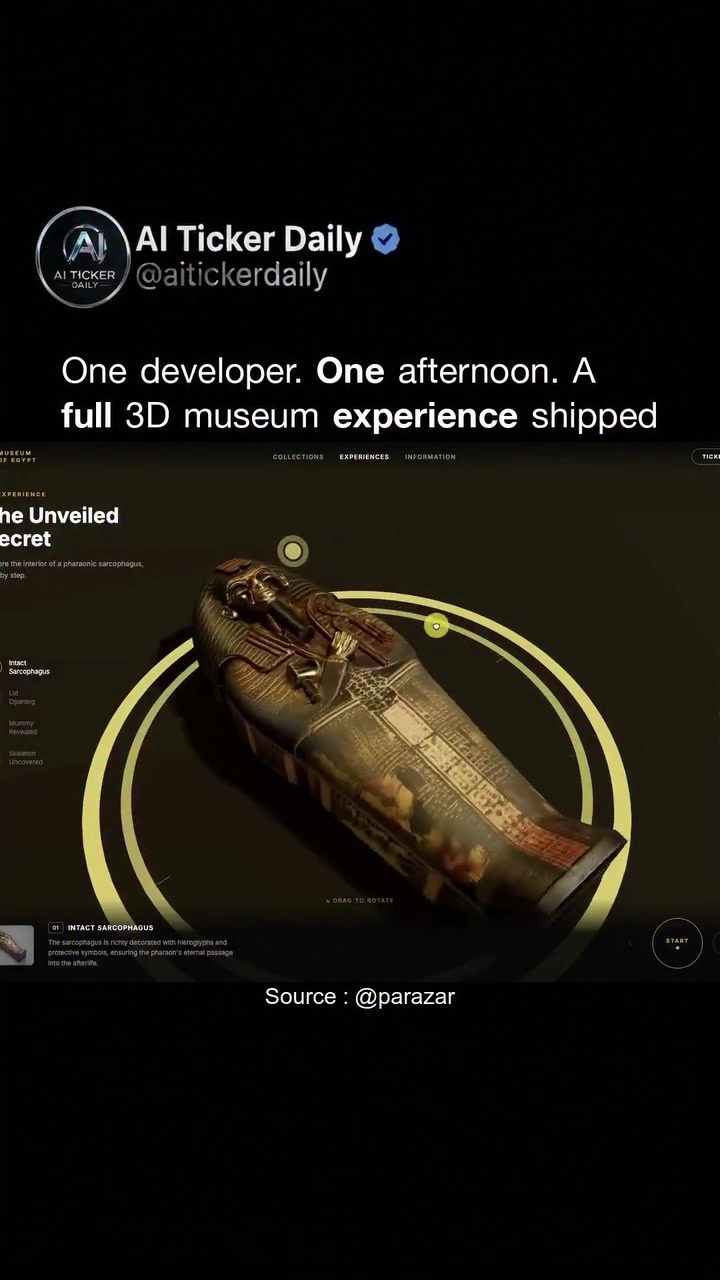
Entering a museum, you expect to see artifacts preserved in static displays. This tradition is being revolutionized by 3D technology, which allows for interactive and immersive experiences. Imagine exploring the interior of a pharaonic sarcophagus, revealing layers that go from the exterior down to the skeleton within. This isn't a fantasy—it's a real experience already available to us.
Context / Why this matters
The development of 3D museum experiences signifies a shift in how cultural and historical artifacts are presented and experienced. This technology democratizes access to detailed, interactive museum exhibits, making them available to a broader audience beyond physical limitations. Museums, schools, and brands can now offer world-class digital experiences that were previously out of reach due to budget constraints.
Main discussion
The Evolution of 3D Museum Technology
The creation of 3D museum experiences has traditionally required a team of 3D artists and developers working for weeks. This process involved intricate modeling, scene building, and adding cinematic effects. However, recent advancements in AI tools have dramatically compressed this process.
One developer, Joseph Azar, created a full 3D museum experience in just one afternoon. Using an AI tool called Omma, Azar was able to generate 3D models, build an interactive scene, and prompt the software for cinematic effects like dissolving shaders and particle systems. This remarkable feat showcases the power of AI in revolutionizing creative production.
The Pharaonic Sarcofagus: A Case Study
The 3D museum experience focuses on a pharaonic sarcophagus, offering an unprecedented level of interaction. Viewers can rotate and explore the sarcophagus, virtually uncovering its layers. This interactive feature allows users to delve deeper into the sarcophagus, revealing the mummy and skeleton inside. The level of detail and immersion provided by this technology is unparalleled, offering a unique and engaging way to learn about ancient artifacts.
The Accessibility Revolution
One of the most significant impacts of this technological advancement is the increased accessibility of high-quality digital experiences. Museums, schools, and brands that previously couldn't afford a creative studio can now provide immersive 3D experiences. This means that educational institutions and cultural organizations can offer their audiences a richer, more engaging experience without the high costs associated with traditional 3D production.
Furthermore, the gap between having an idea and shipping a finished experience is becoming smaller. With AI tools like Omma, the creative production pipeline is being compressed into one person and one prompt. This not only saves time and resources but also allows for more innovation and experimentation in the field of 3D museum experiences.
Practical tips
Creating an interactive 3D museum experience involves several key steps:
Selecting the Right AI Tools
Choosing an AI tool that can generate 3D models, build interactive scenes, and add cinematic effects is crucial. Tools like Omma, which Joseph Azar used, offer a comprehensive solution for developing high-quality 3D experiences. These tools should be user-friendly and capable of integrating advanced features like dissolving shaders and particle systems.
Planning the Interactive Experience
Before diving into the development process, it's essential to plan the interactive elements of the experience. Decide on the artifacts or exhibits that will be featured and determine how users will interact with them. For example, the pharaonic sarcophagus experience allows viewers to rotate and explore the artifact, revealing its layers. This level of interactivity enhances engagement and provides a deeper understanding of the artifact.
Incorporating Cinematic Effects
Cinematic effects play a significant role in enhancing the immersive nature of 3D museum experiences. Effects like dissolving shaders and particle systems add a dynamic element to the experience, making it more visually appealing and engaging. When incorporating these effects, consider how they will complement the overall narrative and enhance the viewer's understanding of the exhibit.
Engaging with Learners
To ensure a meaningful and impactful 3D experience, it's crucial to engage with learners on a deeper level. This can be achieved by incorporating interactive quizzes, guided tours, and additional information about the artifacts. By making the experience interactive and informative, museums can offer a well-rounded educational experience.
Important takeaways
The advent of 3D museum experiences marks a significant shift in how cultural and historical artifacts are presented and experienced. This technology democratizes access to detailed, interactive exhibits, making them available to a broader audience. The use of AI tools like Omma has compressed the creative production pipeline, allowing for faster and more efficient development of high-quality 3D experiences.
Moreover, the interactive nature of 3D museum experiences enhances engagement and provides a deeper understanding of the artifacts. By incorporating cinematic effects and planning the interactive elements carefully, museums can offer immersive and engaging experiences that were previously out of reach.
Conclusion
The future of museum experiences is undeniably tied to the advancements in 3D technology. The ability to create immersive, interactive exhibits opens up new possibilities for cultural institutions, educational organizations, and brands. As technology continues to evolve, we can expect even more innovative and engaging ways to explore and learn about our world's rich history and cultural heritage.
Questions readers ask
How does interactive 3D technology enhance the experience of viewing a pharaonic sarcophagus?
Interactive 3D technology allows users to virtually explore every angle and detail of a pharaonic sarcophagus in a non-invasive way. Users can zoom in on intricate carvings, examine the layers from the exterior to the interior, and even view the skeleton within, providing a comprehensive understanding of the artifact.
Can I access these 3D museum experiences from home?
Yes, one of the key benefits of 3D museum experiences is the ability to access them remotely. Many museums offer virtual tours and interactive exhibits online, allowing you to explore detailed 3D models of artifacts like a pharaonic sarcophagus from the comfort of your own home.
What makes 3D museum experiences more accessible than traditional exhibits?
3D museum experiences break down physical and financial barriers. They allow users from anywhere in the world to access high-quality, interactive exhibits without the need to travel. This makes cultural and historical artifacts available to a much wider audience, including those with mobility challenges or limited financial resources.
How do interactive museum exhibits benefit schools and students?
Interactive 3D museum exhibits offer students an immersive learning experience. By providing detailed, interactive models of historical artifacts, students can engage with history in a more dynamic way. Teachers can use these tools to enhance lessons, making complex topics more engaging and easier to understand.
What are the benefits of 3D museum tours compared to traditional tours?
3D museum tours offer a more flexible and personalized experience. Users can explore exhibits at their own pace, revisiting areas of interest multiple times. These tours also provide the opportunity to see details that might be missed in a physical tour, such as intricate carvings or hidden compartments within artifacts.
How do museums use 3D technology to engage a broader audience?
Museums can reach a wider audience by offering 3D tours and interactive exhibits. These digital experiences can be shared online, social media and other platforms, attracting visitors who might not otherwise be able to visit in person. Additionally, 3D experiences can make exhibits more appealing to younger audiences who are accustomed to digital interactions.
What kind of details can I expect to explore in a 3D sarcophagus model?
In a 3D sarcophagus model, you can expect to explore a wide range of details, from the exterior decorations and inscriptions to the interior construction. You can also examine how the sarcophagus was designed to protect the remains, and in some cases, even view a 3D model of the skeleton or other artifacts found within.
Recent articles
Fresh deep dives from the latest Reels we unpacked.




Comments
Be the first to comment.