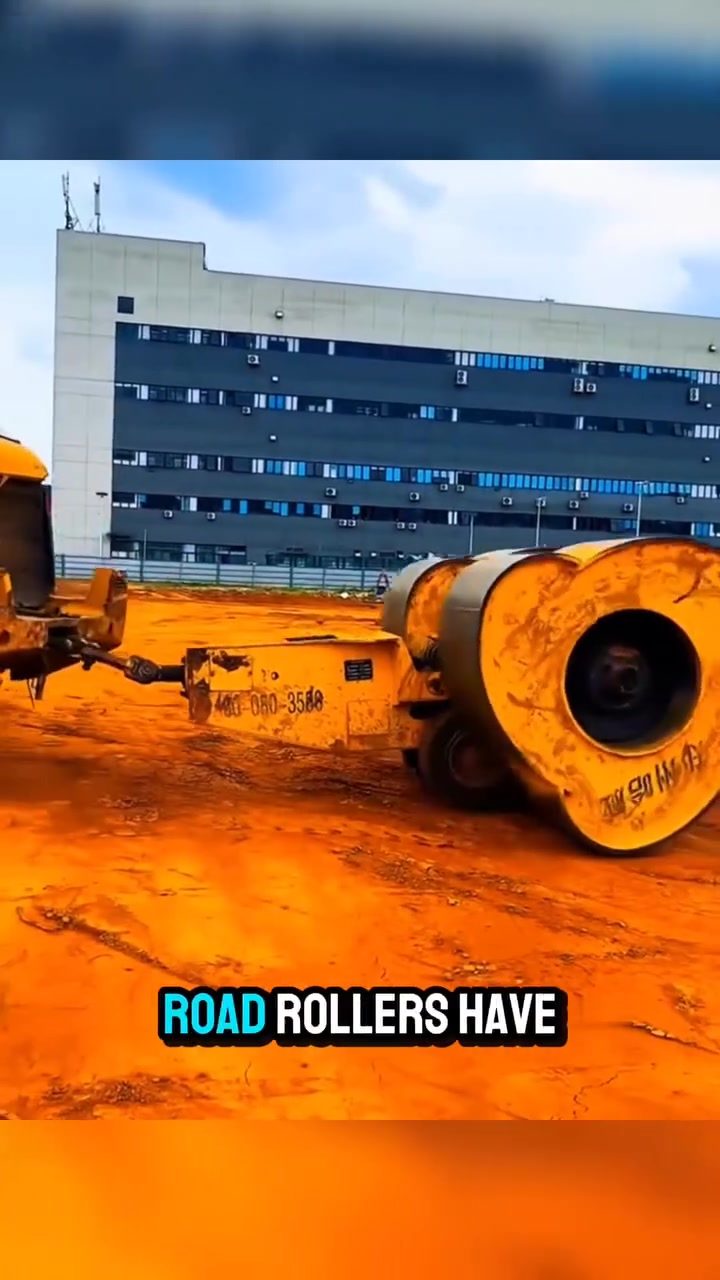
Soil Compactors and the Use of Triangular Drums
Triangular drums on road rollers aren't a mere design quirk. They serve a specific purpose in soil compaction, especially for major construction projects. These specialized machines, known as impact rollers, are crucial for deep ground compaction, which is essential for large-scale projects such as highways, airports, dams, and railways. Their unique design and functionality set them apart from conventional round rollers, making them an indispensable tool in the construction industry.
Why Deep Compaction Matters
For major construction projects, the stability and durability of the foundation are paramount. This is where soil compaction comes into play. Deep compaction ensures that the soil is densely packed, providing a stable base that can support heavy structures and withstand various environmental conditions. Traditional round rollers, while effective for ordinary road surfaces, typically compact soil to a depth of only 20 to 30 centimeters. This depth is sufficient for everyday use but falls short for large-scale construction projects that require deeper compaction.
The Science Behind Impact Rollers
Impact rollers, also known as pyramidal or triangular rollers, are designed to deliver a powerful impact force with each revolution. This force is generated by the unique shape of the drum, which creates three major impacts per revolution. These impacts are akin to giant hammers repeatedly pounding the foundation, generating shock waves that can reach depths of around 1.5 to 2.5 meters. This deep penetration is crucial for compacting difficult soils and large earth fills, ensuring a robust and stable base for construction.
Impact vs. Vibration: Understanding the Difference
While conventional round rollers rely on their weight and high-frequency vibration to compact the soil, impact rollers use a different mechanism. The triangular shape of the drum converts the rolling motion into a powerful impact force. This force is more effective in penetrating deeper layers of soil, making it ideal for projects that require deep compaction. The shock waves generated by the impacts help in breaking down any loose soil particles and settling them into a denser, more stable configuration.
Applications of Impact Rollers
Impact rollers are commonly used in various large-scale construction projects, including highways, airports, dams, and railways. These projects require a solid foundation that can withstand heavy loads and environmental stresses. Impact rollers are particularly effective in compacting difficult soils, such as coarse-grained or granular materials, which are often found in these projects. Their ability to penetrate deep into the soil makes them an indispensable tool for ensuring the stability and durability of these structures.
Practical Tips for Using Impact Rollers
When using impact rollers, it's essential to consider several practical tips to ensure effective compaction:
-
Site Preparation: Before using an impact roller, ensure the site is properly prepared. Remove any large debris or obstacles that could interfere with the compaction process.
-
Soil Moisture: The moisture content of the soil plays a crucial role in compaction. Impact rollers work best on soil with optimal moisture levels. Too dry or too wet soil can hinder the compaction process.
-
Operating Speed: Maintain a consistent operating speed to ensure uniform compaction. Varying speeds can result in uneven compaction, which can compromise the stability of the foundation.
-
Multiple Passes: For deep compaction, multiple passes may be required. This ensures that the shock waves reach the desired depth and that the soil is adequately compacted.
-
Regular Maintenance: Impact rollers are robust machines, but regular maintenance is essential to keep them in optimal working condition. Inspect the drum, bearings, and other critical components regularly to ensure they function correctly.
Important Takeaways
- Specialized Design: Impact rollers are designed with a triangular drum to generate powerful impact forces, which are crucial for deep ground compaction.
- Deep Compaction: These machines can compact soil to depths of around 1.5 to 2.5 meters, making them ideal for large-scale construction projects.
- Versatility: Impact rollers are versatile and can be used for various projects, including highways, airports, dams, and railways.
- Effective for Difficult Soils: They are particularly effective in compacting difficult soils, such as coarse-grained or granular materials.
Conclusion
Impact rollers play a vital role in construction, particularly for projects that require deep ground compaction. Their unique design and powerful impact force make them an essential tool for ensuring the stability and durability of large-scale structures. Understanding their functionality and practical use can significantly enhance construction outcomes, ensuring that projects are completed to the highest standards.
Questions readers ask
What makes impact rollers different from traditional round rollers?
Impact rollers feature a unique triangular drum design. This design allows them to deliver a more powerful and deeper force into the ground compared to traditional round rollers. The impact roller compaction technique utilizes shock waves to achieve superior compaction, making them suitable for large-scale construction projects like highways and airports.
Why is deep soil compaction important for major infrastructure projects?
Deep soil compaction is crucial for creating a stable and durable base for major infrastructure projects. By densely packing the soil, compaction ensures that the foundation can withstand heavy loads and resist settling, which is vital for the longevity and safety of structures like highways, airports, and dams.
What types of construction projects benefit from using impact rollers?
Impact rollers are particularly beneficial for large-scale construction projects that require a stable and durable base. This includes the construction of highways, airports, railways, and dams. The deep compaction provided by impact rollers ensures that these structures will have a solid foundation to support their intended use and longevity.
How does the triangular drum design of an impact roller work for compaction?
The triangular drum design of an impact roller generates a powerful force that penetrates deep into the soil. As the roller moves, it creates shock waves that compress the soil more effectively than traditional round rollers. This results in a more compacted and stable base, which is essential for major construction projects.
Are impact rollers more effective than traditional round rollers for highway construction?
Yes, impact rollers are often more effective for highway construction due to their ability to achieve deep soil compaction. This is particularly important for highways, where the stability and durability of the base are critical for withstanding heavy traffic and varying weather conditions. The unique design of impact rollers ensures a more robust and long-lasting road surface.
Can impact rollers be used for airport construction, and if so, why are they beneficial?
Impact rollers are highly beneficial for airport construction due to their ability to provide deep compaction. This is crucial for airport runways and taxiways, which need to support the weight of heavy aircraft and withstand frequent use. The stability and durability ensured by impact rollers make them an ideal choice for these critical infrastructure elements.
How do impact rollers compare to other compaction equipment for highways and major infrastructure?
Impact rollers stand out from other compaction equipment due to their unique triangular drum design, which allows for deeper and more effective compaction. This makes them particularly suitable for major infrastructure projects where a stable and durable base is essential, such as highways, airports, and dams. Their ability to deliver powerful shock waves ensures a superior level of compaction compared to traditional methods.
Recent articles
Fresh deep dives from the latest Reels we unpacked.




Comments
Be the first to comment.