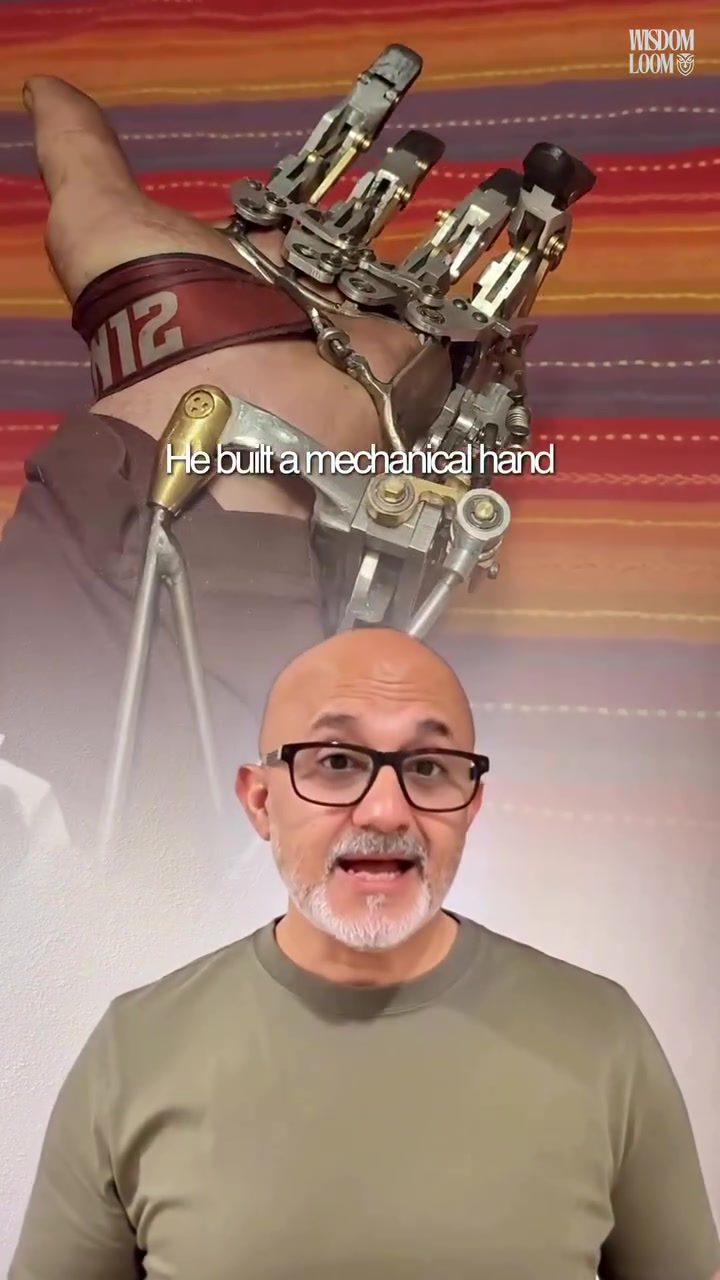
Mechanical Hand Creation
Ian Davis, a mechanical engineer and cancer patient, turned necessity into ingenuity by crafting a mechanical prosthetic hand using readily available hardware store materials. His journey began with a high school project, but it took a personal turn when a life-threatening infection led to the amputation of four fingers on his dominant hand. Insurance denied his claim for a prosthetic, labeling his fingers as "medically unnecessary." Undeterred, Davis designed and built his own prosthetic hand from his hospital bed using a 3D printer and common household items.
Why This Matters
Davis' mechanical hand stands out in the world of prosthetics due to its simplicity and efficiency. Unlike electronic prosthetics, which often rely on complex systems of motors, batteries, and electronics, Davis' hand operates purely through mechanical principles. This makes it not only more reliable but also significantly faster and easier to maintain. The hand opens in 0.2 seconds, ten times faster than most electronic prosthetics, and can splay its fingers completely flat, a feature that many commercial prosthetics lack.
Main Discussion
The Inspiration and Necessity
Davis' journey began during his high school years when he worked on a mechanical hand project. Little did he know that this experience would later prove invaluable. After developing multiple myeloma, a type of cancer that weakened his bones, a simple hand injury escalated into a life-threatening infection. Doctors amputated four fingers on his dominant hand, leaving him with limited mobility and functionality. Traditional prosthetics, which relied on complex electronic systems, were both expensive and out of reach for him.
The Design and Construction
Davis' mechanical hand is a testament to his engineering prowess. Using 3D-printed components, elastic strings, metal rods, and hardware-store materials, he created a prosthetic that is both functional and durable. The design leverages the natural movement of the wrist to control all four fingers through pure mechanics, eliminating the need for motors, batteries, or electricity. This not only simplifies the design but also makes it more affordable and accessible.
The Advantages of a Mechanical Design
One of the standout features of Davis' mechanical hand is its speed. It can open in just 0.2 seconds, making it 10 times faster than most electronic prosthetics. Additionally, the hand's ability to splay its fingers completely flat allows for a level of dexterity that many commercial prosthetics cannot achieve. This design ensures that users have individual control over each finger, enhancing their ability to perform intricate tasks.
Practical Tips
Building Your Own Mechanical Hand
For those inspired by Davis' story and interested in creating their own mechanical hand, here are some practical tips to get you started:
- Start with a Plan: Begin by sketching out your design. Think about the materials you'll need and how the hand will function mechanically.
- Choose Your Materials: Davis used 3D-printed components, elastic strings, metal rods, and hardware-store materials. These are all readily available and affordable.
- Test and Iterate: Building a prosthetic is an iterative process. Don't be afraid to test different designs and materials to find what works best.
- Focus on Functionality: Make sure your design allows for the necessary range of motion and control. Davis' design is successful because it leverages natural wrist movements for control.
- Seek Expertise: If possible, consult with an engineer or someone with experience in mechanical design. Their expertise can help you refine your ideas and avoid common pitfalls.
Important Takeaways
Davis' mechanical hand is more than just a practical solution for amputees. It represents a shift in how we think about prosthetics and medical engineering. By using mechanical principles, Davis has created a device that is not only faster and more reliable but also more affordable. This approach could pave the way for new innovations in the field, making prosthetics more accessible to those who need them.
Conclusion
Ian Davis' journey from a high school project to building a functional mechanical hand is a story of resilience and innovation. His mechanical hand, crafted with simple materials and mechanical engineering principles, offers a practical and affordable alternative to complex electronic prosthetics. Whether you're an engineer, a maker, or someone in need of a prosthetic, Davis' story serves as an inspiration to think outside the box and create solutions that work.
Questions readers ask
What inspired Ian Davis to create his mechanical hand?
Ian Davis was inspired to create his mechanical hand after a life-threatening infection led to the amputation of four fingers on his dominant hand. His insurance denied a claim for a prosthetic, stating his fingers were 'medically unnecessary,' prompting him to build his own from readily available materials.
What materials did Ian Davis use to build his prosthetic hand?
Ian Davis used a 3D printer and common household items to build his prosthetic hand. The materials were sourced from hardware stores, making his creation an affordable and accessible solution for others in similar situations.
How does Ian Davis' mechanical hand differ from commercial prosthetics?
Ian Davis' mechanical hand stands out due to its simplicity and efficiency. Unlike commercial electronic prosthetics, which often rely on complex systems of motors and sensors, Davis' design is straightforward, using basic hardware components.
Can I build a similar prosthetic hand at home?
Yes, you can build a similar prosthetic hand at home. Ian Davis' design uses readily available materials, and his story demonstrates that a mechanical hand can be constructed with basic hardware store components and a 3D printer. However, it is important to consult with a healthcare professional to ensure the design meets your specific needs.
How long did it take Ian Davis to create his prosthetic hand?
Ian Davis developed his prosthetic hand while in the hospital, which shows the remarkable speed of his creation. He designed and built his mechanical hand in a relatively short period, highlighting the power of necessity-driven innovation.
Recent articles
Fresh deep dives from the latest Reels we unpacked.




Comments
Be the first to comment.