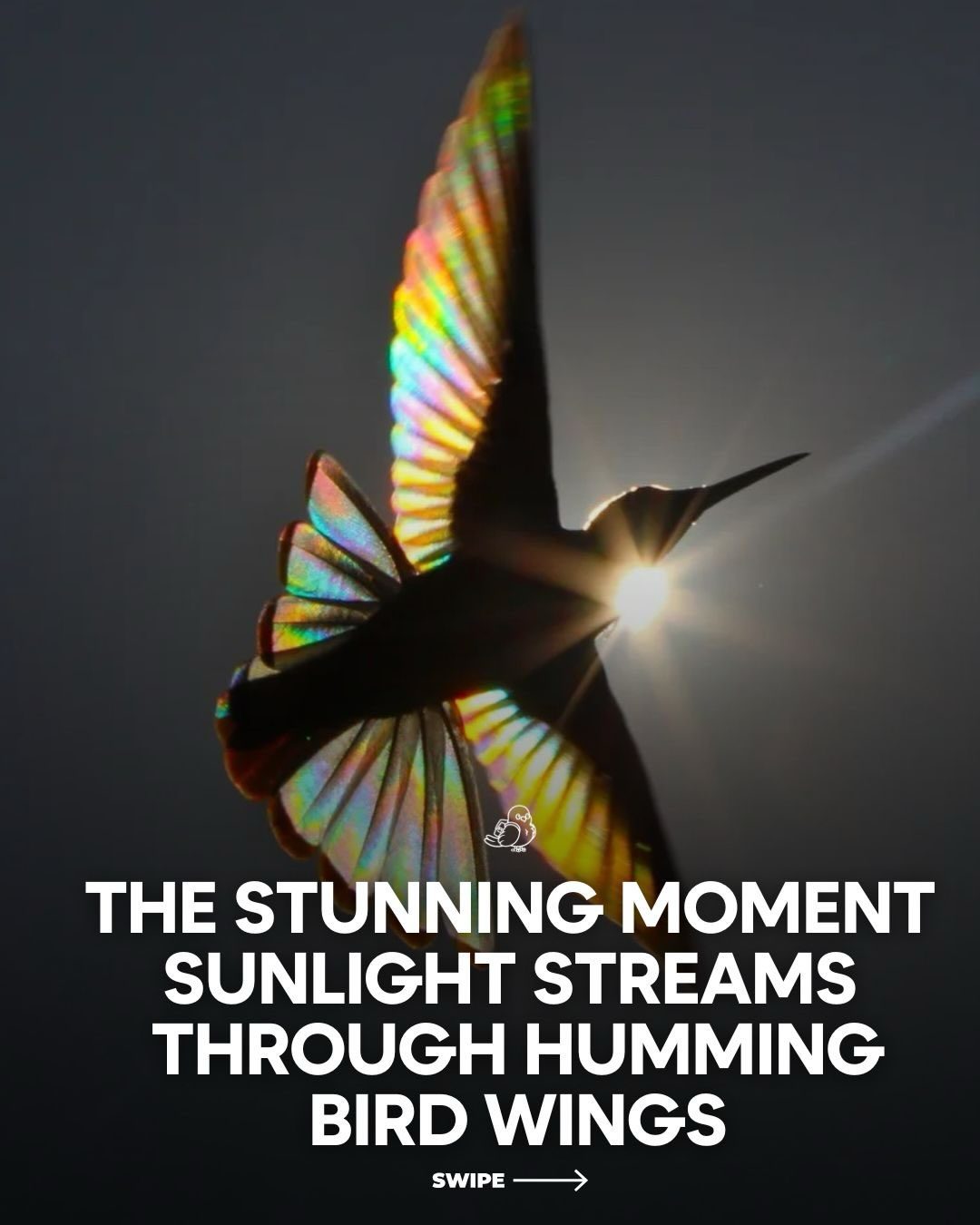
Hummingbird Wings in Sunlight
When sunlight filters through a hummingbird's wings, it reveals a breathtaking and natural play of light. This stunning moment was captured by an award-winning photograph, showcasing the iridescent colors and dynamic movement of a hummingbird in flight. The image, taken by Christian Spencer, highlights the beauty of nature without any AI or Photoshop enhancements, focusing on the purely natural allure of the scene.
Why This Matters
Hummingbirds are known for their remarkable agility and speed, making them a captivating subject for photographers. The way sunlight interacts with their wings adds an extra layer of fascination. Understanding this natural phenomenon can deepen appreciation for these small but extraordinary birds and the wonders of the natural world.
Main Discussion
The Science Behind Iridescence
The iridescent colors seen on hummingbird wings are due to a phenomenon called structural coloration. This is different from the pigments that create colors in many other animals. Structural coloration is produced by the interaction of light with tiny structures on the surface of the feathers. In hummingbirds, these structures are microscopic barbs and hooks that reflect and scatter light in a way that creates a striking, shimmering effect.
The Role of Sunlight
Sunlight plays a crucial role in revealing the iridescence of hummingbird wings. When the sun’s rays hit the wings at just the right angle, the tiny structures on the feathers cause the light to separate into its different wavelengths, creating a spectrum of colors. This is why the hummingbird’s wings appear so vibrant and colorful in direct sunlight. The beauty of this natural display is enhanced by the bird’s rapid wing movements, making it a mesmerizing sight.
Capturing the Moment
Capturing this stunning moment requires more than just a camera and a lucky break. It involves understanding the behavior and flight patterns of hummingbirds, as well as the optimal conditions for lighting and background. Photographers often spend hours observing these birds to anticipate the perfect moment. Christian Spencer’s award-winning photograph is a testament to his skill and patience.
Practical Tips
For those interested in capturing similar moments, here are some practical tips:
Patience and Preparation
Hummingbirds are small and fast, so patience is key. Spend time observing their behavior and flight patterns. Knowing their routines can help you anticipate the perfect moment to snap a shot. Also, set up your equipment in advance to avoid any delays when the moment arises.
Optimal Lighting
Natural, direct sunlight is crucial for highlighting the iridescent colors of hummingbird wings. Position yourself where the sunlight can filter through the wings at an angle that maximizes the color effect. Early morning or late afternoon light is often best for this type of photography.
Camera Settings
Use a fast shutter speed to capture the rapid wing movements. A tripod can help stabilize the camera, and a telephoto lens can bring the subject closer without frightening the bird. Manual focus is often necessary to capture the fine details of the wings. Experiment with different camera settings and angles to get the best results.
Important Takeaways
The beauty of a hummingbird's wings in sunlight is a natural marvel that can be captured through careful observation and the right photographic techniques. Understanding the science behind iridescence and the role of sunlight can help enhance the appreciation for this stunning sight. For photographers, capturing this moment involves patience, preparation, and a deep understanding of the subject.
Conclusion
The interplay of sunlight and a hummingbird’s wings creates a visual spectacle that is both awe-inspiring and scientifically fascinating. It is a testament to the intricate beauty of nature, best appreciated through careful observation and the right photographic skills. Christian Spencer’s photograph exemplifies this natural wonder, inviting us to marvel at the iridescent colors and dynamic movements of these remarkable birds. Whether you're a photographer or a nature enthusiast, taking the time to appreciate these moments can enrich your understanding and appreciation of the natural world.
Questions readers ask
How do hummingbird wings produce those shimmering colors in sunlight?
Hummingbird wings exhibit structural coloration, which is the result of microscopic structures on their feathers that refract and reflect light. When the sun hits these structures, it creates the stunning iridescent effect that makes hummingbird wings shimmer and change color.
What is the best way to capture the shimmering effect of hummingbird wings in photos?
To capture hummingbird wings shimmering in sunlight, use a fast shutter speed to freeze their rapid wing movements. Position yourself so that the sunlight hits the wings at an angle, and focus on the bird's flight patterns to anticipate the best moments for a shot. Backlit images can also enhance the iridescent effect.
Why do hummingbirds move their wings so rapidly during flight?
Hummingbirds have the highest metabolism of any bird, which requires a constant intake of energy. Their rapid wing movements, with beats ranging from 50 to 200 times per second, allow them to hover in place and change direction swiftly. This agility is crucial for feeding and avoiding predators, making their flight patterns both efficient and captivating to observe.
What camera settings are recommended for photographing hummingbirds in flight?
For photographing hummingbirds, use a fast shutter speed (at least 1/1000 second) to capture their quick movements. A wide aperture (low f-number) will help blur the background and keep the bird in focus. Consider using a high ISO to maintain a fast shutter speed in lower light conditions and a continuous shooting mode to capture multiple frames per second.
How can understanding hummingbird behavior improve wildlife photography?
Understanding hummingbird behavior, such as their feeding times and preferred flowers, can help you anticipate their movements and be ready to capture stunning moments. Knowing their flight patterns and preferred perches can also help you position yourself for the best angles and lighting, making your photography sessions more successful and enjoyable.
Recent articles
Fresh deep dives from the latest Reels we unpacked.




Comments
Be the first to comment.