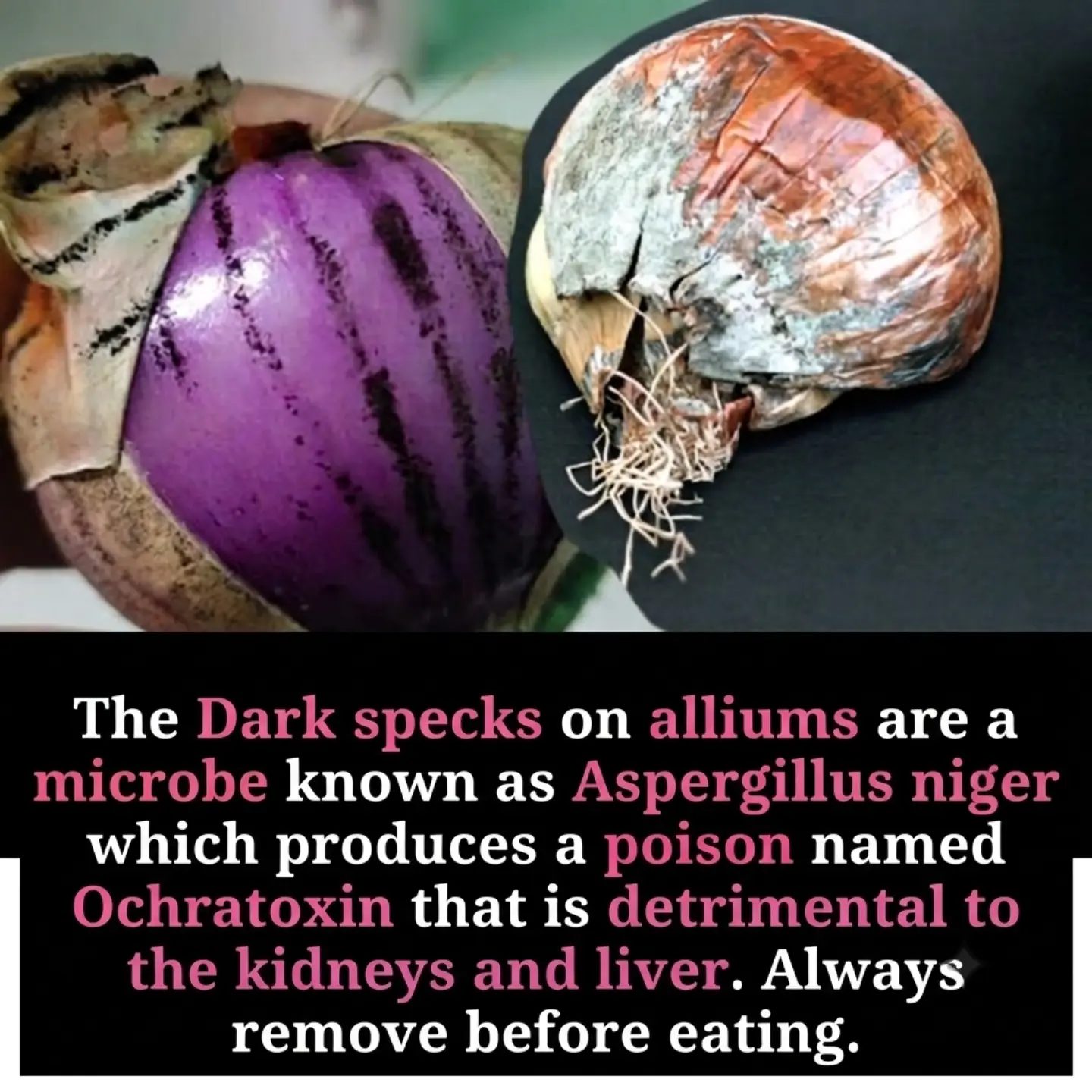
Red Onions and Fungal Infection: Understanding Aspergillus Niger
When shopping, you might notice small dark spots on red onions. These specks, often mistaken as dirt, are actually a fungus known as Aspergillus niger, a common pathogen that thrives in warm and humid post-harvest environments. While it might be alarming to see these spots, understanding the nature of Aspergillus niger and the potential risk to consumers can put your mind at ease.
Context / Why This Matters
Onions are a staple in many kitchens, used to flavor a wide variety of dishes. The discovery of Aspergillus niger on your onions might cause concern, but it's important to understand the true risk and how to handle onions safely. This knowledge ensures you and your family can continue enjoying onions without worry.
The Fungal Infection: Aspergillus Niger
What is Aspergillus Niger?
Aspergillus niger is a ubiquitous soil-borne fungus that frequently affects alliums, the family of plants that includes onions, garlic, and chives. The dark specks or streaks on the outer skins and necks of onions, caused by Aspergillus niger, are indicative of black mold. This fungus is particularly active in warm, humid conditions, making proper storage crucial.
How Does it Affect Onions?
Aspergillus niger primarily affects the dry, papery outer scales of onions. It is less common for the fungus to penetrate the deep, succulent inner layers of the bulb. In some cases, the fungus produces a toxin called Ochratoxin, but it is essential to clarify the true risk this poses to consumers.
Occurrence and Spread
The fungus thrives in warm, humid post-harvest environments, making proper storage and handling of onions crucial. It is also important to note that the fungus can be found in many environments, which means it is not uncommon to find it on onions.
Ochratoxin: The Poisonous Compound
Understanding Ochratoxin
Certain strains of Aspergillus niger can produce a toxin known as Ochratoxin A. This mycotoxin is linked to renal toxicity and liver stress, particularly in cases of severe, high-exposure. However, it is highly uncommon for black mold on domestic onions to produce hazardous levels of this toxin.
Risk to Humans
Under normal consumption habits, the fungus remains superficial and does not penetrate the inner layers of the onion. Even if the fungus is present, the risk to humans is minimal, especially when proper precautions are taken.
Management and Culinary Preparation
Proper Handling and Storage
To minimize the risk of fungal infection, it's essential to handle and store onions correctly. Store onions in a cool, dry place, away from direct sunlight and moisture. Proper ventilation in the storage area can also help prevent the growth of Aspergillus niger.
Preparation Tips
When preparing onions for cooking, follow these steps to ensure food safety:
- Infection Outer Scales: Peel off and discard the infected outer scales entirely. This will remove the majority of the fungal spores.
- Exposed Inner Layers: Wash the exposed inner layers thoroughly under cold, running water. This will help remove any loose spores that may remain.
- Inspect the Flesh: Check the inner flesh of the onion. If it is firm and spot-free, it is safe to cook and consume. If the flesh is soft, mushy, or deeply discolored, discard the entire onion to avoid consuming any toxins.
When to Discard
If the fungal growth has penetrated deep into the flesh or caused the onion to become soft, discard the entire bulb. This is a clear indication that the onion is no longer safe to eat.
Practical Tips
Choosing and Buying
When buying onions, inspect them carefully for any signs of discoloration or mold. Choose onions that are firm, have dry outer scales, and are free from any visible signs of infection. Store them in a well-ventilated area to prevent the growth of Aspergillus niger.
Cleaning and Storing
Once you've purchased your onions, clean and store them properly. Remove any outer scales that show signs of mold and store the onions in a cool, dry place. Proper storage can help prevent the spread of any potential fungal infection.
Recognizing and Handling
Recognize the signs of Aspergillus niger and handle onions accordingly. By removing the affected outer layers and thoroughly washing the inner flesh, you can minimize the risk of consuming any toxins.
Important Takeaways
Aspergillus niger is a common fungus that can affect onions, but the risk to humans is minimal when proper precautions are taken. By understanding the nature of this fungus and following safe handling and preparation practices, you can continue to enjoy onions in your cooking.
Conclusion
While the presence of Aspergillus niger on onions might be alarming, it is crucial to understand the true risk and how to handle onions safely. By following proper storage and preparation practices, you can minimize any potential risks and continue to enjoy onions in your cooking. Always remember to inspect, peel, and wash your onions thoroughly to ensure food safety.
Questions readers ask
What are the signs of Aspergillus niger on red onions?
Aspergillus niger on red onions typically appears as small, dark spots or specks, often mistaken for dirt. These spots are usually found on the outer layers of the onion and can indicate the presence of the fungus.
Is it safe to consume onions with Aspergillus niger?
Yes, it is generally safe to consume onions with Aspergillus niger. The fungus is primarily found on the outer layers, and thorough removal of these layers can minimize exposure. However, if the inner layers show signs of mold, it is best to discard the onion.
How should I cut and prepare onions with Aspergillus niger?
To safely cut and prepare onions with Aspergillus niger, start by removing the outer layers where the fungus is most likely present. Use a clean knife and cutting board to minimize cross-contamination. Ensure that the inner layers, which are typically unaffected, are thoroughly washed before use.
What are the risks of consuming Aspergillus niger ochratoxin?
While Aspergillus niger can produce ochratoxin, a mycotoxin, the levels typically found on red onions are minimal and pose a low risk to healthy individuals. However, young children, the elderly, and those with compromised immune systems may be more susceptible and should take extra precautions.
How can I safely store onions to prevent fungal growth?
To prevent fungal growth, store onions in a cool, dry, and well-ventilated area. Avoid storing them in plastic bags, which can trap moisture and promote mold growth. Opt for mesh bags or burlap sacks, and ensure the onions have space between them to allow for air circulation.
What should I do if I find mold on the inner layers of an onion?
If you discover mold on the inner layers of an onion, it is best to discard the entire onion. Consuming moldy inner layers can pose a health risk. Always inspect onions thoroughly before use, and if in doubt, it’s safer to discard them.
Related deep dives
Similar reads based on topic and creator.
Recent articles
Fresh deep dives from the latest Reels we unpacked.




Comments
Be the first to comment.