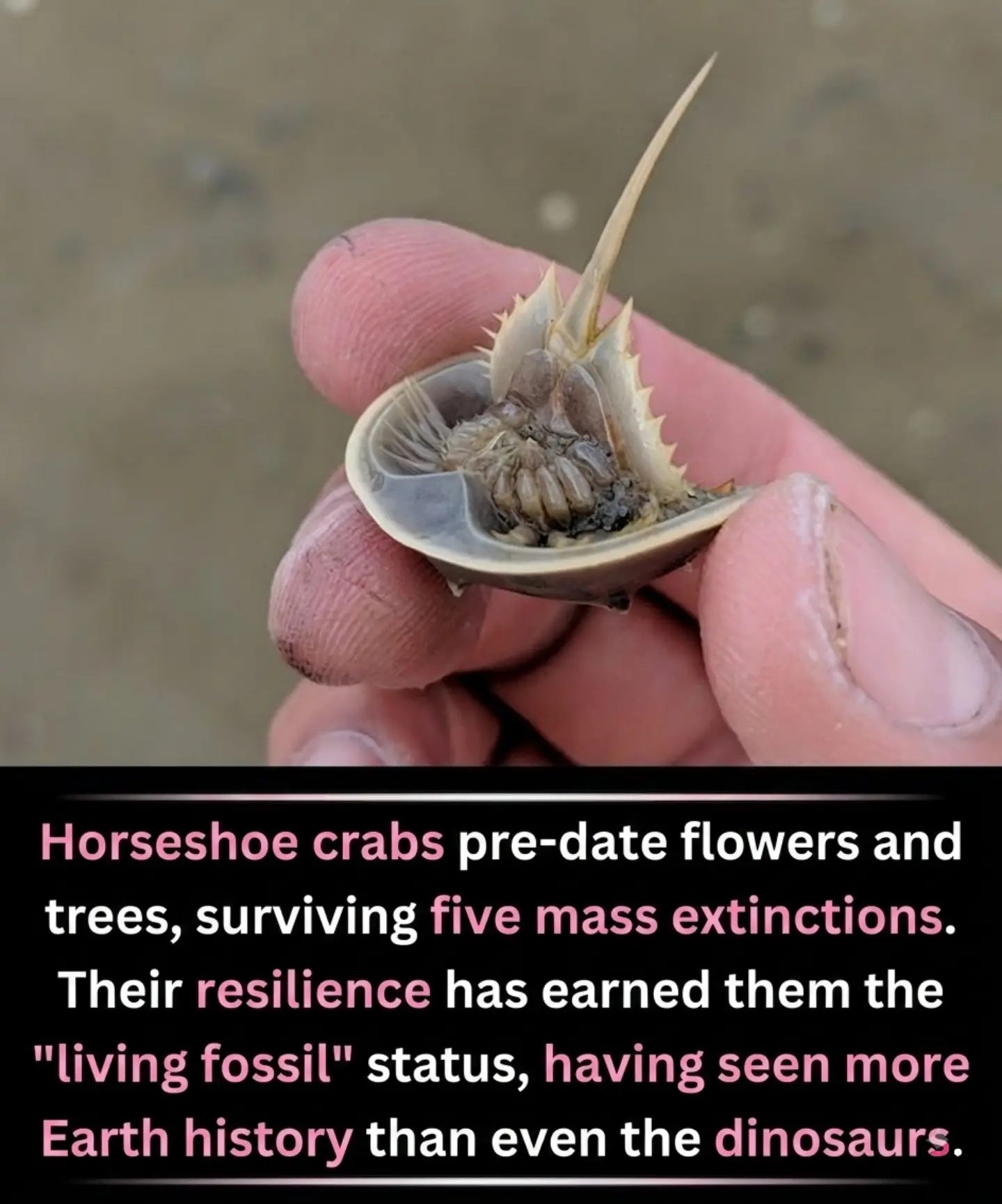
Horseshoe crabs are fascinating creatures that have captured the attention of scientists and nature enthusiasts alike. These ancient creatures have a rich history and unique biological features that make them stand out in the animal kingdom.
Context / Why this matters
Understanding the remarkable resilience and unique characteristics of horseshoe crabs is important for several reasons. Their long history on Earth provides insights into the evolution of life and the resilience of species to environmental changes. Additionally, their unique biological features have significant implications for modern medicine, making them valuable to both scientific research and human health.
The Ancient Origins of Horseshoe Crabs
A Timeline of Survival
Horseshoe crabs have been on Earth for over 450 million years, predating not only dinosaurs but also flowering plants and trees. This ancient lineage has allowed them to witness significant events in Earth's history, including the rise and fall of various species.
Surviving Extinctions
One of the most remarkable aspects of horseshoe crabs is their ability to survive multiple mass extinction events. They have endured five such events, which is a testament to their resilience and adaptability. Their endurance has earned them the nickname "living fossil," a term that highlights their unchanged form over millions of years.
More Than Just a Crab
While often referred to as crabs, horseshoe crabs are actually more closely related to arachnids, such as spiders and scorpions. This misnomer can be attributed to their crustacean-like appearance and similar marine habitats. Their unique biology and evolutionary history make them a subject of great interest in the fields of marine biology and evolutionary studies.
Unique Biological Features
Blue Blood and Medical Applications
One of the most intriguing features of horseshoe crabs is their copper-based, bright blue blood. This distinctive color is due to the presence of hemocyanin, a copper-containing protein that transports oxygen. This unique blood has significant medical applications, particularly in the field of biotechnology. Scientists use a substance found in horseshoe crab blood, called limulus amebocyte lysate (LAL), to test new vaccines and medical devices for bacterial contamination. This ensures the safety and efficacy of medical treatments, making horseshoe crabs indispensable in modern medicine.
Adaptations for Survival
Horseshoe crabs have several adaptations that contribute to their remarkable resilience. Their hard, spiked shell provides protection against predators, and their unique respiratory system allows them to extract oxygen from water. These adaptations, combined with their ancient lineage, have enabled them to thrive in various marine environments.
Practical Tips for Observing and Protecting Horseshoe Crabs
How to Identify a Horseshoe Crab
Identifying a horseshoe crab is relatively straightforward due to their distinctive appearance. They have a hard, horseshoe-shaped shell and a long, spiked tail. Their bright blue blood is another key identifier, though it is not always visible.
Conservation Efforts
Given their importance to scientific research and their ancient lineage, conservation efforts for horseshoe crabs should be a priority. Individuals can contribute by supporting marine conservation organizations and participating in beach cleanups. Additionally, practicing sustainable fishing and avoiding the harvesting of horseshoe crabs for bait or other uses can help protect these vital creatures.
Respect and Appreciation
Horseshoe crabs, while often overlooked, are deserving of respect and appreciation for their incredible resilience and contributions to human health. By recognizing their unique place in the natural world, we can better understand and preserve the delicate balance of marine ecosystems.
Important Takeaways
Horseshoe crabs are not only ancient creatures with a rich evolutionary history but also vital to modern medicine. Their blue blood contains a substance crucial for ensuring the safety of medical treatments. Their resilience in the face of multiple extinction events and their unique biological features make them a subject of great interest and importance.
Conclusion
Horseshoe crabs are a testament to the incredible resilience and adaptability of life on Earth. From their ancient origins to their unique biological features and significant contributions to modern medicine, these creatures offer valuable insights into the natural world. By understanding and appreciating horseshoe crabs, we can better protect and preserve the diverse ecosystems that support life on our planet.
Questions readers ask
How are horseshoe crabs related to arachnids?
Horseshoe crabs, despite their name, are not true crabs. They belong to the subphylum Chelicerata, which includes arachnids like spiders and scorpions. This shared ancestry is a reason why horseshoe crabs have unique biological features.
What makes horseshoe crab blood unique and valuable?
The blue blood of horseshoe crabs contains a clotting agent called Limulus amebocyte lysate (LAL), which is highly sensitive to bacterial endotoxins. This property makes it invaluable in testing medical equipment and vaccines for bacterial contamination, contributing to modern medicine.
How have horseshoe crabs adapted to survive mass extinctions?
Horseshoe crabs have shown remarkable resilience due to their ability to thrive in various environments and adapt to changing conditions over millions of years. Their simple yet effective biological mechanisms, such as their hard shell and burrowing habits, have helped them endure through multiple mass extinction events.
What is the historical timeline of horseshoe crabs?
Horseshoe crabs have been present on Earth for over 445 million years and have survived through numerous geological periods, including the time of dinosaurs. Throughout their history, they have witnessed and survived multiple mass extinction events, making them one of the most enduring species on the planet.
How do horseshoe crabs reproduce and why is their reproduction unique?
Horseshoe crabs have a unique mating process where the male attaches to the female's shell during mating. After mating, the female lays her eggs in the sand, usually in clusters, and the male fertilizes them. This process, combined with their long lifespan and slow metabolism, has contributed to their survival over millennia.
What are the different species of horseshoe crabs and where can they be found?
There are four recognized species of horseshoe crabs: the Atlantic horseshoe crab, the Gulf Coast horseshoe crab, the Indo-Pacific horseshoe crab, and the Japanese horseshoe crab. They are primarily found in shallow coastal waters and estuaries, with the Atlantic and Gulf Coast species inhabiting the eastern coast of North America, and the Indo-Pacific and Japanese species found in the western Pacific.
What can the fossil record tell us about horseshoe crabs?
The fossil record of horseshoe crabs reveals a continuous presence on Earth for millions of years, with fossils dating back over 445 million years. These fossils show that horseshoe crabs have undergone relatively little change in body structure, indicating a high level of adaptation and resilience to changing environments, but they have not evolved much over the long expanse of Earth's history.
Related deep dives
Similar reads based on topic and creator.




Recent articles
Fresh deep dives from the latest Reels we unpacked.




Comments
Be the first to comment.