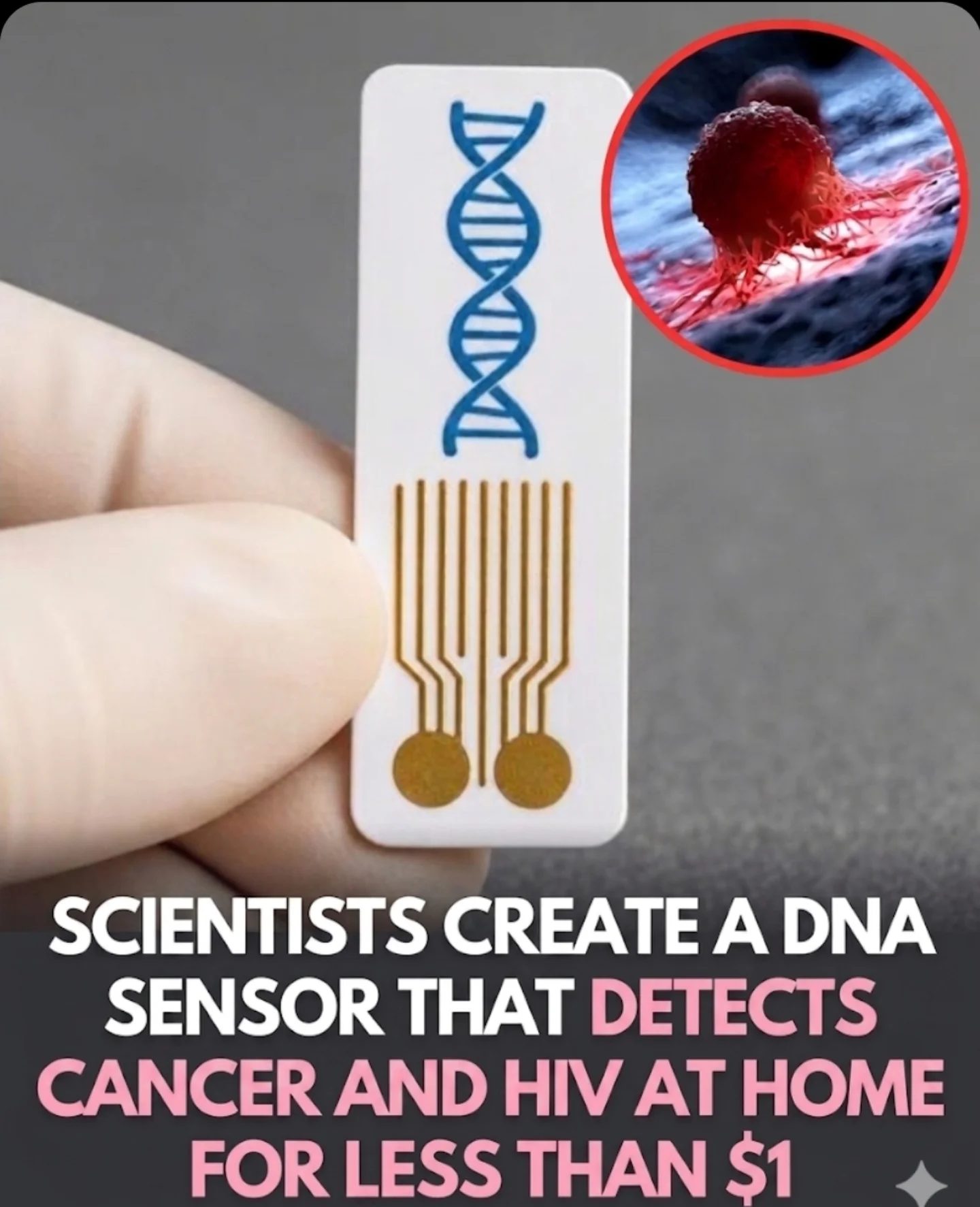
DNA Sensors for Home Detection of Cancer and HIV: A Revolutionary Breakthrough
The ultra-low-cost DNA biosensor is a groundbreaking innovation in medical biotechnology, designed to revolutionize point-of-care diagnostics. This device utilizes electrochemical signaling to detect specific genetic markers for cancer and HIV from a single drop of fluid, making it an invaluable tool for early detection and monitoring.
Context / Why This Matters
Access to timely and accurate diagnostic tools is crucial for managing and treating diseases like cancer and HIV. Traditional diagnostic methods often require sophisticated laboratory equipment and trained personnel, which can be a barrier in remote or resource-limited settings. The ultra-low-cost DNA biosensor aims to bridge this gap by providing a portable, affordable, and user-friendly solution for point-of-care diagnostics.
Main Discussion
How the DNA Sensor Works
The sensor's architecture features gold-printed electrodes that trigger a measurable electrical response when targeted viral or malignant DNA is identified. This electrochemical signaling mechanism allows the device to deliver clinical-grade results in under thirty minutes. The process involves introducing a small amount of fluid (such as blood or saliva) to the sensor, which then detects specific genetic markers associated with cancer or HIV. The results are displayed on a connected device, such as a smartphone, making it accessible for home use.
Applications and Benefits
One of the most significant advantages of this DNA sensor is its portability and affordability. With a production cost of less than one dollar, these sensors can be widely distributed, making early disease detection accessible to people in remote regions and low-resource settings. The device's ability to provide results in under thirty minutes is crucial for timely medical interventions, which can significantly improve patient outcomes.
Transition to Clinical Validation
Currently, these sensors are transitioning from successful research trials to clinical validation. This phase involves rigorous testing and approval processes to ensure the reliability and accuracy of the device in real-world settings. Once validated, the sensors can be integrated into global healthcare systems, offering a cost-effective solution for early detection and monitoring of diseases like cancer and HIV.
The Science Behind the Sensor
The DNA biosensor operates on the principles of electrochemical detection. When a fluid sample containing viral or malignant DNA is introduced to the sensor, the gold-printed electrodes detect specific genetic markers. These markers trigger an electrical response, which is then measured and analyzed to provide a clinical-grade result. The electrochemical signaling process ensures high accuracy and sensitivity, making the results reliable for diagnostic purposes.
The sensor's design incorporates advanced materials and cutting-edge technology to ensure its effectiveness and affordability. The use of gold-printed electrodes enhances the device's sensitivity and durability, allowing it to function efficiently in various environments. The compact and portable nature of the sensor makes it ideal for home use, enabling individuals to perform diagnostic tests without the need for specialized laboratory equipment.
Comparison with Traditional Diagnostic Methods
Traditional diagnostic methods for diseases like cancer and HIV often involve complex laboratory procedures and specialized equipment. These methods can be time-consuming and expensive, limiting their accessibility in resource-constrained settings. In contrast, the ultra-low-cost DNA biosensor offers a portable, affordable, and user-friendly alternative. Its ability to deliver results in under thirty minutes makes it a valuable tool for early detection and monitoring, potentially saving lives by enabling timely medical interventions.
Practical Tips
Using the ultra-low-cost DNA biosensor at home is straightforward and user-friendly. Follow these practical tips to ensure accurate and reliable results:
- Preparation: Ensure the sensor and the fluid sample are at the recommended temperature and conditions. Follow the manufacturer's instructions for handling and preparation.
- Sample Collection: Collect a small amount of fluid (such as blood or saliva) using a sterile swab or collection device. Introduce the sample to the sensor as per the instructions.
- Electrochemical Signaling: Allow the sensor to process the sample. The gold-printed electrodes will detect specific genetic markers, triggering an electrical response.
- Result Interpretation: Connect the sensor to a compatible device, such as a smartphone, to view the results. Follow the on-screen instructions for interpreting the results.
- Storage: Store the sensor in a cool, dry place away from direct sunlight and moisture. Ensure the sensor is kept in its original packaging until use.
Important Takeaways
The ultra-low-cost DNA biosensor represents a significant advancement in medical diagnostics, offering a portable, affordable, and accurate solution for early detection and monitoring of diseases. By utilizing electrochemical signaling, the sensor delivers clinical-grade results in under thirty minutes, making it an invaluable tool for point-of-care diagnostics. This innovation has the potential to revolutionize global healthcare, particularly in remote and resource-constrained settings, by prioritizing speed, affordability, and life-saving accuracy.
Conclusion
The ultra-low-cost DNA biosensor is a game-changer in the field of medical diagnostics. Its ability to detect specific genetic markers for cancer and HIV from a single drop of fluid, combined with its affordability and portability, makes it an invaluable tool for early detection and monitoring. As this technology transitions from research trials to clinical validation, it holds the promise of empowering individuals and communities worldwide, particularly in remote and resource-limited settings. By providing accessible and reliable diagnostic solutions, the DNA biosensor can significantly improve patient outcomes and contribute to the broader goal of decentralized medicine.
Questions readers ask
How does the home DNA sensor work for cancer and HIV detection?
The home DNA sensor uses electrochemical signals to identify specific genetic markers associated with cancer and HIV. By analyzing a single drop of blood or saliva, the device can deliver reliable results in under 30 minutes, making it a convenient and efficient tool for early detection.
What makes the home DNA sensor cost-effective?
The sensor is designed with affordability in mind, aiming to provide clinical-grade results at an incredibly low cost—under $1 per test. This cost-effectiveness is achieved through the use of electrochemical signaling, which eliminates the need for expensive laboratory equipment and trained professionals.
Can the home DNA sensor be used in remote or resource-limited settings?
Yes, the portable and user-friendly design of the home DNA sensor makes it ideal for use in remote or resource-limited settings. Its ability to provide accurate results with minimal sample requirements and no need for complex equipment ensures that it can be effectively used in areas where access to traditional diagnostic tools is limited.
How accurate are the results from the home DNA sensor?
The home DNA sensor is designed to deliver clinical-grade results, meaning it provides a high level of accuracy comparable to traditional laboratory tests. This ensures that users can rely on the results for early detection and monitoring of cancer and HIV.
Is the home DNA sensor easy to use for individuals without medical training?
Yes, the device is user-friendly, so individuals without medical training can use it. It requires only a single drop of blood or saliva and provides results within 30 minutes, making it accessible for home use and remote testing.
Can the home DNA sensor be used for other medical conditions besides cancer and HIV?
Currently, the home DNA sensor is specifically designed to detect cancer and HIV. However, the technology behind it has the potential to be adapted for other medical conditions in the future, expanding its utility for a wider range of health issues.
What is the significance of early detection for cancer and HIV using the home DNA sensor?
Early detection is crucial for effective management and treatment of cancer and HIV. By using the home DNA sensor for early detection, individuals can seek timely medical intervention, potentially improving their outcomes and quality of life. This early detection can also help in preventing the spread of HIV and providing better management of cancer.
Related deep dives
Similar reads based on topic and creator.


Recent articles
Fresh deep dives from the latest Reels we unpacked.




Comments
Be the first to comment.