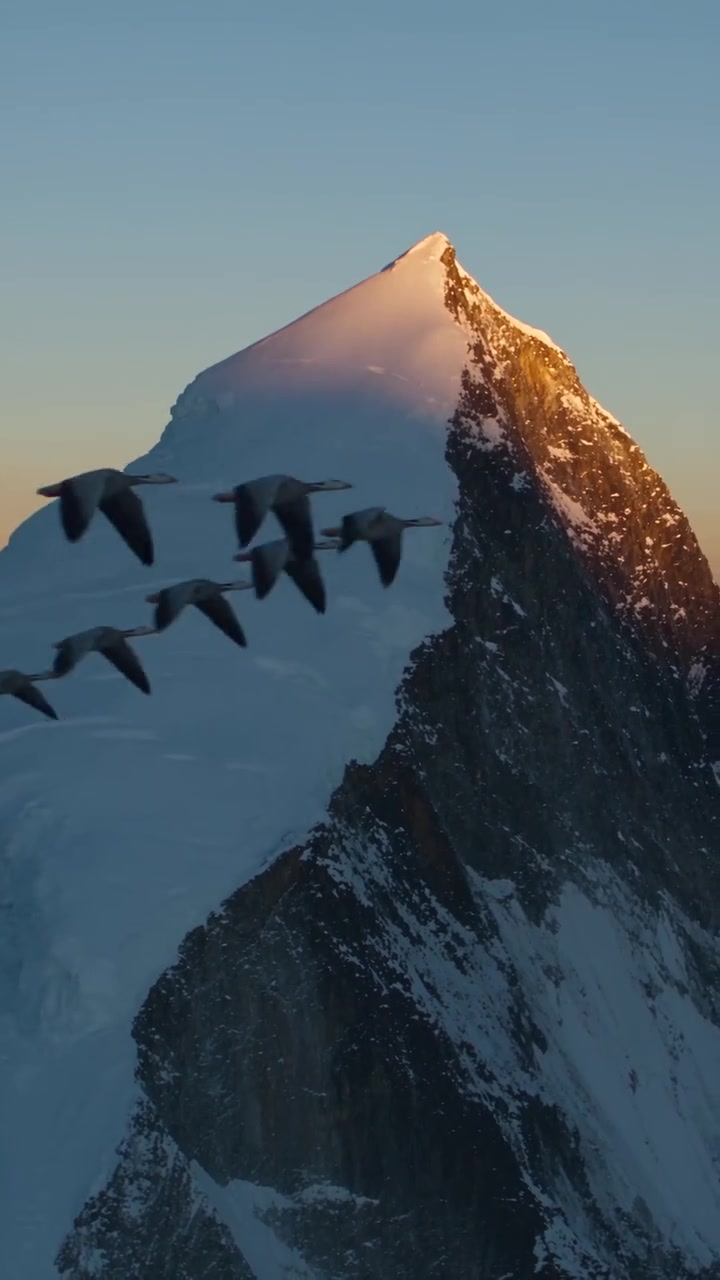
A flock of geese crests a Himalayan peak, where the air is so thin it holds less than half the oxygen available at sea level. Such is the annual journey of these birds. Flyers of the Himalayas is a mission the barheaded geese carry out twice a year. High-stakes, High-altitude migration makes others look feeble. Geese climb 6,000 meters in a single night, from the Indian plains to mountain passes in the Himalayas —the peaks are 6,000 meters high, and the birds cover this distance before sunrise. How do they manage it?
The Inner Workings of Alpine Birds
Climbing a vertical kilometer requires monster lungs. Barheaded geese have large lungs, thick blood that grabs oxygen harder, and hearts that beat at a steady pace even where a human’s would slow. This physiology helps them endure high altitudes and survive thin air. It goes far beyond lungs. Geese adapted to the unique challenges of high altitude. In a wind tunnel, researchers found that geese can fly in air as thin as 9,000 meters. Their own blood — much thicker than that of humans— cools to maintain body temperature. The geese don’t merely soar over the Himalayas, they ride the terrain like a roller coaster. They drop into valleys to save energy before ascending to the next peak. Geese navigate the Himalayas using the terrain instead of flying straight over it. They conserve energy and strength by dropping into valleys. Then, they climb over each ridge depending on the prevailing wind direction.
The Crystal- Clear Algorithm of Flight
Energy conservation fuels the geese’s journey. The birds use the terrain to navigate instead of exhausting themselves with continuous flight. They’re wired for endurance. Their brains program their wings to grasp the oxygen they need. Then, they dive for valleys to rest. When they finally approach the mountain, the birds climb without hesitation. Their track records suggest that their migration is a science.
Grasp for Oxygen
Geese have a thicker blood that is more capable of holding more oxygen. Their bodies have adapted in ways that humans can’t replicate. Geese grab oxygen from the atmosphere with a natural mechanism. They can gather oxygen in thin air. This comes from the fact that their blood is different. Their lungs are much larger than an average bird. All these factors contribute to their sustained flight across the Himalayas. Their hearts beat steadily where a human's would slow. It's all about conserving oxygen and energy.
The Wind Tunnel Experiment
A wind tunnel experiment has shown that geese can fly in air as thin as 9,000 meters. Their blood cools while this happens. Scientists are still trying to figure out why. Geese rely on extremely cold temperatures during their flight. This may be a way to conserve oxygen. They get this extreme altitude exclusively at night. It's a natural occurrence because geese are nocturnal. It's fascinating to see how this happens.
The Wonders of Annual Migration
Every spring, geese leave the Himalayas on their return flight to the Indian plains. This behavior repeats annually. They migrate twice a year, each time crossing the Himalayas. Some do it to avoid harsh winters, but geese do it to reach their breeding grounds. The Himalayas are an obstacle they easily navigate.
The Most Efficient Goose Trackers
Researchers tracked the geese’s journey. They found that the birds don’t stay high for long. Instead, they save energy by dropping into valleys. Geese release vital energy when flying through hills. This is not an easy process. This requires them to navigate cold temperatures and lack of oxygen. They stay committed to this routine. On most nights, geese cover a distance close to 6,000 meters. This is an extraordinary distance to cover at night.
Deep Dive into the Passes
How Geese Navigate
Geese navigate the Himalayas using the terrain. They drop into valleys and then climb up to the next ridge. Geese track the weather to maintain energy in flight. These factors all depend on the weather conditions. Terrain navigation requires geese to follow the prevailing wind. Then, they can navigate with precision. Tracking this phenomenon is difficult because geese migrate at night. However, researchers managed to track them using technology. This shows the geese travel faster during nighttime compared to day time. The flight path is intricate and precise.
Staying High
Geese don’t stay high for long when flying over the Himalayas. They drop into valleys to save energy. They climb over each ridge with precision. This is all part of their flight conservation strategies. This saves energy and strength for the next leg of the journey.
Winds of Change
Geese are precise. They ride the mountain like a roller coaster. This is all down to their natural instincts and weather tracking mechanisms. They navigate the mountains with precision. They can predict the wind direction and use it to their advantage. This isn't the only thing special about these birds. The birds are known for their large lungs. They have a more primitive blood structure. Their hearts beat at a steady pace. The birds can travel to higher altitudes. Their ability to adapt is what makes them special. This feature is unique to the Himalayas. It is common among people living in the Himalayas.
Seeing Geese in Nature
The best way to experience this majestic flight is to plan a trip to the Himalayas. Look for the birds when they are migrating in spring or autumn. You will be surprised to see how they climb 6,000 meters in a night. Expect a breathtaking flight path. You can catch a glimpse of them every spring. This will be the most rewarding experience. The experience is truly worthwhile. The geese have a specific flight path every spring. Researchers tracked the birds’ entire path. They found that the birds drop into valleys to save energy. Then, they climb over each ridge using the wind as their guide.
Questions readers ask
What makes Himalayan geese capable of flying at such high altitudes?
Himalayan geese, also known as bar-headed geese, have several physiological adaptations that allow them to fly at extreme altitudes. These include large lungs, thick blood that can hold more oxygen, and hearts that maintain a steady beat even in thin air. Their unique physiology enables them to survive and thrive in conditions where humans would struggle to breathe.
How do Himalayan geese navigate the Himalayan terrain during their migration?
Instead of flying straight over the mountains, these geese use the terrain to their advantage. They descend into valleys to conserve energy and then ascend to the next peak, riding the wind and terrain like a roller coaster. This strategy helps them maintain their strength and energy throughout the journey.
Why do Himalayan geese migrate twice a year?
Himalayan geese undertake this high-altitude migration twice a year. They fly from the Indian plains to the Himalayas and back. This annual journey is driven by the need to avoid harsh winters and to follow food sources, which change with the seasons.
Can Himalayan geese fly at altitudes higher than the Himalayas?
Research in a wind tunnel has shown that these geese can fly in air as thin as 9,000 meters, which is higher than the peaks they typically cross. This remarkable ability is due to their unique physiology and adaptations, but it is not something they typically do during their natural migration.
How do Himalayan geese conserve energy during their long journey?
These geese conserve energy by using the terrain to their advantage. They drop into valleys to rest and then climb over each ridge. This strategy, combined with their ability to efficiently use oxygen, allows them to maintain their endurance throughout the journey.
Do Himalayan geese fly during the day or at night?
Himalayan geese are known to fly at night, especially during their high-altitude journeys. This nocturnal behavior helps them avoid predators and take advantage of cooler temperatures, which may also help them conserve energy and oxygen.
What role does the wind play in the migration of Himalayan geese?
The direction of the prevailing winds influences the geese's flight path. They climb over ridges and descend into valleys depending on the wind direction, using it to their advantage to conserve energy and maintain their course over the Himalayas. This strategic use of wind is a key part of their migration success.
Related deep dives
Similar reads based on topic and creator.




Recent articles
Fresh deep dives from the latest Reels we unpacked.




Comments
Be the first to comment.