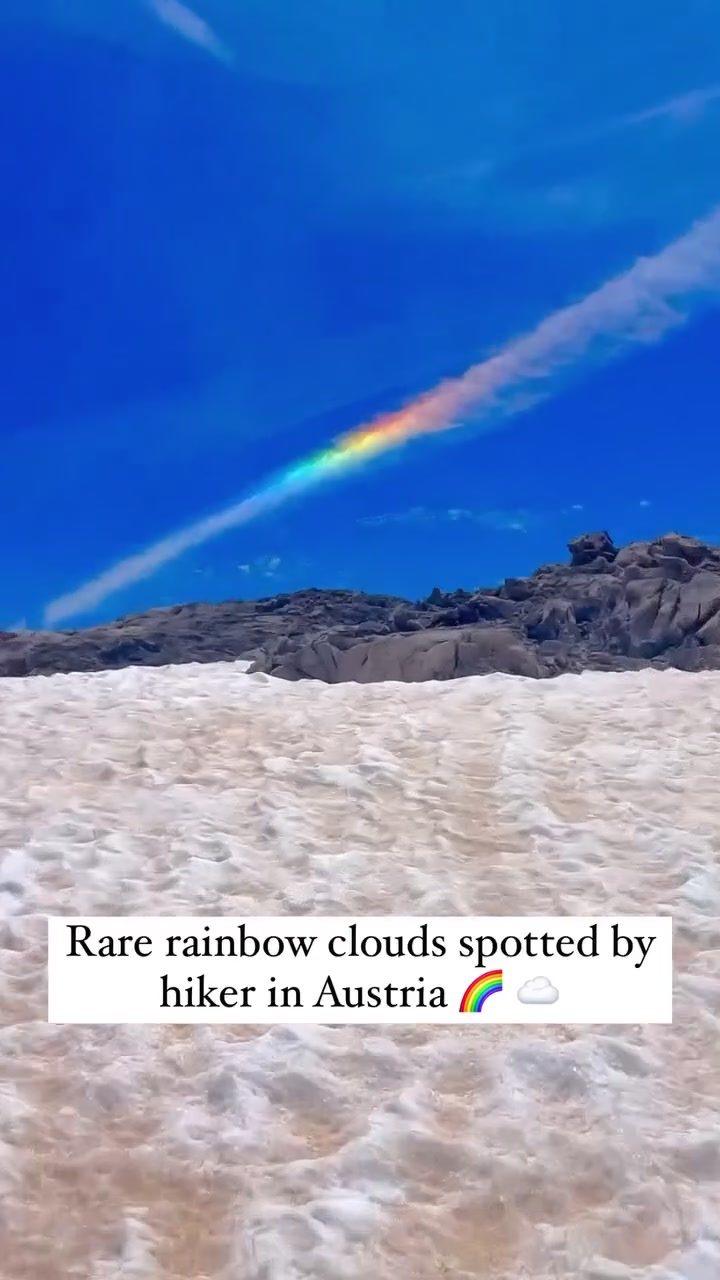
Rare Rainbow Clouds in Austria
For those who love the outdoors, Austria provides a unique and breathtaking experience. From its snow-capped mountains to its vibrant landscapes, Austria is home to some of the most beautiful natural scenery in the world. One of the most stunning phenomena seen there are the iridescent clouds, also known as rainbow clouds, which are a rare and captivating meteorological feature.
Why Iridescent Clouds Matter
Iridescent clouds are more than just a pretty sight; they are a fascinating meteorological phenomenon. These clouds form when sunlight diffracts through tiny water droplets or ice crystals in the air. This diffraction creates a colorful display of light, often appearing as a vibrant rainbow arc within the clouds. The rarity of these clouds makes them a coveted sight for hikers and nature enthusiasts.
Understanding Iridescent Clouds
Formation and Science
Iridescent clouds, also known as rainbow clouds, are a unique type of cloud that displays a spectrum of colors. These clouds are formed when sunlight diffracts through tiny water droplets or ice crystals in the air. The diffraction process causes the light to bend and separate into various colors, creating a mesmerizing rainbow effect within the clouds. This phenomenon typically occurs in high-altitude clouds, such as cirrostratus or cirrocumulus clouds, which are composed of small, uniform ice crystals.
These clouds are most commonly seen in mountainous regions, where cold temperatures and high altitudes provide the ideal conditions for their formation. The presence of these clouds can also indicate the approach of a warm front, which brings in warm, moist air that can lead to the formation of other types of clouds and potentially precipitation.
Types of Iridescent Clouds
Iridescent clouds can appear in various forms, each with its unique characteristics. Some of the most common types include:
- Cirrostratus Clouds: These are high-altitude clouds that often appear as thin, wispy layers. They can produce a halo effect around the sun or moon, and when conditions are right, they can also display iridescent colors.
- Cirrocumulus Clouds: These are small, puffy clouds that are also found at high altitudes. They often appear in large groups and can produce a ripple-like effect in the sky. When these clouds exhibit iridescence, it creates a stunning visual display.
- Altocumulus Clouds: These clouds are found at mid to high altitudes and can appear in various shapes and sizes. When they display iridescent colors, it's often a sign of instability in the atmosphere, which can lead to the formation of other types of clouds and potentially thunderstorms.
Best Conditions to Witness Iridescent Clouds
Witnessing iridescent clouds can be a thrilling experience, and knowing when and where to look can greatly increase your chances of seeing them. Here are some tips for spotting these rare and beautiful clouds:
- Time of Day: Iridescent clouds are most visible during the early morning or late afternoon when the sun is low in the sky. The low-angle sunlight increases the chances of diffracting through the tiny water droplets or ice crystals, creating the rainbow effect.
- Weather Conditions: Iridescent clouds are more likely to form on clear days with high humidity. The presence of moisture in the air helps create the ideal conditions for cloud formation, including those with iridescence.
- Location: Mountainous regions and high-altitude areas are often the best places to spot iridescent clouds. The cool temperatures and high altitudes provide the ideal conditions for their formation.
Practical Tips for Viewing Iridescent Clouds
Best Viewing Spots
One of the most popular locations to see iridescent clouds in Austria is the Austrian Alps. The region's high altitudes and crisp, clear air create the perfect conditions for these clouds to form. The Alps are a hiker's paradise, with numerous trails leading to stunning viewpoints where you can watch the clouds form and dissipate.
- Hohe Tauern National Park: This park is home to some of the highest peaks in the Austrian Alps and offers breathtaking views of the surrounding landscape. The park's high altitudes and clear skies provide the ideal conditions for spotting iridescent clouds.
- Zillertal Alps: This region is known for its stunning mountain scenery and clear skies, making it an excellent spot for viewing iridescent clouds. The Zillertal Alps are a popular destination for hikers and nature enthusiasts, with numerous trails and viewpoints to explore.
Best Seasons
The best time to see iridescent clouds in Austria is during the spring and summer months. During these seasons, the weather is generally clear and warm, providing the ideal conditions for cloud formation. However, iridescent clouds can also be spotted during the winter, especially in high-altitude areas.
Equipment and Preparation
To get the best view of iridescent clouds, it's essential to be prepared with the right equipment and knowledge. Here are some tips to help you make the most of your cloud-watching adventure:
- Camera: Bring a good-quality camera or smartphone with a clear lens to capture the colors and details of the iridescent clouds.
- Binoculars: A pair of binoculars can help you get a closer look at the clouds and their intricate details.
- Weather App: Use a weather app to track cloud formations and weather patterns in real-time. This can help you plan your outing and increase your chances of spotting iridescent clouds.
- Layered Clothing: Dress in layers to stay comfortable in changing weather conditions. This is especially important in mountainous regions, where temperatures can fluctuate quickly.
Important Takeaways
- Rarity: Iridescent clouds are a rare phenomenon, making them a sought-after sight for nature enthusiasts and photographers.
- Science: These clouds form when sunlight diffracts through tiny water droplets or ice crystals, creating a beautiful rainbow effect.
- Best Conditions: Iridescent clouds are most visible during early morning or late afternoon, in clear, humid conditions, and at high altitudes.
- Best Spots: The Austrian Alps, including Hohe Tauern National Park and the Zillertal Alps, offer some of the best viewing spots for iridescent clouds.
Conclusion
Watching iridescent clouds in Austria is an unforgettable experience. Whether you're a seasoned hiker or a casual nature enthusiast, these vibrant and rare clouds provide a unique and captivating sight. By understanding the science behind their formation, knowing the best conditions and locations to view them, and being prepared with the right equipment, you can increase your chances of witnessing this stunning natural phenomenon firsthand. So pack your bags, grab your camera, and head to the Austrian Alps for an adventure you won't soon forget.
Questions readers ask
What causes iridescent clouds to form?
Iridescent clouds form when sunlight diffracts through tiny water droplets or ice crystals in the air. This diffraction process creates a vibrant, colorful display. The high altitude of these clouds makes it possible.
Where are iridescent clouds most commonly seen?
Iridescent clouds are most commonly seen in mountainous regions, like the Austrian Alps. These high-altitude clouds love the cold, humid, and windy conditions of hilly or mountainous regions.
What makes iridescent clouds so special for hikers?
Iridescent clouds are a coveted sight for hikers due to their rarity and vibrant colors. Spotting these clouds can make a hike even more memorable, and many hikers enjoy the challenge of trying to see them.
Why did Javier Darnaude's viral video gain so much attention?
Javier Darnaude's viral video gained attention because it captured a rare and beautiful sighting of iridescent clouds in the Austrian Alps. The vibrant colors and unique appearance of these clouds make them a fascinating subject for nature enthusiasts and casual viewers alike.
Can iridescent clouds be seen from any location in Austria?
Iridescent clouds are most commonly seen in the mountainous regions of Austria, such as the Austrian Alps. While it is possible to see them from other locations, the high-altitude conditions make them more likely to be spotted in these areas.
Related deep dives
Similar reads based on topic and creator.




Recent articles
Fresh deep dives from the latest Reels we unpacked.




Comments
Be the first to comment.