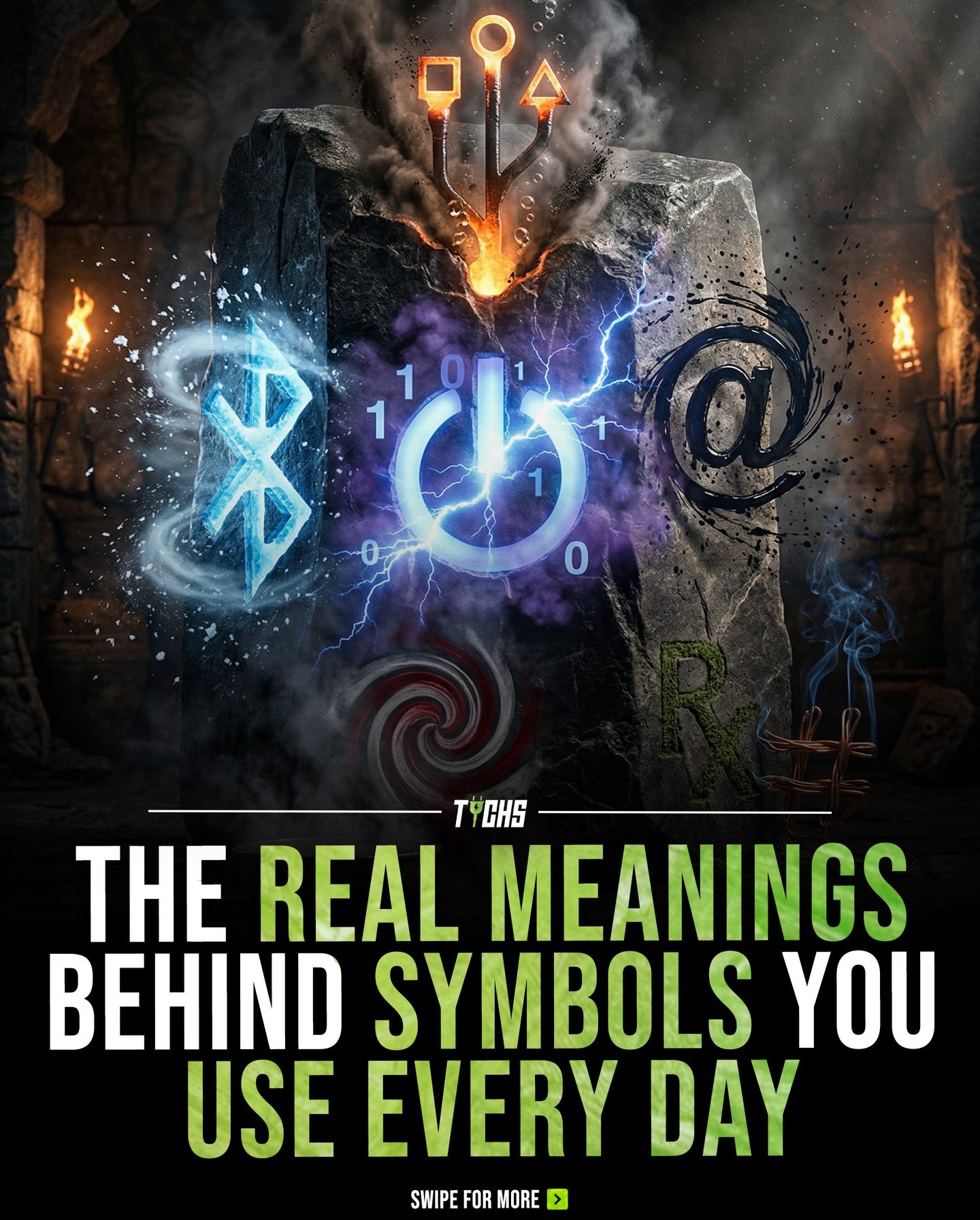
The Remarkable Origins of Everyday Symbols
Symbols are everywhere, from the logos on our devices to the icons on our screens. Many of these symbols have deep historical meanings, often rooted in ancient languages, science, and traditions. Let’s explore the fascinating origins of some common symbols.
Why This Matters
Understanding the origins of everyday symbols can provide a deeper appreciation for the objects and technologies we use daily. These symbols often carry centuries of history and cultural significance, reflecting the evolution of language, technology, and society.
The @ Symbol
The @ symbol is one of the most ubiquitous symbols in modern communication. It is often used in email addresses and social media handles. The symbol is believed to have originated as a medieval shorthand for the Latin word “ad,” which means "at" or "to." The design of the @ symbol was created by wrapping the “d” around the “a.” This shorthand was used in medieval manuscripts to denote the Latin preposition "ad," which was commonly used in phrases like "ad diem" (to the day) and "ad nuntium" (to the news).
The USB Symbol
The USB (Universal Serial Bus) icon is another familiar symbol, often seen on computers and electronic devices. The USB icon is based on Neptune’s trident, a symbol of power and compatibility. The trident shape, with its three prongs, represents the three main functions of a USB connection: power, data transfer, and device charging. The different shapes and lines in the USB icon also indicate its versatility and compatibility across multiple devices.
The Power Button
The power button is a staple on almost every electronic device. This button is often marked with a circle containing a vertical line or a line with a notch, representing the binary digits 1 and 0. These binary digits signify the "on" and "off" states of electronic devices. The simplicity of the design makes it universally recognizable, ensuring that users can easily identify the power function, regardless of language or cultural background.
The Bluetooth Logo
The Bluetooth logo, often seen on wireless devices, is derived from the runes of King Harald Bluetooth. King Harald Bluetooth, who ruled Denmark in the 10th century, was known for uniting disparate Danish tribes. The Bluetooth logo combines the runes representing his initials, H and B, symbolizing the unification and connectivity that the Bluetooth technology aims to achieve. This historical connection adds a layer of cultural depth to the modern technology.
The Barbershole
The barber pole, often seen outside barbershops, has a rich history rooted in medical practices. The red and white stripes represent the bandages used during bloodletting, a common medical practice in the past. The pole itself is believed to have originated from the practice of using a wooden pole to twist the bandages around a stick to tighten them. Today, the barber pole is a recognizable symbol of barbershops and hairdressing services.
The Rx Symbol
The Rx symbol, commonly seen in prescriptions, has its origins in the Latin word "recipe," which means "take." This symbol has been used in pharmacy and medicine for centuries, serving as a shorthand for "take thou" or "recipe" in prescriptions. The Rx symbol is a reminder of the long history of medical practices and the evolution of pharmaceutical science.
The Hashtag
The hashtag, now a ubiquitous symbol in social media, has a technical origin. Originally, the hashtag was a term used in telecommunications to denote the number of points in a message. The symbol itself is composed of eight points, representing the eight bits in a byte. This technical background highlights the symbol's early use in data transmission and communication protocols.
Practical Tips
- Appreciate the History: Next time you see these symbols, take a moment to appreciate their historical and cultural significance.
- Share the Knowledge: Share these fascinating stories with friends and family to spark interesting conversations.
- Look for More: Pay attention to other symbols in your daily life. You might discover more hidden meanings and origins.
Important Takeaways
- Historical Roots: Many everyday symbols have deep historical roots, often stemming from ancient languages and traditions.
- Cultural Significance: Symbols carry cultural significance and reflect the evolution of society and technology.
- Everyday Use: Understanding the origins of everyday symbols can enhance our appreciation for the objects and technologies we use daily.
Conclusion
The symbols we use every day are more than just graphical representations; they are carriers of historical and cultural significance. From the @ symbol to the USB icon, and from the power button to the Bluetooth logo, each symbol tells a story of its own. By understanding these origins, we can gain a deeper appreciation for the tools and technologies that shape our world.
Questions readers ask
What is the origin of the @ symbol, commonly used in email addresses?
The @ symbol, also known as the 'at' symbol, has a history dating back to the 16th century. It was used in medieval commerce as an abbreviation for 'at the price of' or 'each at' when recording transactions. Its modern usage in email addresses began in the 1970s, popularized by Ray Tomlinson, who chose it due to its uniqueness and ease of typing.
What does the USB icon on my device represent?
The USB icon is a stylized representation of a plug and socket, symbolizing the connection between devices. The design was created in the 1990s by Ajay Bhatt and his team at Intel. The icon features a trapezoid (the plug) and a rectangle with a line (the socket), reflecting the physical connectors used to transfer data and power between devices.
What is the significance of the trident symbol?
The trident symbol, featuring three prongs, has been used throughout history in various cultures and contexts. It is often associated with power and dominance, notably as the weapon of the Roman god Neptune and the Greek god Poseidon. In modern times, it is used in various emblems, including the Italian national football team and in the logo of the British American Tobacco Company.
Where can I find more symbols and their meanings in everyday life?
Symbols are omnipresent in everyday life, from road signs and logos to icons on digital devices. To learn more, you can explore articles and resources that delve into the origins and meanings of symbols. Additionally, books on symbolism and cultural history can provide in-depth insights into the fascinating stories behind these ubiquitous marks.
Why should I care about the origins of everyday symbols?
Understanding the origins of everyday symbols can enrich your everyday experience by providing context and depth to the objects and technologies you encounter. Symbols often have deep cultural and historical roots, reflecting the evolution of language, science, and societal norms over centuries. This knowledge can foster a greater appreciation for the world around you.
Related deep dives
Similar reads based on topic and creator.



Recent articles
Fresh deep dives from the latest Reels we unpacked.




Comments
Be the first to comment.