Amazon Seller Costs: Understanding the True Cost of Doing Business
Selling on Amazon can be a lucrative business, but it's crucial to understand the true cost of doing business on the platform. The "Amazon Dollar" is often misunderstood as the total revenue generated from a sale. However, this figure doesn't account for the various fees and expenses that Amazon deducts before the seller sees any profit. Let's break down the key cost components that affect your net margin when selling on Amazon.
Why This Matters
Understanding your true net margin is essential for sustaining a profitable business. Many sellers focus on top-line revenue, but this metric can be misleading. By grasping the intricacies of Amazon's fee structure and other cost factors, you can make more informed decisions, optimize your pricing strategy, and ultimately improve your profitability.
Main Discussion
Referral Fees
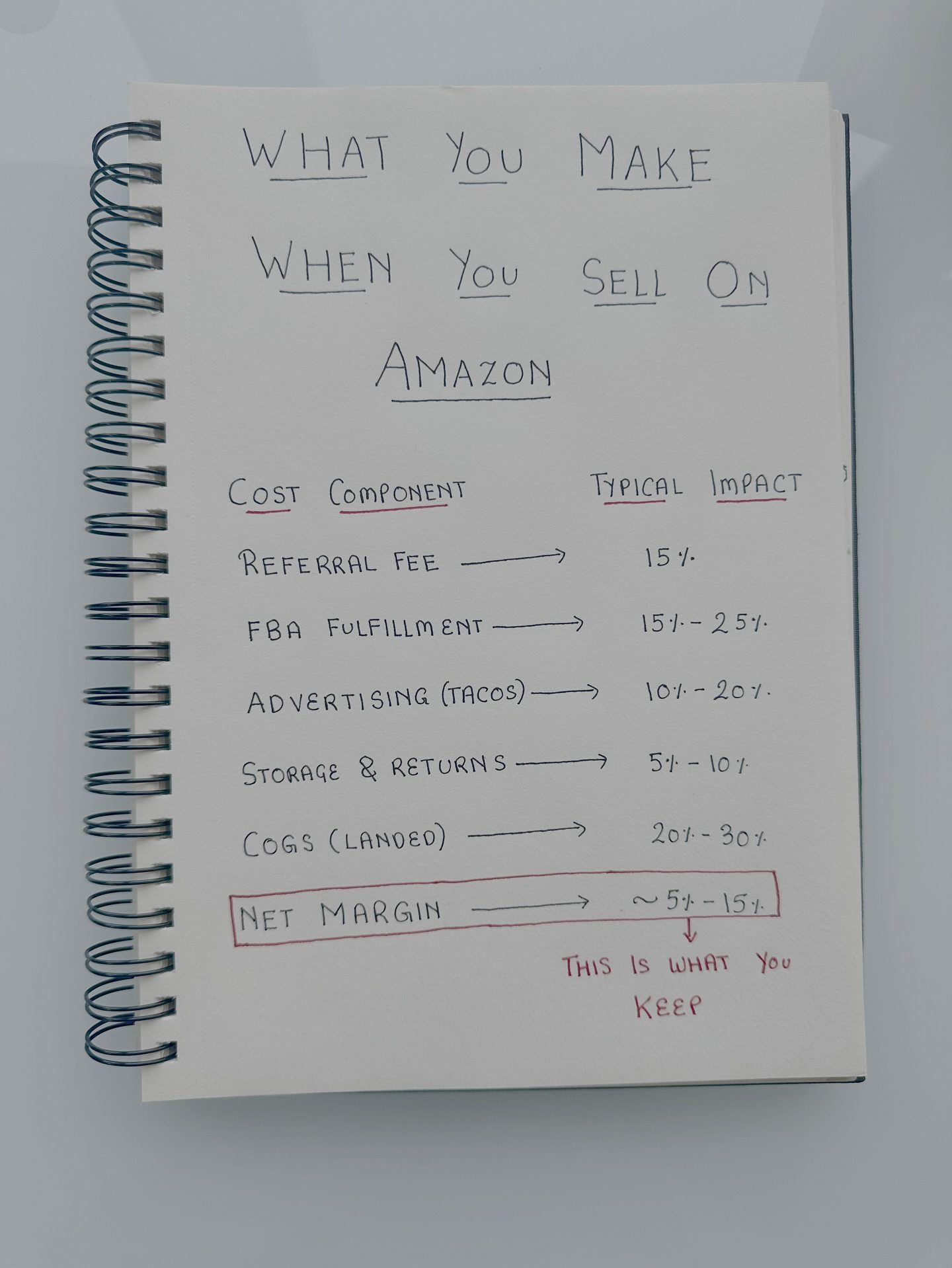
Referral fees are a significant component of your selling costs on Amazon. Typically, referral fees range from 6% to 20% of the sale price, depending on the product category. These fees are automatically deducted from your earnings, so it's important to factor them into your pricing strategy. For example, if you sell a product for $50 and the referral fee is 15%, you'll lose $7.50 to this fee alone.
Fulfillment by Amazon (FBA) Fees
Fulfillment by Amazon (FBA) fees can range from 15% to 25% of the sale price, depending on the size, weight, and category of your product. These fees cover the costs of storing, picking, packing, and shipping your products. While FBA can save you time and effort, it's essential to weigh these convenience benefits against the higher costs. If you opt for FBA, ensure you're pricing your products to account for the additional expenses.
Advertising Spend (TACOS)
Advertising is crucial for maintaining visibility on Amazon, and the costs can vary widely. Known as TACOS (Total Advertising Cost of Sales), these expenses typically range from 10% to 20% of your total revenue. Effective advertising campaigns can significantly boost your sales, but it's essential to track your return on investment (ROI) to ensure you're getting a positive return.
Storage and Returns
Storage fees can add up quickly, especially for larger or seasonal items. These costs can range from 5% to 10% of the sale price, depending on the size of your inventory and the time of year. Additionally, handling costs for returns can add to your operating expenses. It's crucial to manage your inventory levels efficiently to minimize storage fees and streamline the return process.
Cost of Goods Sold (COGS)
COGS, or the cost of acquiring and preparing your products for sale, typically accounts for 20% to 30% of the sale price. This includes the cost of the product itself, as well as any additional expenses such as shipping, taxes, and preparation fees. Understanding your true COGS is essential for accurately calculating your net margin and setting competitive prices.
Net Margin
After accounting for all the above costs, your net margin is the amount you ultimately keep. For many sellers, this figure ranges from 5% to 15% of the sale price. Given the complexity of Amazon's fee structure and other cost factors, it's essential to conduct a thorough analysis of your profitability to ensure you're operating sustainably.
Practical Tips
Conduct a Detailed Cost Analysis
To truly understand your profitability, it's essential to conduct a detailed analysis of your costs. This involves accurately tracking all expenses, from referral fees and FBA costs to advertising, storage, and COGS. By doing so, you can identify areas where you can optimize your spending and improve your net margin.
Optimize Your Pricing Strategy
Pricing your products correctly is crucial for maintaining profitability. Factor in all your costs, including Amazon fees and other expenses, when setting your prices. Consider using pricing tools and strategies, such as dynamic pricing, to stay competitive while ensuring you're covering your costs and generating a profit.
Monitor and Adjust Your Advertising Spend
Regularly review your advertising campaigns to ensure you're getting a positive ROI. Experiment with different ad formats, placements, and targeting options to optimize your spend. Amazon Advertising offers a range of tools and features to help you monitor performance and make data-driven decisions.
Manage Inventory Efficiently
Effective inventory management can help you reduce storage fees and other costs. Use tools like Amazon's Inventory Management Dashboard to track your stock levels and make informed decisions about when to restock or liquidate inventory. Additionally, consider using FBA Small and Light or FBA Long-Term Storage to minimize costs for slow-moving or seasonal items.
Understand the Impact of Geography and Product Category
Amazon's fee structure can vary significantly depending on your geographic location and the product category. For example, Amazon UAE fees differ from those in the US or Europe, and selling heavy furniture may incur higher storage fees compared to small electronics. Familiarize yourself with the specific costs associated with your market and category, and adjust your pricing and strategies accordingly.
Important Takeaways
The "Amazon Dollar" is a Myth
The "Amazon Dollar" often misleads sellers into thinking they retain more of the sale price than they actually do. By understanding the true cost components, you can make more informed decisions and avoid the pitfalls of relying on vanity metrics.
The Exact Percentages Vary
While the benchmarks provided offer a general guideline, the exact percentages can vary based on your geography and product category. It's essential to conduct your own analysis and adjust your strategies accordingly.
Regularly Review and Adjust
The e-commerce landscape is dynamic, and Amazon's fee structure can change over time. Regularly review your costs, monitor your performance, and make data-driven adjustments to stay competitive and profitable.
Conclusion
Selling on Amazon can be a profitable venture, but it requires a deep understanding of the true costs involved. By grasping the intricacies of referral fees, FBA costs, advertising, storage, returns, and COGS, you can make better-informed decisions and optimize your profitability. Conduct thorough cost analyses, optimize your pricing, monitor your advertising spend, manage your inventory efficiently, and stay aware of geographic and categoric variations. Ultimately, the key to success on Amazon lies in understanding your true net margin and adjusting your strategies to maximize profitability.
Questions readers ask
What are Amazon referral fees and how are they calculated?
Amazon referral fees are a percentage of the total sales price that Amazon charges for each item sold. They vary by category, typically ranging from 6% to 20%. For example, if you sell an item in a category with a 15% referral fee, and the total sales price is $100, you will pay $15 in referral fees.
What is the difference between Amazon FBA and FBM, and which has higher fees?
Amazon FBA (Fulfillment by Amazon) involves Amazon handling storage, packing, and shipping, while FBM (Fulfillment by Merchant) requires the seller to manage these tasks. FBA typically has higher fees due to storage, picking, packing, and shipping costs, but it offers advantages like Prime eligibility and customer service handling.
What are the most common hidden fees associated with selling on Amazon?
Common hidden fees include referral fees, FBA fees, storage fees, and advertising costs. Referral fees are a percentage of the sale price, FBA fees cover fulfillment services, and storage fees apply when inventory is stored in Amazon's warehouses. Advertising costs can vary widely depending on the competitiveness of the product's niche.
How can I calculate my net profit margin when selling on Amazon?
To calculate your net profit margin, subtract all Amazon fees (referral, FBA, storage, and advertising) and any other business expenses (e.g., cost of goods, shipping) from your total sales revenue. Divide the resulting profit by the total sales revenue and multiply by 100 to get the percentage.
What strategies can I use to optimize my pricing and increase profit margins on Amazon?
Optimize your pricing by considering all fees and expenses, and use tools like the Amazon Seller App to monitor and adjust prices. You can also optimize your listing with relevant keywords, high-quality images, and compelling product descriptions to improve sales and reduce advertising costs.
How do Amazon storage fees work, and when do they apply?
Amazon storage fees are charged based on the volume of inventory stored in Amazon's warehouses. These fees vary by the time of year and the size of the inventory. Monthly storage fees apply to all inventory, with additional long-term storage fees for items stored for more than 365 days. It's crucial to manage inventory levels to avoid these costs.
Recent articles
Fresh deep dives from the latest Reels we unpacked.




Comments
Be the first to comment.