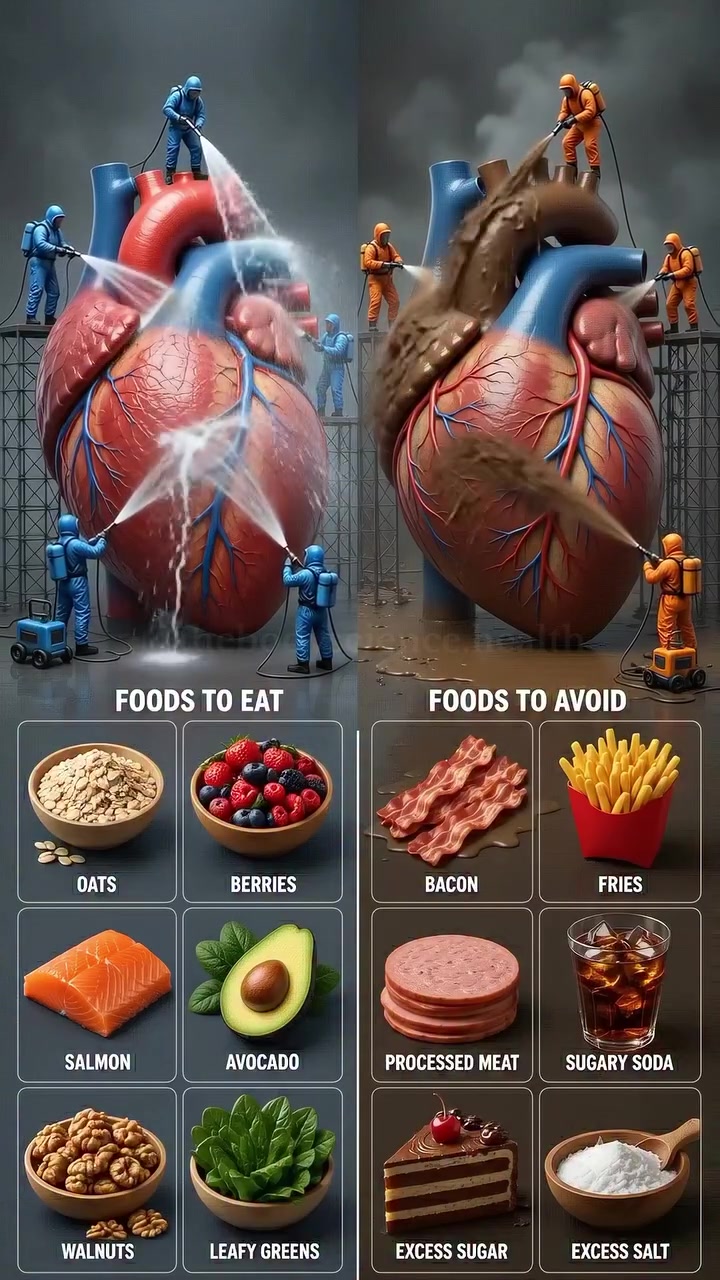
Oats and berries versus bacon and fries. We've all seen these lists — but what exactly gives these foods their power to help or harm our hearts? A simple model shows the stark contrast.
The Heart's Own Cleaners
This diet advice is a great way to start thinking about food. The key to these food choices' impact is inflammation and oxidation in the body. The healthy foods have antioxidants and healthy fats to counteract those processes. The unhealthy foods are high in saturated fats, processed ingredients, excess salt, and sugar. Processed meat like bacon is linked with chronic inflammation. Processed meat ingredients nitroso compounds can damage heart tissue. They elevate the chance of heart disease in the following manner. The body produces more inflammation in response to foreign, processed chemicals. This process can spread to nearby tissue, causing further damage. Foods that are high in sugar contribute to the narrowing of the arteries. Saturated fat-rich foods like fried foods can also elevate bad cholesterol, among other negative health outcomes. The healthy foods, on the other hand, have powerful antioxidants. These antioxidants neutralize the pollutants that cause heart disease, and assist in the prevention of inflammation. Some foods can lower cholesterol. That is helpful for a healthy heart. Walnuts and avocados may contain "good fatty acid", or monounsaturated fatty acids. Monounsaturated fatty acids are known to elevate good cholesterol as well as aid in reducing blood pressure.
The Rush of Science
This heart-healthy food guidance isn't just something people made up. It is based on serious research. The evidence comes from all the research on chronic inflammation and heart disease. It started in the 80s, and continues to evolve.
Foods to Eat
What's the deal with these "foods to eat"? Start with berries and oats. Berries, like strawberries and blueberries, contain antioxidants. These have been shown to reduce the likelihood of heart disease. Oats have soluble fiber, which helps to reduce cholesterol. Fiber can make you feel full. This is helpful for maintaining a healthy weight. Salmon, avocado, and walnuts are also on that list. Which of these foods works for everyone? Each food category has its own health benefits. Some are high in antioxidants, some have healthy fats, and others have soluble fiber. The effects of these foods are long-term. Adding these foods one at a time to a diet can allow a person to see which foods work best for them.
Eco-Friendly Eating
Eating heart-healthy food is not just about what you do for your body. Healthy food choices have a positive impact on the environment. Many of these foods are locally available, which means a lower carbon footprint. They take less energy to produce and transport. This is the case for oats. Fishing salmon is sustainable, and salmon is often locally sourced. Leafy greens like spinach are fresh, and they preserve soil health. Many of the unhealthy choices require a lot of energy for production, and their carbon footprint is significantly higher. Sugar, salt, and processed foods often have packaging. This causes waste. Furthermore, the packaging is often made from petroleum products. This contributes to carbon emissions. Meat production is known to contribute to greenhouse gases. The production of avocados can be harmful to the soil and local water sources. So, moderation and where possible, local sourcing is valuable to the sustainability of the planet, not just the human body.
The List from Above
The foods on the "foods to avoid" list are certainly not without their niche health benefits. Heavy training and working out takes considerable energy. Fried foods and red meats provide protein and energy. Some foods, like bacon, are high in vitamin B12. This is beneficial for the nervous system. BUT most dietary guidelines recommend limiting consumption of these foods. As it turns out, what really matters for the heart is consuming foods in their natural state and not processed. The foods are higher in nutrient content. These are the foods that the body can use for energy the most effectively. These foods also help the body maintain its processes. The alternative to eating healthy and exercising is prescription medicine.
Questions readers ask
What exactly are these 'heart cleaners' that foods can help or hinder?
The 'heart cleaners' refer to the body's natural processes that combat inflammation and oxidation. Foods with antioxidants and healthy fats, like berries and oats, support these processes, while foods high in saturated fats, processed ingredients, excess salt, and sugar, like bacon and fries, hinder them.
How do processed meats like bacon damage heart tissue?
Processed meats contain nitroso compounds that can directly damage heart tissue. They also trigger chronic inflammation, which can spread to nearby tissue and cause further damage.
What makes berries and oats so beneficial for heart health?
Berries are packed with antioxidants that neutralize pollutants and prevent inflammation. Oats, on the other hand, contain soluble fiber, which helps lower cholesterol and maintain a healthy weight.
Are there any specific foods that can lower cholesterol levels?
Yes, foods like oats, walnuts, and avocados can help lower cholesterol. Oats contain soluble fiber, while walnuts and avocados have monounsaturated fatty acids that elevate good cholesterol and aid in reducing blood pressure.
How does the science behind heart-healthy foods compare to other dietary advice?
The guidance on heart-healthy foods is backed by decades of research on chronic inflammation and heart disease, starting from the 80s. It's not just anecdotal; it's based on serious, evolving scientific evidence.
Can eating heart-healthy foods have environmental benefits as well?
Absolutely. Many heart-healthy foods like oats, salmon, and leafy greens are locally available, have a lower carbon footprint, and are more sustainable. They often require less energy for production and transport, making them eco-friendly choices as well.
Related deep dives
Similar reads based on topic and creator.

Recent articles
Fresh deep dives from the latest Reels we unpacked.




Comments
Be the first to comment.