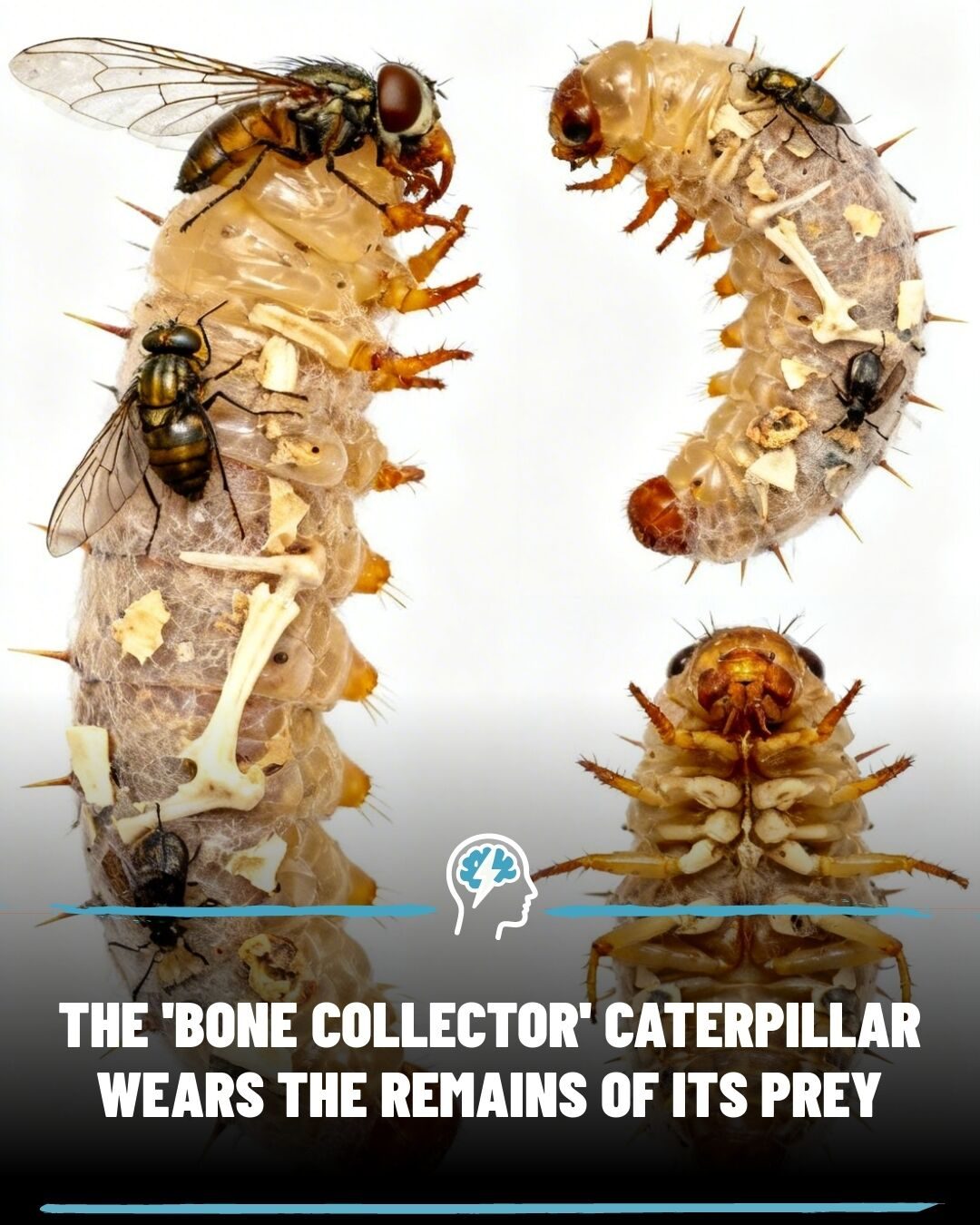
The Bone Collector Caterpillar: Nature's Macabre Master of Disguise
The Bone Collector caterpillar, native to Hawaii, is a fascinating example of nature's ingenuity. This caterpillar, part of the Hawaiian genus Hyposmocoma, has a unique feeding behavior: it gathers the remains of dead insects and incorporates them into its own body. This is not just a random collection of debris; the caterpillar specifically chooses insect parts, such as fly wings, weevil heads, and earwig abdomens, attaching them to its silk case.
Why This Matters
The Bone Collector caterpillar's behavior is more than just a curious quirk. It highlights the intricate strategies that have evolved in nature to ensure survival. Understanding this caterpillar can offer insights into the broader ecosystem and the delicate balance that sustains it. The caterpillar’s unique behavior also underscores the importance of conservation efforts, as this species is critically endangered.
The Bone Collector Caterpillar: A Closer Look
Unique Feeding Behavior
The Bone Collector caterpillar's distinctive feeding behavior involves gathering specific parts from dead insects. This behavior is not random; lab studies have shown that these caterpillars actively select insect parts over other materials like twigs, leaves, or bark. This selective behavior suggests that the insect parts serve a specific purpose beyond mere camouflage.
Survival Advantages
The primary advantage of wearing the remains of dead insects is survival. Researchers believe that these caterpillars feed on prey caught in spider webs. By incorporating the remains of other insects into their own bodies, the caterpillars may blend in both visually and olfactorily. This disguise could help them steal food from spider webs without being detected or eaten by the spider.
Evolutionary History
The evolutionary history of the Bone Collector caterpillar is ancient. Researchers estimate that the Hawaiian genus Hyposmocoma stretches back approximately 5 to 6 million years, predating the current Hawaiian islands themselves. This long evolutionary history suggests that the Bone Collector caterpillar's behavior may have evolved over millions of years, adapting to the unique ecological pressures of its habitat.
The Bone Collector Caterpillar: A Critically Endangered Species
Discovery and Documentation
The Bone Collector caterpillar was first discovered in 2008, but formal scientific description came only in April 2025. This nearly two-decade gap between discovery and formal naming highlights the challenges in studying rare and elusive species. Despite extensive searches, only 62 specimens have been documented over 20 years. This low number underscores the caterpillar's critically endangered status.
Habitat and Conservation
The Bone Collector caterpillar exists exclusively on the island of Oahu, within a single 15 square kilometer forest patch. This limited geographic range makes the caterpillar particularly vulnerable to environmental changes and human activities. Conservation efforts focused on protecting these small forest patches could be crucial in ensuring the survival of this unique species. The future of the Bone Collector caterpillar may well depend on the success of such conservation initiatives.
Practical Tips for Observing and Studying the Bone Collector Caterpillar
Observing and studying the Bone Collector caterpillar can be challenging due to its rarity and specific habitat. Here are some practical tips for those interested in learning more about this fascinating creature:
Research and Preparation
Before venturing out to observe the Bone Collector caterpillar, conduct thorough research. Familiarize yourself with its habitat and behavior. Knowing the specific forest patches where it has been documented can increase your chances of spotting one.
Respect the Environment
When visiting the habitat of the Bone Collector caterpillar, be mindful of your impact on the environment. Stick to designated paths and avoid disturbing the natural surroundings. The caterpillar's limited habitat makes it particularly vulnerable to human interference.
Use Proper Equipment
Bring the right equipment for observation. A good pair of binoculars, a magnifying glass, and a camera with a macro lens can be invaluable. These tools will help you get a closer look at the caterpillar and document your findings.
Document Findings
If you are lucky enough to spot a Bone Collector caterpillar, document your findings carefully. Take detailed notes and photographs. Share your observations with relevant research institutions or conservation groups to contribute to the body of knowledge about this rare species.
Important Takeaways
The Bone Collector caterpillar offers a fascinating glimpse into the intricate strategies that evolution has devised for survival. Its unique behavior of incorporating dead insect parts into its body is a testament to nature's ingenuity. The caterpillar's critically endangered status underscores the need for continued research and conservation efforts.
The Bone Collector caterpillar's existence serves as a reminder of how much remains unknown even in well-studied ecosystems. The discovery of this species highlights the importance of conservation and the need to protect small, isolated habitats. Future generations may depend on the efforts made today to safeguard these delicate ecosystems and the unique species that call them home.
Conclusion
The Bone Collector caterpillar is a remarkable example of nature's adaptive strategies. Its unique behavior of wearing the remains of its prey is not just a curiosity but a critical survival mechanism. The caterpillar's critically endangered status and limited habitat highlight the urgent need for conservation efforts. Understanding and protecting this species can provide valuable insights into the broader ecosystem and the importance of preserving even the smallest patches of nature.
Questions readers ask
What makes the Bone Collector caterpillar unique among Hawaii insects?
The Bone Collector caterpillar stands out due to its distinctive feeding habit of collecting and attaching the remains of dead insects, such as fly wings and weevil heads, to its silk case. This behavior is a unique defense mechanism that sets it apart from other Hawaiian insects.
What types of insect remains does the Bone Collector caterpillar collect?
The Bone Collector caterpillar selectively gathers specific insect parts, including fly wings, weevil heads, and earwig abdomens. These remnants are carefully chosen and attached to the caterpillar's silk case, enhancing its camouflage and defense.
How does the Bone Collector caterpillar use collected insect remains for survival?
By incorporating dead insect remains into its body, the Bone Collector caterpillar creates a convincing disguise. This macabre feeding behavior is a survival strategy that helps the caterpillar blend into its surroundings, protecting it from potential predators.
What genus does the Bone Collector caterpillar belong to?
The Bone Collector caterpillar is part of the Hawaiian genus Hyposmocoma. This genus is known for its diverse and often unique behaviors, making the Bone Collector a notable member of this group.
What insights can be gained from studying the Bone Collector caterpillar?
Researching the Bone Collector caterpillar can provide valuable information about the broader ecosystem and the intricate defense mechanisms that have evolved in nature. By understanding its unique habits, scientists can learn more about how insects adapt and survive in their environments.
Why is the Bone Collector caterpillar's behavior considered macabre?
The Bone Collector caterpillar's behavior is considered macabre due to its practice of collecting and displaying the remains of dead insects on its body. This unusual and somewhat eerie habit is part of its defense strategy, making it a fascinating subject for insect research.
Related deep dives
Similar reads based on topic and creator.




Recent articles
Fresh deep dives from the latest Reels we unpacked.




Comments
Be the first to comment.