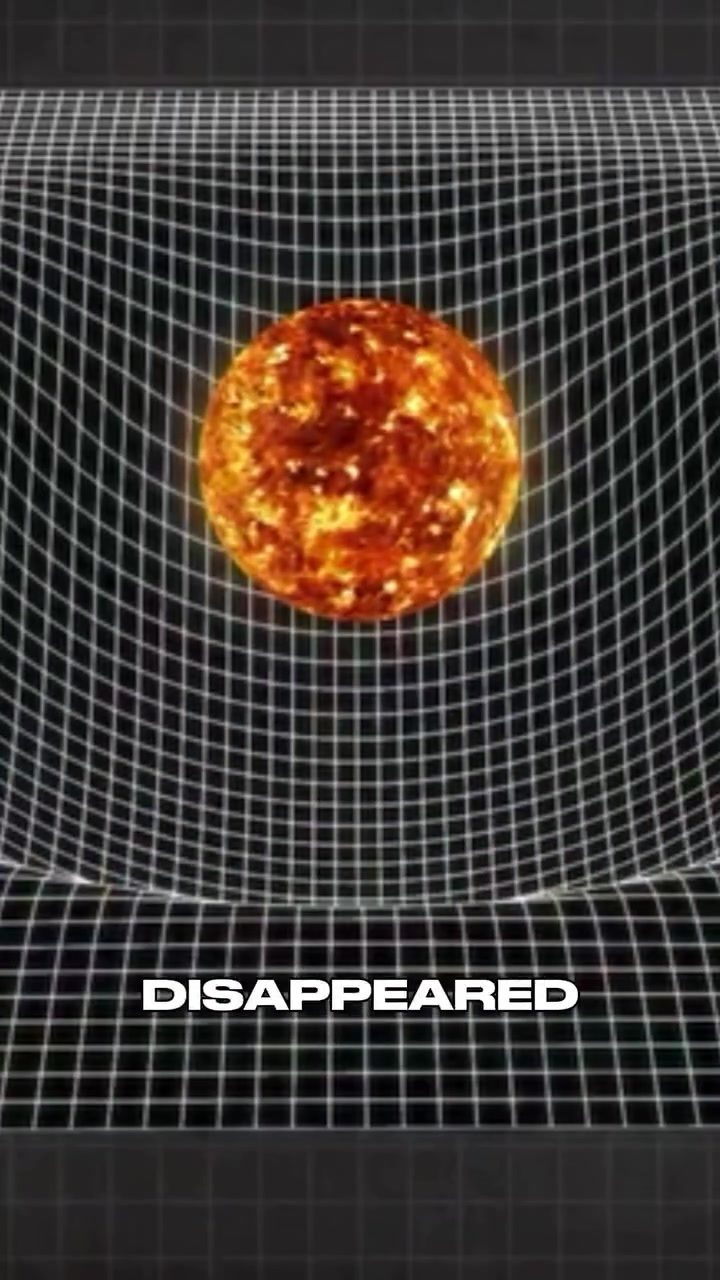
Gravitational waves, invisible and inaudible ripples in the fabric of spacetime, are a phenomenon that has fascinated scientists and enthusiasts alike. These waves, which travel at the speed of light, provide profound insights into the behavior of gravity and the structure of the universe.
Gravity and the Speed of Light
One of the most striking revelations from the detection of gravitational waves is that the speed of gravity matches the speed of light. This confirmation was made possible by precise measurements that detected gravitational waves down to the order of 10^-15. The significance of this discovery lies in its impact on our understanding of fundamental physics.
Consider a thought experiment: if the sun suddenly disappeared, the Earth would continue to orbit in its path for approximately 8 minutes and 20 seconds. This is the exact amount of time it takes for light (and gravitational information) to travel from the sun to Earth. At the end of this period, the change in the gravitational field would reach us, and Earth would fly off into space. This thought experiment underscores the direct relationship between the speed of gravity and the speed of light.
Gravitational Waves: Ripples in Spacetime
Gravitational waves are produced by violent astrophysical events, such as the collision of black holes or neutron stars. These events cause ripples in the fabric of spacetime, which propagate outward at the speed of light. The detection of these waves has opened a new window into the universe, allowing scientists to observe phenomena that were previously invisible.
One of the key visualizations in this context is gravitational lensing. This effect occurs when massive objects, like galaxies or black holes, bend the path of light passing nearby. The visual representation of the sun and Earth within a warped grid is a dramatic illustration of this phenomenon. It helps to convey the concept that gravity is not just a force but a curvature of spacetime itself.
The Detection of Gravitational Waves
The detection of gravitational waves was a monumental achievement in astrophysics. Advanced detectors, such as the Laser Interferometer Gravitational-Wave Observatory (LIGO), have been instrumental in this endeavor. These detectors use laser interferometry to measure the minuscule distortions in spacetime caused by passing gravitational waves. The precision of these instruments allows scientists to confirm the speed of gravity with remarkable accuracy.
The detection process involves several steps. First, the gravitational wave signal is captured by the detectors. Next, the data is analyzed to filter out background noise and confirm the presence of a gravitational wave event. Finally, the data is cross-referenced with other astronomical observations to pinpoint the source of the wave. This multi-step process ensures the reliability of the findings and provides a deeper understanding of the universe's dynamics.
Gravitational Lensing and Black Holes
Gravitational lensing is a fascinating consequence of the curvature of spacetime. When light passes near a massive object, its path is bent, creating multiple images of the same object or distorting its appearance. This effect has been used to study distant galaxies and to detect dark matter, which does not emit light but has a significant gravitational influence.
Black holes, another intriguing aspect of spacetime, are regions where the gravitational pull is so strong that nothing, not even light, can escape. The visual representation of a black hole in the reel highlights its role as a gravitational lens. The warped grid around the black hole shows how it bends the fabric of spacetime, creating a gravitational lens effect.
Practical Tips for Understanding Gravitational Waves
Understanding gravitational waves and their implications can be a complex task, but there are several practical tips to help grasp these concepts:
-
Visualize Spacetime: Imagine spacetime as a flexible fabric that can be warped and distorted by massive objects. This visualization helps in understanding how gravitational waves travel through the universe.
-
Learn About Gravitational Lensing: Study how massive objects bend light and create multiple images or distortions. This concept is crucial for understanding the effects of gravitational waves.
-
Explore Black Hole Dynamics: Investigate how black holes interact with spacetime and create gravitational lensing effects. This will deepen your understanding of the profound impact of these cosmic objects.
-
Follow Scientific Discoveries: Stay updated with the latest findings in astrophysics, particularly those related to gravitational wave detections. This will provide insights into the ongoing research and discoveries in this field.
-
Engage with Educational Resources: Utilize online courses, documentaries, and simulations to gain a hands-on understanding of these complex concepts. This will make the learning process more engaging and effective.
Important Takeaways
- The detection of gravitational waves confirmed that the speed of gravity matches the speed of light. This insight deepens our understanding of fundamental physics and the behavior of ripples in spacetime that pass through the universe and us constantly.
- Gravitational waves are invisible, inaudible waves in space and time itself, rippling through the universe, through Earth, and through us, all the time.
- Gravitational lensing and black holes are critical concepts that help in understanding the effects of gravitational waves and the curvature of spacetime.
Conclusion
Gravitational waves offer a unique perspective on the universe, revealing its hidden dynamics and the nature of gravity. The confirmation that the speed of gravity matches the speed of light is a testament to the precision and ingenuity of modern astrophysics. As we continue to explore these ripples in spacetime, we gain deeper insights into the fabric of the universe and our place within it.
Questions readers ask
How do gravitational waves form and what causes them?
Gravitational waves are formed by violent cosmic events such as colliding black holes or exploding stars. These events cause ripples in the fabric of spacetime, which then travel outward at the speed of light.
Why is it significant that gravitational waves travel at the speed of light?
The fact that gravitational waves travel at the speed of light is significant because it confirms that the speed of gravity is the same as the speed of light. This has profound implications for our understanding of fundamental physics and the nature of gravity.
How are gravitational waves detected?
Gravitational waves are detected using highly sensitive instruments called interferometers, which can measure tiny distortions in space caused by the passage of a gravitational wave. The most well-known detectors are the Laser Interferometer Gravitational-Wave Observatory (LIGO) and Virgo.
What can we learn from observing gravitational waves?
By observing gravitational waves, we can gain new insights into the behavior of gravity and the structure of the universe. Gravitational waves allow us to observe phenomena that were once invisible, such as black hole collisions, and provide a new way to study the cosmos.
What happens if the speed of gravity is not the same as the speed of light?
If the speed of gravity were different from the speed of light, it would challenge our current understanding of general relativity. It would also affect how we interpret observations of cosmic events and potentially require a new framework for understanding gravity.
How precise are the measurements of gravitational waves?
The measurements of gravitational waves are incredibly precise, down to the order of 10^-15. This high level of precision allows scientists to confirm that the speed of gravity matches the speed of light and to gather detailed information about the sources of these waves.
What is the relationship between gravitational waves and the structure of the universe?
Gravitational waves provide a unique window into the structure of the universe. By studying these waves, scientists can learn about the distribution of mass in the cosmos, the behavior of black holes, and the dynamics of other extreme astrophysical events. This helps to map out the invisible phenomena and understand the overall structure of the universe.
Related deep dives
Similar reads based on topic and creator.


Recent articles
Fresh deep dives from the latest Reels we unpacked.




Comments
Be the first to comment.