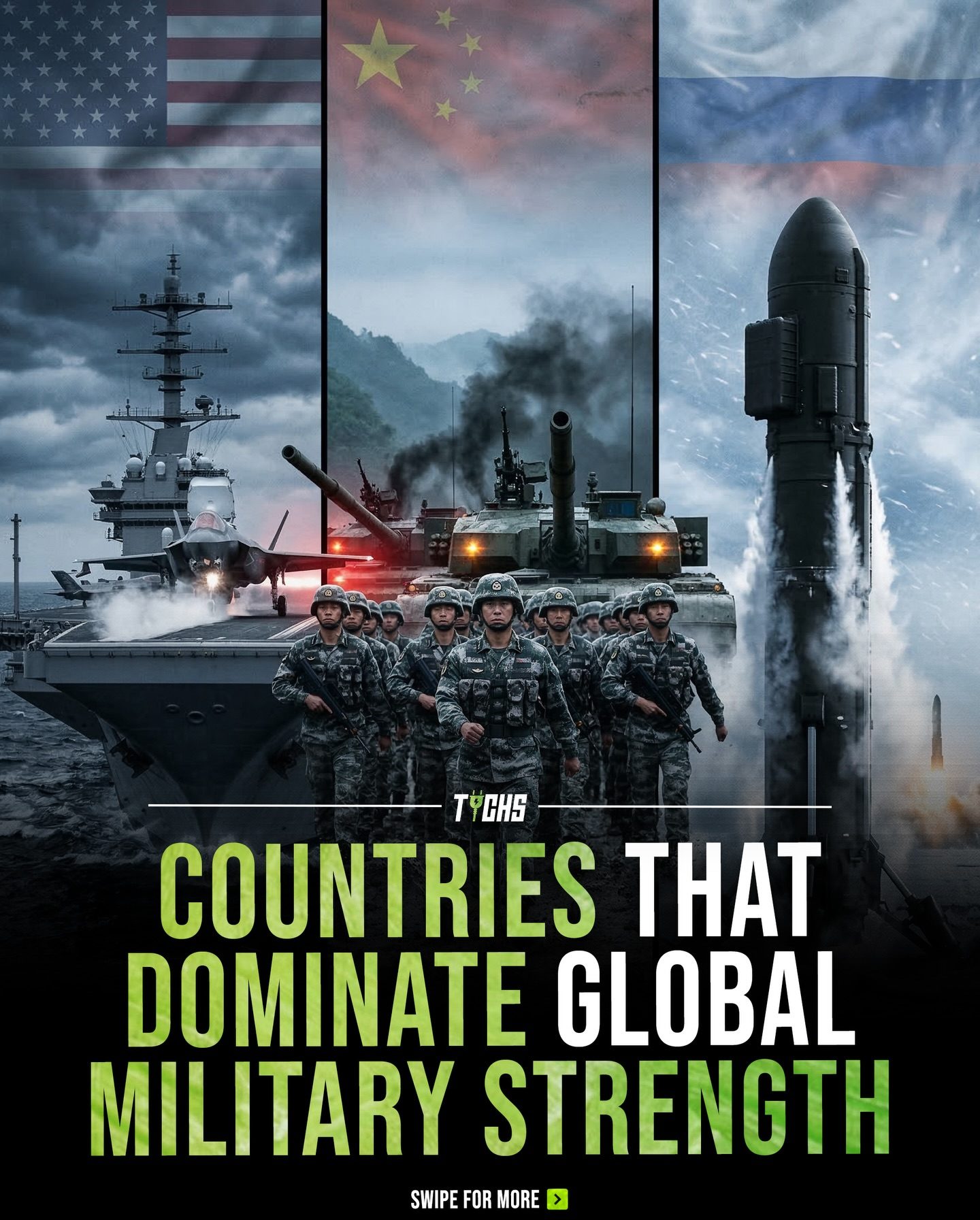
Military Strength Comparison
Global military power is distributed across various countries, each excelling in different areas such as nuclear arsenals, aircraft fleets, naval strength, troop numbers, and defense spending. Understanding these dynamics provides insight into the geopolitical landscape and the strategic capabilities of nations.
Context / Why this matters
The distribution of military power influences global politics, economics, and security. Countries with significant military capabilities often play crucial roles in international affairs, shaping alliances, and deterring potential threats. By examining the strengths of different nations, one can better understand the balance of power and the potential for conflict or cooperation.
Main discussion
Nuclear Arsenals
Russia holds the largest nuclear arsenal, with approximately 5,800 warheads. This substantial nuclear capability serves as a powerful deterrent and a key component of Russia's national security strategy. The vast arsenal not only underscores Russia's military might but also its influence in global affairs, particularly in matters of nuclear non-proliferation and arms control.
Air Power
The United States leads in air power, boasting the largest fleet of fighter jets and total military aircraft. This dominance in the skies is crucial for various military operations, including air superiority, strategic bombing, and support for ground troops. The U.S. also operates the world’s largest drone fleet, which enhances its surveillance and precision-strike capabilities.
Naval Strength
China operates the largest navy by the total number of ships, with approximately 370 ships. This extensive naval fleet enables China to project power across the Asia-Pacific region and beyond, safeguarding maritime trade routes and asserting sovereignty over disputed territories. The size and capability of China's navy are critical for its strategic interests and economic security.
Ground Forces
Russia also stands out with its significant tank count, boasting around 12,000 tanks. This substantial ground force enhances Russia's ability to conduct large-scale military operations and defend its borders. The sheer number of tanks underscores Russia's preparedness for potential ground conflicts and its focus on maintaining a robust land-based military capability.
Troop Numbers
China fields the largest active military force, with about two million soldiers. This vast manpower allows China to conduct extensive military operations, maintain internal security, and project power globally. The large troop numbers also support China's territorial claims and strategic objectives, making it a formidable player in global military affairs.
Practical tips
Understanding military strengths can provide valuable insights for various stakeholders, from policymakers to investors and analysts. Here are some practical tips for gaining a deeper understanding of global military dynamics:
Stay Informed
Keep up-to-date with the latest developments in military technology, defense spending, and strategic doctrines. This information is crucial for understanding the evolving capabilities and intentions of different countries.
Analyze Trends
Look for trends in military spending, technological advancements, and strategic alliances. These trends can offer insights into future military conflicts or collaborative efforts.
Contextualize Data
Military strength is not just about numbers; it's about the context in which these numbers are used. Consider factors such as geographical location, technological advancements, and strategic alliances when assessing a country's military capabilities.
Understand Regional Dynamics
Different regions have unique military dynamics and power balances. For example, the Asia-Pacific region is shaped by the rivalries and alliances among China, the United States, and other regional powers. Understanding these dynamics can provide a more nuanced view of global military strengths.
Important takeaways
Modern military dominance is spread across different capabilities rather than being controlled by a single country. Nuclear deterrence, air power, naval strength, and technology investment are all critical components of a country's military strength. By examining these areas, one can gain a comprehensive understanding of the global military landscape and the strategic capabilities of different nations.
Conclusion
The distribution of military power among countries is a complex and dynamic field. By exploring the strengths of different nations in nuclear arsenals, air power, naval strength, and troop numbers, one can gain valuable insights into the geopolitical landscape and the strategic capabilities of key players. This knowledge is essential for understanding global politics, economics, and security, and for navigating the challenges and opportunities that arise from these dynamics.
Questions readers ask
Which countries have the most significant nuclear capabilities?
The United States and Russia possess the largest nuclear arsenals, with China also emerging as a major nuclear power. These countries have extensive stockpiles of nuclear warheads and advanced delivery systems, making them key players in global nuclear deterrence.
How does the United States' military strength compare to other nations?
The United States is often ranked at the top in global military power due to its advanced technology, large defense budget, and extensive nuclear, air, and naval capabilities. It has the most powerful air force and one of the most powerful navies in the world, with 11 nuclear-powered aircraft carriers.
What are the key aspects of Russia's military power?
Russia's military strength lies in its large nuclear arsenal, significant number of tanks, and substantial air and naval forces. Russia is also known for its advanced military technology and its capacity to deploy forces rapidly. Russia's naval strength includes a formidable fleet of submarines and aircraft carriers.
Which countries have the strongest naval forces?
The United States has the world's largest navy in terms of size and capability, with over 480 ships and submarines. China follows closely, with rapid modernization and expansion of its naval fleet, and Russia also has a significant naval presence, particularly in the Black Sea and the Arctic.
Which countries are the top spenders on military defense?
The United States consistently leads in global defense spending, allocating hundreds of billions of dollars annually. China and Russia follow as the next top spenders, with China's defense budget rapidly increasing in recent years. These countries' significant investments in military capabilities reflect their strategic priorities and global influence.
How does China's military strength compare to other global powers?
China is a rising military power, with advancements in nuclear capabilities, significant naval and air forces, and advanced military technology. China has the world's largest standing military and is rapidly modernizing its forces, including its nuclear arsenal, aircraft, and naval fleets, to challenge the dominance of the US.
Is there a clear ranking of global military power?
While rankings can vary based on different metrics, the US, Russia, and China typically top the lists due to their comprehensive military capabilities. Other countries like India, France, and the UK also have significant military strengths, contributing to the complex dynamics of global military power.
Recent articles
Fresh deep dives from the latest Reels we unpacked.




Comments
Be the first to comment.