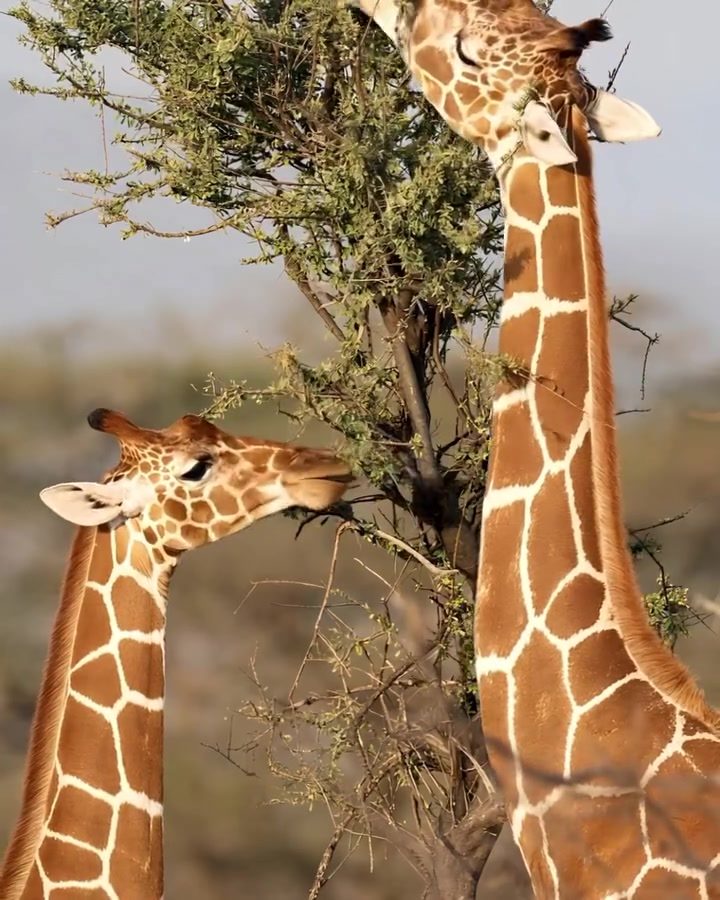
Giraffes Eating from a Tree
Context / Why this Matters
Giraffes are one of the most iconic animals in the savanna, known for their distinctive long necks and elegant gait. These characteristics are not just for show; they are essential adaptations that allow giraffes to access food sources that other herbivores cannot reach. Understanding the feeding habits of giraffes provides insights into their survival strategies and the intricacies of their ecosystem.
Main Discussion
The Unique Feeding Behavior of Giraffes
Giraffes primarily feed on leaves, twigs, and shoots from trees. Their long necks, which can be up to 6 feet in length, enable them to reach high into the canopy where other herbivores cannot. This behavior is crucial for their survival, as it allows them to access a food source that is both abundant and less contested. By feeding on the leaves and shoots of trees, giraffes help to maintain the health of the ecosystem by promoting tree growth and dispersing seeds through their dung.
The Savanna Habitat
The savanna is a vast, open grassland with scattered trees and shrubs. This environment is ideal for giraffes, as it provides ample space for grazing and browsing. The scattered trees offer a variety of food sources, from the leaves and twigs of acacia trees to the shoots of other flowering plants. Giraffes move through the savanna, often in small groups, and are known to travel long distances in search of food and water.
Social Structure and Feeding
Giraffes are social animals and often feed in groups. This behavior not only provides a sense of security but also allows for cooperative feeding. When feeding in groups, giraffes can access more food by spreading out and covering a larger area. Additionally, younger giraffes can learn from older, more experienced individuals about the best places to find food and how to avoid potential predators.
Diet and Digestion
The diet of a giraffe is primarily herbivorous, consisting of a variety of leaves, twigs, and shoots. Their digestive system is uniquely adapted to handle this diet, with a complex stomach structure that includes four compartments. This allows them to efficiently break down the fibrous plant material they consume. Despite their large size, giraffes have a relatively small digestive system, so they need to eat a large volume of food to meet their nutritional needs.
Adaptations for Feeding
Giraffes have several adaptations that make them well-suited for their feeding habits. Their long necks and long, prehensile tongues help them reach food that other animals cannot. Their tongues are also tough and covered in a thick, tough papillae that protect them from thorns and rough leaves. Additionally, their long legs allow them to move quickly and efficiently through their habitat, helping them to cover large distances in search of food.
Practical Tips
Observing Giraffes in the Wild
For those interested in observing giraffes in the wild, it's important to follow a few practical tips. First, always maintain a respectful distance. Giraffes are generally calm animals, but they can be territorial and may react defensively if they feel threatened. Second, try to observe from a high vantage point, such as a hill or a tree, to get a clear view of their feeding behavior.
Supporting Conservation Efforts
Giraffes face numerous threats, including habitat loss and poaching. Supporting conservation efforts can help protect these magnificent animals and their habitats. Organizations like the Giraffe Conservation Foundation work to preserve giraffe populations and promote sustainable practices in areas where giraffes live. Donating or volunteering with such organizations can make a significant difference.
Understanding the Role of Giraffes in the Ecosystem
Giraffes play a critical role in their ecosystems. By feeding on trees and shrubs, they help to shape the landscape and promote biodiversity. Understanding their role in the ecosystem can help inform conservation strategies and promote sustainable land use practices.
Important Takeaways
Giraffes are fascinating creatures with unique adaptations that allow them to survive in their savanna habitats. Their long necks and tongues enable them to access food sources that other animals cannot, and their social behavior and digestive system are well-suited to their diet. Observing giraffes in the wild and supporting conservation efforts can help ensure that these magnificent animals continue to thrive. By understanding their feeding habits and the role they play in their ecosystems, we can appreciate the complexity and beauty of the natural world.
Conclusion
Giraffes are not just icons of the African savanna; they are critical players in their ecosystems. Their unique feeding habits and adaptations make them a vital part of the natural world, and observing them can provide valuable insights into the intricacies of wildlife behavior. Whether you're a wildlife enthusiast or simply appreciate the beauty of nature, understanding the feeding habits of giraffes can enrich your perspective on the natural world.
Questions readers ask
How do giraffes use their long necks during feeding?
Giraffes employ their long necks to reach leaves, twigs, and shoots high up in tree canopies. This adaptation allows them to access food sources that other herbivores cannot, giving them a significant advantage in their savanna habitat. Their necks can extend up to 6 feet, enabling them to feast on foliage that remains out of reach for most other animals.
What types of food do giraffes primarily consume?
Giraffes mainly feed on leaves, twigs, and shoots from trees. Their diet consists of plant matter, which they obtain by browsing on various species of trees and shrubs. This tree-eating habit is a defining characteristic of their feeding behavior and contributes to their unique ecological role.
Do giraffes have a specific feeding routine?
Giraffes typically spend most of their day feeding, with periods of rest and social interaction interspersed. They are known to feed in the early morning and late afternoon, when temperatures are cooler. This routine helps them conserve energy and avoid the harsh midday heat of the savanna.
How does the social structure of giraffes influence their feeding behavior?
Giraffes live in loose, open herds, and their social structure can influence feeding behavior. They often feed in groups, which can provide safety from predators. Dominance hierarchies within these groups can also determine access to preferred feeding sites, with more dominant individuals often having priority.
What is the ecological impact of giraffes' tree-eating habits?
Giraffes play a crucial role in their ecosystem by pruning trees and shrubs, which can stimulate new growth and influence the structure of the savanna landscape. Their feeding habits also help disperse seeds, contributing to the propagation of various plant species. This makes giraffes an integral part of the savanna's ecosystem.
Why is it beneficial for giraffes to reach high branches?
Reaching high branches allows giraffes to access food that other herbivores cannot. This reduces competition for resources and ensures that giraffes have a steady food supply. High branches also tend to have less thorns and more nutritious leaves, making them a preferred food source.
Related deep dives
Similar reads based on topic and creator.




Recent articles
Fresh deep dives from the latest Reels we unpacked.




Comments
Be the first to comment.