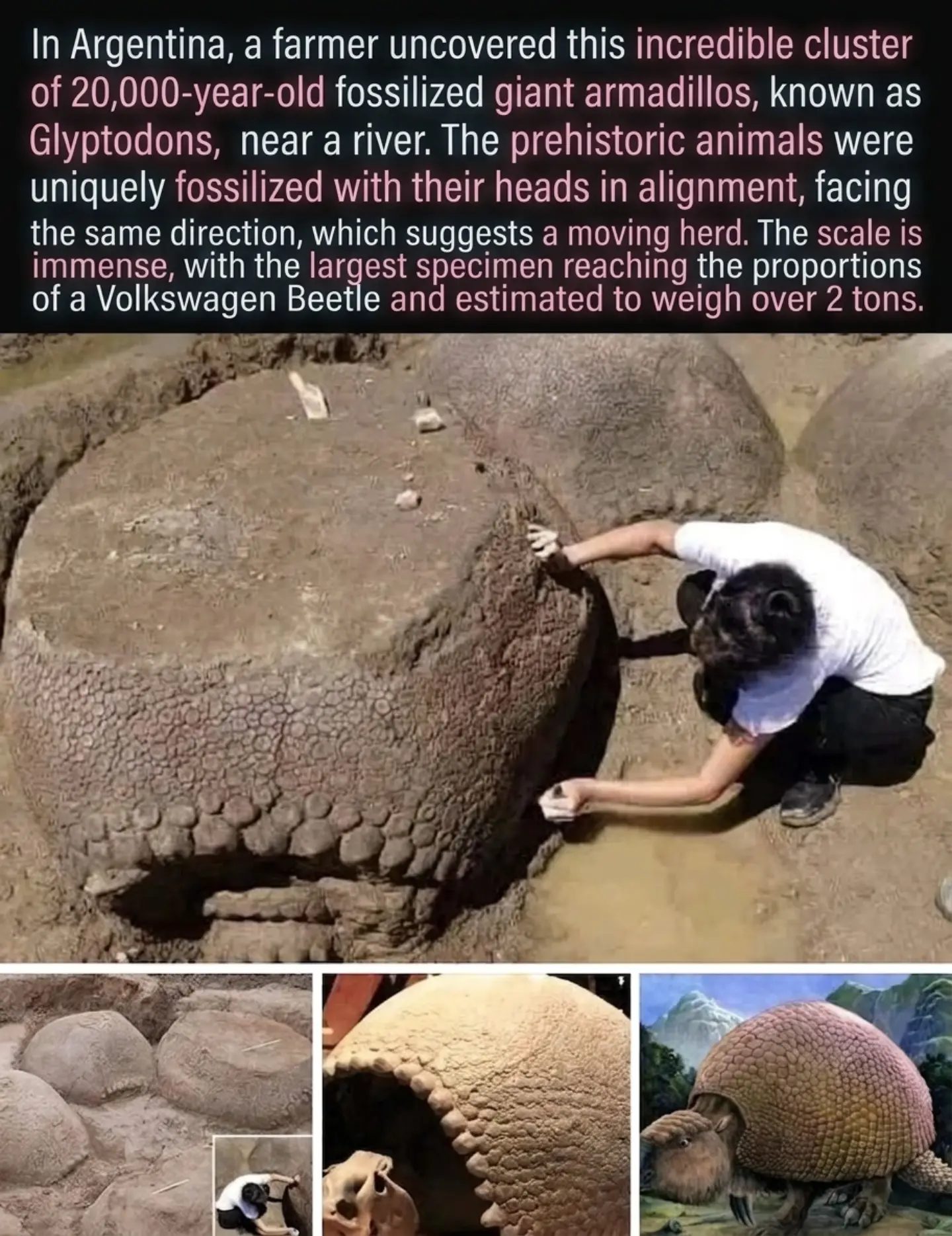
Fossil Discovery
A farmer in Argentina made an astonishing discovery while tending his land near a river. Buried in the soil, he uncovered a cluster of massive, round shapes—not boulders, but the 20,000-year-old fossilized remains of Glyptodons. These ancient creatures are believed to be the giant ancestors of modern armadillos, and their discovery offers a fascinating glimpse into the Ice Age.
Why This Matters
The significance of this fossil find goes beyond its sheer size and rarity. The alignment of the Glyptodon fossils suggests they were part of a herd, moving in the same direction at the time of their demise. This unique arrangement provides valuable insights into the behavior and social structures of these prehistoric animals. Additionally, the fossils offer a rare opportunity to study the anatomy and biology of a creature that roamed the Earth thousands of years ago.
Main Discussion
The Discovery
The fossils were found in a line, with their heads aligned in the same direction. This alignment is a rare occurrence in paleontology and suggests that the herd was on the move when they met their end. The largest specimen found is estimated to be the size of a Volkswagen Beetle and weighs over 2 tons. This massive size and the unique alignment of the fossils have captivated scientists and enthusiasts alike.
Glyptodons: The Giant Armadillos
Glyptodons were large, armored mammals that lived during the Pleistocene epoch, which spanned from about 2.6 million to 11,700 years ago. They are known for their massive, armored shells, which were composed of hundreds of interlocking bony plates. This armor provided protection from predators and is one of the reasons why complete fossils are so rare; the shells were durable and often preserved well. Glyptodons are believed to have lived in herds, much like modern elephants or bison, which makes the discovery of a group of them together even more remarkable.
Anatomical Features
The Glyptodon fossils in Argentina are particularly intriguing due to their preservation. The armor, or shell, of a Glyptodon was made up of bony plates that provided robust protection. This structure is unique among mammals and is more commonly associated with reptiles or other armored animals. The fossils also reveal other anatomical features, such as the skull and teeth, which can provide insights into the diet and behavior of these ancient creatures.
The Ice Age Connection
The discovery of these Glyptodon fossils is a fascinating window into the Ice Age, a period of significant environmental change. The climate during the Pleistocene epoch was characterized by repeated cycles of glacial advancement and retreat, which had profound effects on the Earth's ecosystems and the animals that inhabited them. Understanding these environmental factors can help scientists better grasp how Glyptodons and other Ice Age animals adapted to their surroundings.
Scientific Significance
The Glyptodon fossils in Argentina are not just significant for their size and rarity; they also offer valuable scientific insights. Paleontologists can study these fossils to gain a better understanding of the biology, behavior, and ecology of these ancient creatures. The unique alignment of the fossils suggests that they were part of a herd, providing a rare glimpse into the social dynamics of these prehistoric animals.
Practical Tips
For anyone interested in exploring the world of paleontology or fossil hunting, here are some practical tips:
Finding Fossils
Fossil hunting can be a rewarding hobby, but it requires patience, knowledge, and the right tools. Always consult with local regulations and laws regarding fossil collecting. Some areas may require permits, and it's important to obtain permission before digging. Always fill in any holes you dig to preserve the site for future exploration.
Equipment
Having the right equipment is essential for a successful fossil hunt. Key items include a geological hammer, chisels, brushes, and a digging kit. A good field guide can also be invaluable for identifying different types of fossils and understanding their geological context.
Preservation
Once you've found a fossil, proper preservation is crucial. Avoid using harsh chemicals or excessive force to remove the fossil from the surrounding rock. Instead, carefully brush away the sediment with a soft brush. If the fossil is fragile, it may be best to leave it in place and consult a professional.
Important Takeaways
The discovery of these Glyptodon fossils in Argentina is a significant find that offers unique insights into the behavior, biology, and ecology of these ancient creatures. The alignment of the fossils suggests a moving herd, providing a rare glimpse into the social dynamics of these prehistoric animals. Additionally, the size and rarity of the fossils make them a valuable addition to our understanding of the Ice Age and its impact on the Earth's ecosystems.
Conclusion
The discovery of these 20,000-year-old Glyptodon fossils in Argentina is a remarkable find that has captivated both scientists and enthusiasts. The unique alignment and massive size of the fossils provide valuable insights into the behavior and biology of these ancient creatures. Whether you're a fossil hunter, a paleontology enthusiast, or simply curious about the mysteries of the past, the discovery of these Glyptodon fossils is a fascinating glimpse into the Ice Age and the world of these amazing prehistoric mammals.
Questions readers ask
What are Glyptodons and why are they significant?
Glyptodons are giant, extinct armadillos that roamed the Earth during the Ice Age. They are significant because their fossils provide a rare glimpse into the behavior, anatomy, and social structures of these ancient creatures, which are believed to be the ancestors of modern armadillos. This is especially true for the recent discovery of 20,000-year-old Glyptodon fossils in Argentina, which were found in a line, suggesting herd behavior.
How large were the Glyptodons discovered in Argentina?
The largest Glyptodon specimen found in Argentina is comparable in size to a Volkswagen Beetle, weighing over 2 tons. These massive creatures stand out for their size, and the detailed structure of their fossils has contributed greatly to our understanding of Ice Age animals and their environment.
What does the alignment of the Glyptodon fossils suggest about their behavior?
The alignment of the Glyptodon fossils in a line suggests that these creatures moved in herds. This unique arrangement provides valuable insights into the behavior and social structures of these prehistoric animals, offering a rare glimpse into their interactions and movements.
How were the Glyptodon fossils discovered in Argentina?
The Glyptodon fossils were discovered by a farmer while tending his land near a river. Buried in the soil, he uncovered a cluster of massive, round shapes, which were later identified as the 20,000-year-old fossilized remains of Glyptodons.
What can we learn from the Glyptodon fossils found in Argentina?
The Glyptodon fossils found in Argentina offer a rare opportunity to study the anatomy and behavior of these ancient creatures. They provide insights into the herd behavior of Glyptodons, as well as their physical characteristics, which can help us understand the evolution of armadillos and the environment of the Ice Age.
Why is the discovery of Glyptodon fossils in Argentina important for paleontology?
The discovery of Glyptodon fossils in Argentina is important because it offers a unique perspective on the behavior and social structures of these prehistoric animals. The alignment of the fossils suggests that they were part of a herd, moving in the same direction, which is a rare finding for these ancient creatures.
What do the Glyptodon fossils reveal about the Ice Age environment?
The Glyptodon fossils provide valuable information about the Ice Age environment, including the presence of these massive creatures and their behavior. The discovery of 20,000-year-old fossils in a line suggests that these creatures moved in herds, which can help us understand the ecological and environmental conditions of the Ice Age.
Recent articles
Fresh deep dives from the latest Reels we unpacked.




Comments
Be the first to comment.