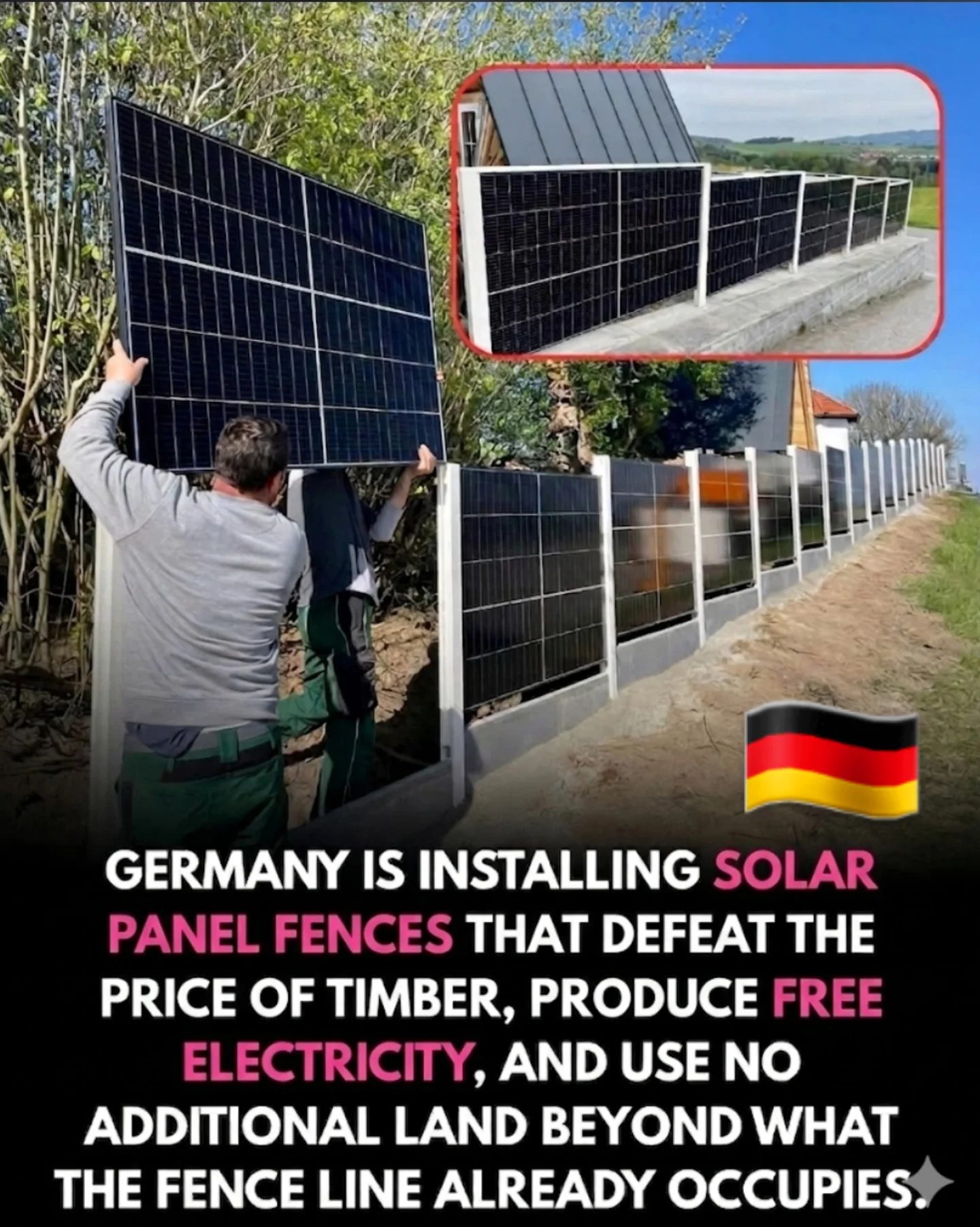
Solar Panel Fences: A Revolutionary Approach to Renewable Energy and Infrastructure
Solar panel fences are emerging as a groundbreaking solution in renewable energy and civil infrastructure, particularly in European countries like Germany. These innovative structures combine the practicality of fencing with the environmental benefits of solar energy, offering a range of advantages that make them a compelling option for both residential and agricultural properties.
Context: The Growing Need for Dual-Use Civil Infrastructure
As the demand for renewable energy sources continues to rise, the challenge of integrating these technologies into existing infrastructure becomes more pressing. Traditional solar farms often require significant land usage, which can lead to conflicts with agricultural or residential areas. Vertical solar fences, however, address this issue by utilizing existing property lines, thus minimizing land-use conflicts.
The Benefits of Solar Panel Fences
Zero-Footprint Land Use
One of the most significant advantages of solar panel fences is their zero-footprint land use. These installations are designed to integrate directly into boundary walls, property fences, or agricultural barriers. By doing so, they occupy no additional surface area, which is a substantial benefit compared to conventional horizontal solar farms. This feature is particularly advantageous in densely populated areas where land is scarce and valuable.
Optimized Power Generation
Vertical, bifacial solar panels are engineered to capture sunlight on both sides, enhancing energy generation. This dual-sided design maximizes power production, especially during the early morning and late afternoon hours when traditional rooftop or ground-mounted solar systems underperform. By stabilizing grid supply, solar panel fences contribute to a more reliable and consistent energy output, which is crucial for maintaining grid stability.
Cost-Efficiency
Solar panel fences offer a cost-effective alternative to traditional timber fences. The initial investment in these solar panels can be offset by the long-term savings on energy bills, as the panels produce free electricity. Additionally, the structural purpose of the fences rivals or even undercuts the lifetime material and maintenance costs of traditional timber fencing, making them a financially sound choice for many property owners.
Practical Tips for Installing Solar Panel Fences
Assessing Your Property
Before installing a solar panel fence, it's essential to evaluate your property's specific needs and constraints. Consider the existing fence lines and how much sunlight they receive throughout the day. Bifacial solar panels are particularly effective in areas with varying sunlight angles, making them suitable for a range of property types.
Choosing the Right Panels
Selecting the right solar panels is crucial for optimal performance. Bifacial panels are ideal for fences as they capture sunlight from both sides. Ensure that the panels you choose are durable and weather-resistant, as they will be exposed to the elements year-round.
Professional Installation
While some DIY enthusiasts might consider installing solar panel fences themselves, hiring a professional is typically the best course of action. Professionals have the expertise to ensure that the panels are installed correctly and safely, maximizing their efficiency and longevity. They can also provide valuable insights into the best placement and orientation for your specific property.
Important Takeaways
Solar panel fences represent a significant advancement in dual-use civil infrastructure. They offer a sustainable and space-saving solution for renewable energy generation, which can be integrated seamlessly into existing property lines. By adopting this technology, property owners can contribute to a more sustainable future while also benefiting from cost savings and reliable energy production.
Conclusion
The integration of renewable energy into standard civil infrastructure, as seen with solar panel fences, highlights a growing global shift toward smart, space-saving, and sustainable solutions. These fences not only generate free electricity but also provide structural support and minimize land-use conflicts, making them an attractive option for both residential and agricultural properties. As we continue to seek innovative ways to harness renewable energy, solar panel fences stand out as a practical and forward-thinking solution.
Questions readers ask
How do solar panel fences work?
Solar panel fences combine vertical solar panels—typically bifacial, which means they absorb sunlight from both sides—with the structure of a fence. These panels generate electricity while serving as a boundary, making them a dual-purpose solution for energy production and property demarcation.
What are the benefits of integrating solar panels into fencing systems?
Integrated solar fencing offers several benefits, including efficient use of space, as it doesn't require additional land. Solar panel fence benefits include enhancing energy production by using bifacial solar panels that capture sunlight from both sides. Additionally, they provide practical infrastructure, improving the aesthetics and functionality of boundaries, particularly in densely populated areas.
What makes Germany a leading country for solar panel fence innovations?
Germany is at the forefront of solar panel fencing innovations due to its strong commitment to renewable energy and efficient land use. The solar panel systems Germany has developed focus on integrating solar energy infrastructure into existing boundaries, especially in urban and agricultural environments. This approach helps to address the challenges of land scarcity and energy demands.
How do solar panel fences contribute to land-saving solutions?
Solar panel fences save land by utilizing existing boundaries and structures rather than requiring additional space. This makes them an ideal renewable energy fence solution for areas where land is scarce, such as urban environments or densely populated agricultural regions. By integrating into fences, these systems generate solar fence electricity without compromising valuable land.
What are bifacial solar panels, and why are they used in solar panel fences?
Bifacial solar panels are designed to absorb sunlight from both the front and back sides, maximizing energy production. In solar panel fences, bifacial solar panels are particularly effective because they can capture sunlight reflected from the ground or other surfaces, enhancing overall efficiency. This makes them a key component in renewable fence solutions, especially in areas with limited direct sunlight.
Can solar panel fences be used for both residential and agricultural properties?
Yes, solar panel fences are versatile and can be used for both residential and agricultural properties. In residential areas, they provide a practical way to generate renewable energy while maintaining property boundaries. For agricultural properties, they offer a solution to the dual problem of energy needs and land use, as solar fence electricity generation does not interfere with farming activities, ensuring that land remains productive.
Recent articles
Fresh deep dives from the latest Reels we unpacked.




Comments
Be the first to comment.