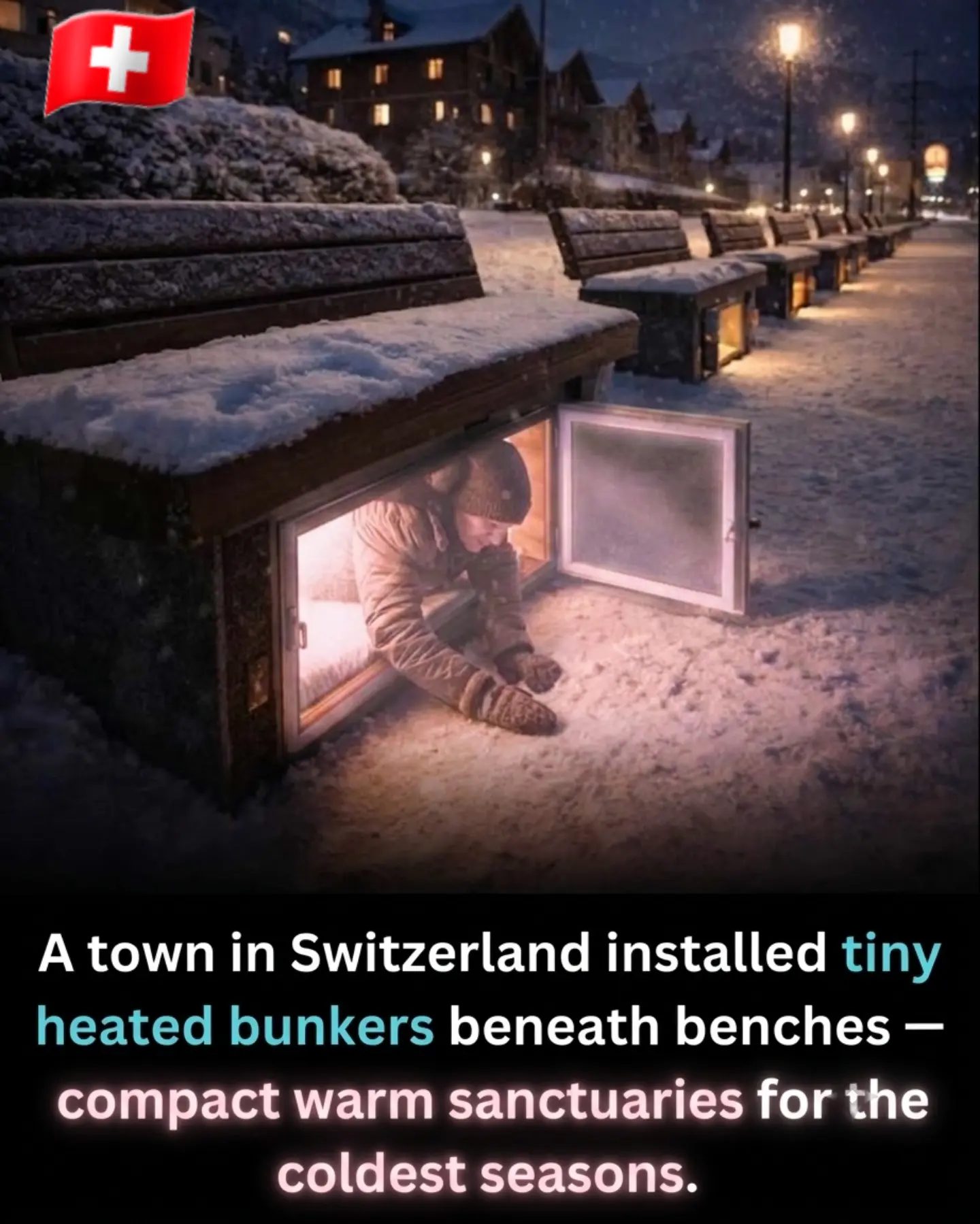
Heated Benches in Switzerland
Heated benches or "tiny heated bunkers beneath public benches" are not actually in Switzerland, but a viral image demonstrates a remarkable project in Ulm, Germany.
Context / Why this matters
As winter approaches, the need for safe and warm shelters for the homeless becomes more pressing. Urban design innovations like heated benches or similar structures can play a crucial role in providing immediate relief and potentially connecting individuals with additional resources and support. Understanding the reality behind these initiatives can inspire similar projects in other cities.
Main discussion
The Misconception and the Reality
The misconception around the “tiny heated bunkers” beneath public benches in Switzerland gained significant attention online. The image, however, is a conceptual artwork generated by AI. The actual innovation originates from Ulm, Germany, where standalone, futuristic sleeping pods, known as "Ulmer Nests," have been developed. But these pods aren't built directly underneath standard park benches.
The Ulmer Nest: Design and Functionality
The Ulmer Nests are insulated, standalone pods designed to provide a safe and warm refuge for unhoused individuals during extremely cold nights. The design of these pods is a testament to the intersection of technology and compassion. They are constructed from durable materials such as wood and steel, ensuring both sturdiness and insulation.
The Ulmer Nests are equipped with several key features to enhance their functionality and effectiveness:
- Solar Panels: These provide a sustainable power source to keep the interior warm.
- Heat Exchangers: These help maintain a comfortable temperature inside the pod.
- Sensors: Silent motion sensors detect when someone is using a pod and alert local charities, which allows social workers to check on the individual the next morning and clean the pod for the next user.
Placement and Accessibility
Unlike the image circulating online, the Ulmer Nests are not installed beneath benches. Instead, they are placed strategically in parks and public squares, allowing for easy accessibility and visibility. This placement ensures that those in need can find them without difficulty.
Practical tips
For Cities Considering Similar Initiatives
Cities looking to implement similar initiatives should consider the following:
- Community Engagement: Engage with local charities and social services to ensure that the pods are well-maintained and checked regularly.
- Sustainability: Incorporate renewable energy sources like solar panels to make the project environmentally friendly.
- Design: Ensure the pods are well-insulated and equipped with sensors for safety and monitoring.
For Individuals
If you come across someone using a heated bench or similar shelter, here's how you can help:
- Offer Assistance: If someone appears to be in distress, offer assistance and contact local social services.
- Report the Pod: If you notice a pod that has not been checked or cleaned, inform local authorities or charities involved in the project.
Important takeaways
- The concept of heated benches or bunkers beneath public benches is actually a misconception. The real innovation originates from Ulm, Germany, in the form of standalone sleeping pods known as Ulmer Nests.
- These pods are equipped with solar panels, heat exchangers, and sensors to provide a safe and warm refuge for the homeless during harsh winter nights.
- The pods are strategically placed in parks and squares, ensuring accessibility and visibility.
- Cities can consider implementing similar initiatives with a focus on community engagement, sustainability, and thoughtful design.
Conclusion
The Ulmer Nests in Ulm, Germany, exemplify how urban design can merge with technology to address pressing social issues. While the viral image of heated bunkers beneath public benches in Switzerland was a misconception, the real project serves as a model for other cities looking to provide safe and warm shelters for the homeless. By understanding and adopting similar initiatives, cities can take a meaningful step toward improving the lives of those in need.
Questions readers ask
What are 'Ulmer Nests' and where can they be found?
'Ulmer Nests' are insulated, solar-powered sleeping pods designed to provide homeless individuals with warm, safe shelter during cold nights. They are located in Ulm, Germany, and are a innovative solution in urban design for the homeless population. Unlike public benches, these pods are specifically designed for overnight use to alleviate cold weather impacts.
How do the 'Ulmer Nests' function and what is their purpose?
The 'Ulmer Nests' are equipped with solar panels to generate power for heating and utilize insulation to retain warmth. Their primary purpose is to offer immediate relief from cold weather and connect users with support services, fostering a pathway out of homelessness.
What is the significance of the 'Ulmer Nest' design in urban planning?
The design of the 'Ulmer Nests' represents a forward-thinking approach to urban planning by addressing the immediate needs of the homeless population. These pods provide a practical example that can be replicated in other cities to enhance support services, showcasing the role of innovative urban design in confronting social issues.
Are there similar initiatives to Germany's 'heated benches' in other countries?
While the 'Ulmer Nests' are unique to Ulm, Germany, the concept has inspired interest in similar initiatives worldwide. Other cities are exploring similar urban design solutions to provide immediate relief and support to homeless individuals, though none have yet replicated the exact design.
How do the 'Ulmer Nests' connect homeless individuals with support services?
The 'Ulmer Nests' are equipped with information and contact details for local support services, helping users access resources like food, shelter, and employment assistance. This connection to support services creates a pathway out of homelessness and offers long-term support.
What materials are used in the construction of the 'Ulmer Nests'?
The 'Ulmer Nests' utilize a combination of durable, weather-resistant materials and efficient insulation, ensuring longevity and comfort for users. Solar panels integrated into the design provide a sustainable energy source for heating, making the structures environmentally friendly and cost-effective.
What is the public's reaction to the 'Ulmer Nests' in Ulm, Germany?
The public's reaction to the 'Ulmer Nests' has been largely positive, with many appreciating the city's proactive approach to addressing homelessness. The innovative design has sparked conversations about urban planning and social responsibility, encouraging other cities to consider implementing similar solutions.
Recent articles
Fresh deep dives from the latest Reels we unpacked.




Comments
Be the first to comment.