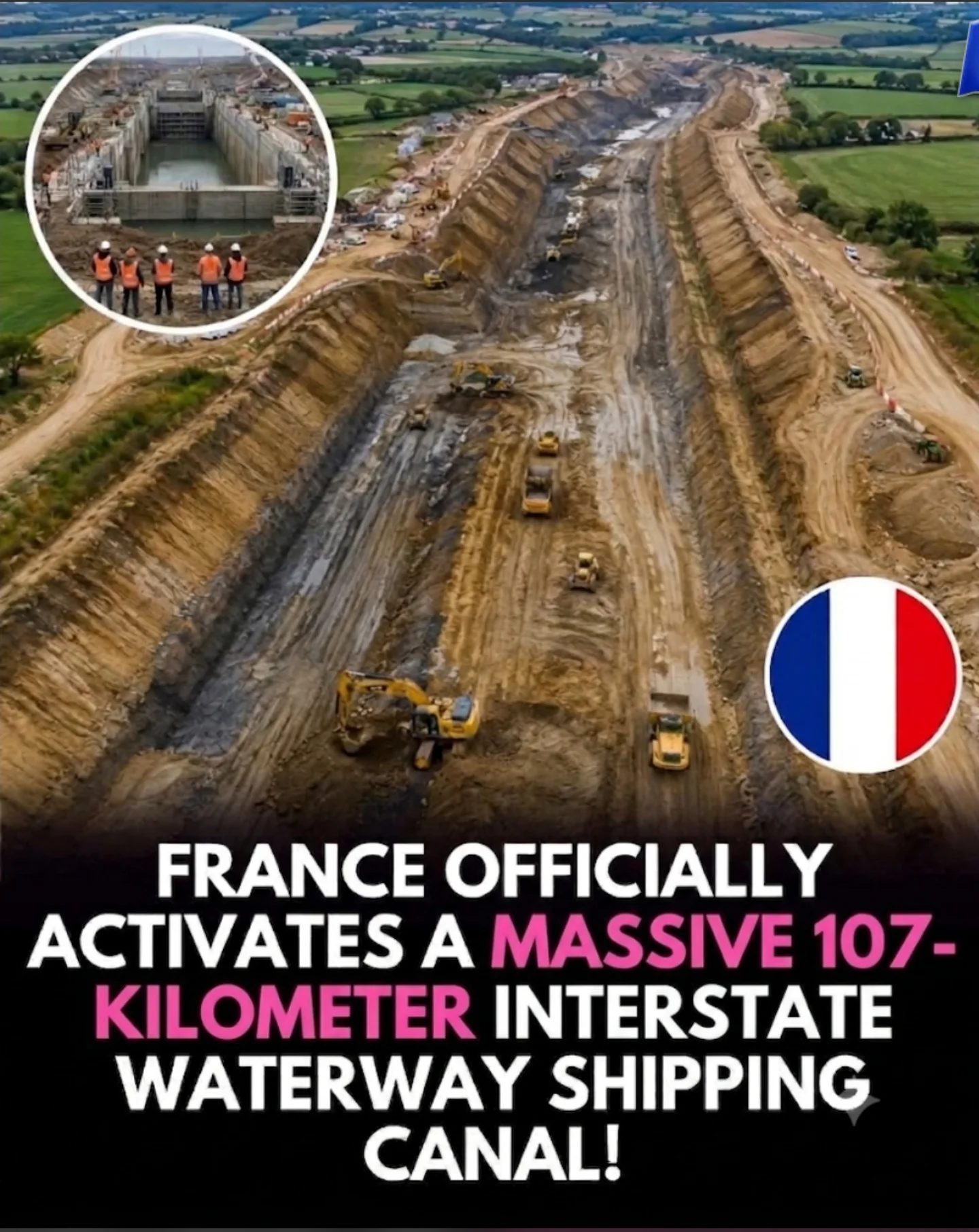
The Seine-Nord Europe Canal
The Seine-Nord Europe Canal (CSNE) is a monumental infrastructure project in France, stretching 107 kilometers between Compiègne and Aubencheul-au-Bac. This high-capacity waterway is designed to connect the Seine river basin with the northern European Rhine-Scheldt network. By accommodating large vessels carrying up to 4,400 tonnes of cargo, the canal aims to fundamentally transform regional logistics by shifting heavy freight from roads to water.
Why This Matters
The CSNE project is more than just a new waterway; it represents a significant shift in how goods are transported in Europe. By moving freight from roads to water, the canal promises to reduce carbon emissions, alleviate traffic congestion, and enhance the efficiency of regional logistics.
France has officially activated the Seine-Nord Europe Canal (CSNE) to promote a more sustainable and efficient transportation network. The project, orchestrated by the Société du Canal Seine-Nord Europe, involves extensive earthmoving and construction work. This massive 107-kilometer interstate waterway shipping canal is designed for shipping purposes, with the capacity to accommodate large vessels carrying up to 4,400 tonnes of cargo.
The Seine-Nord Europe Canal Project
Background and Objectives
The CSNE project is a multi-billion-euro investment funded jointly by France, local authorities, and the European Union. The project's primary objectives are to:
- Connect the Seine river basin with the northern European Rhine-Scheldt network.
- Accommodate large vessels carrying up to 4,400 tonnes of cargo.
- Transform regional logistics by shifting heavy freight from roads to water.
- Remove up to one million trucks from French highways annually.
- Significantly reduce carbon emissions and alleviate traffic congestion.
Route and Design
Spanning 107 kilometers, the canal runs between Compiègne and Aubencheul-au-Bac. The route has been carefully designed to handle the needs of modern shipping. The project's key points include:
- Start Point: Compiègne, a city in northern France.
- End Point: Aubencheul-au-Bac, a commune in the Nord department.
- High-Capacity Design: The canal is designed to accommodate large vessels, making it a critical link in the European freight network.
Environmental and Economic Impact
The environmental and economic benefits of the CSNE project are significant. By shifting freight from roads to water, the project aims to:
- Reduce Carbon Emissions: Moving freight by water is more energy-efficient than overland transportation, leading to significant reductions in carbon emissions.
- Alleviate Traffic Congestion: Removing up to one million trucks from French highways annually will help alleviate traffic congestion and improve road safety.
- Enhance Economic Efficiency: The canal will provide a more efficient and cost-effective means of transporting goods, boosting economic activity and competitiveness in the region.
Construction and Timeline
The construction of the CSNE is a massive undertaking. Key aspects of the project include:
- Earthmoving and Construction: The project involves extensive earthmoving and construction work, with heavy machinery and a large workforce involved.
- Funding: The project is funded jointly by France, local authorities, and the European Union, representing a multi-billion-euro investment.
- Timeline: Full operational activation is projected by 2030.
Practical Tips for Businesses
For businesses involved in freight transportation, the CSNE offers several practical advantages:
- Explore Water-Based Freight: Consider transitioning part of your logistics to water-based transportation. This can lead to cost savings and a reduced carbon footprint.
- Plan for Future Logistics: With the CSNE expected to be fully operational by 2030, start planning how your business can integrate this new route into your supply chain.
- Evaluate Environmental Impact: Use the CSNE as an opportunity to evaluate and reduce the environmental impact of your freight operations.
Important Takeaways
Strategic Importance
The CSNE is more than just a new waterway; it is a strategic asset for Europe. By connecting the Seine basin with the Rhine-Scheldt network, it strengthens the region's transportation infrastructure and enhances its economic competitiveness.
Sustainability
The project's focus on shifting freight from roads to water highlights its commitment to sustainability. This transition is expected to significantly reduce carbon emissions, making the freight transportation sector more environmentally friendly.
Economic Impact
The CSNE will have a profound economic impact. By providing a more efficient and cost-effective means of transporting goods, it will boost economic activity and competitiveness in the region.
Conclusion
The Seine-Nord Europe Canal (CSNE) represents a pivotal moment in European infrastructure. Spanning 107 kilometers, this high-capacity waterway is set to transform regional logistics by shifting heavy freight from roads to water. With a projected completion date of 2030, the CSNE is poised to reduce carbon emissions, alleviate traffic congestion, and enhance economic efficiency. Whether you're a business involved in freight transportation or simply interested in infrastructure, the CSNE is a project worth watching.
Questions readers ask
What are the primary benefits of the Seine-Nord Europe Canal for France's logistics industry?
The canal will significantly decrease road traffic by providing a route for large vessels carrying heavy cargo, thereby reducing carbon emissions and congestion on French roads. It will also enhance logistics efficiency by connecting the Seine River to the Rhine-Scheldt network, facilitating smoother regional shipping routes.
How does the Seine-Nord Europe Canal connect to the broader European waterway network?
The canal links the Seine river basin in France to the Rhine-Scheldt network in northern Europe, enabling vessels to travel more directly and efficiently between these major waterways, enhancing overall interstate waterway connectivity.
What types of vessels will be able to use the Seine-Nord Europe Canal?
The Seine-Nord Europe Canal is designed to accommodate large vessels, with a capacity of up to 4,400 tonnes of cargo, allowing for significant amounts of freight to be transported by water instead of road.
What impact will the Seine-Nord Europe Canal have on environmental sustainability?
By diverting heavy freight from roads to water, the canal will help reduce carbon emissions associated with road transportation. This shift is expected to contribute to a greener and more sustainable logistics sector.
What are the key infrastructure details of the Seine-Nord Europe Canal?
The canal spans 107 kilometers, beginning in Compiègne and ending in Aubencheul-au-Bac. It features high-capacity accommodations for large vessels, ensuring that significant volumes of cargo can be transported efficiently.
How will the Seine-Nord Europe Canal affect traffic congestion in France?
By offering an alternative route for heavy cargo, the canal will alleviate traffic congestion on French roads, particularly in areas around major ports and logistics hubs, resulting in smoother and more efficient road networks.
What role does the Seine-Nord Europe Canal play in France's infrastructure development?
The Seine-Nord Europe Canal serves as a monumental infrastructure project, exemplifying France's commitment to modernizing its transportation network. It aims to integrate seamlessly with the country's existing waterways and major logistics networks, thereby enhancing the overall efficiency and capacity of France's transport infrastructure.
Related deep dives
Similar reads based on topic and creator.

Recent articles
Fresh deep dives from the latest Reels we unpacked.




Comments
Be the first to comment.