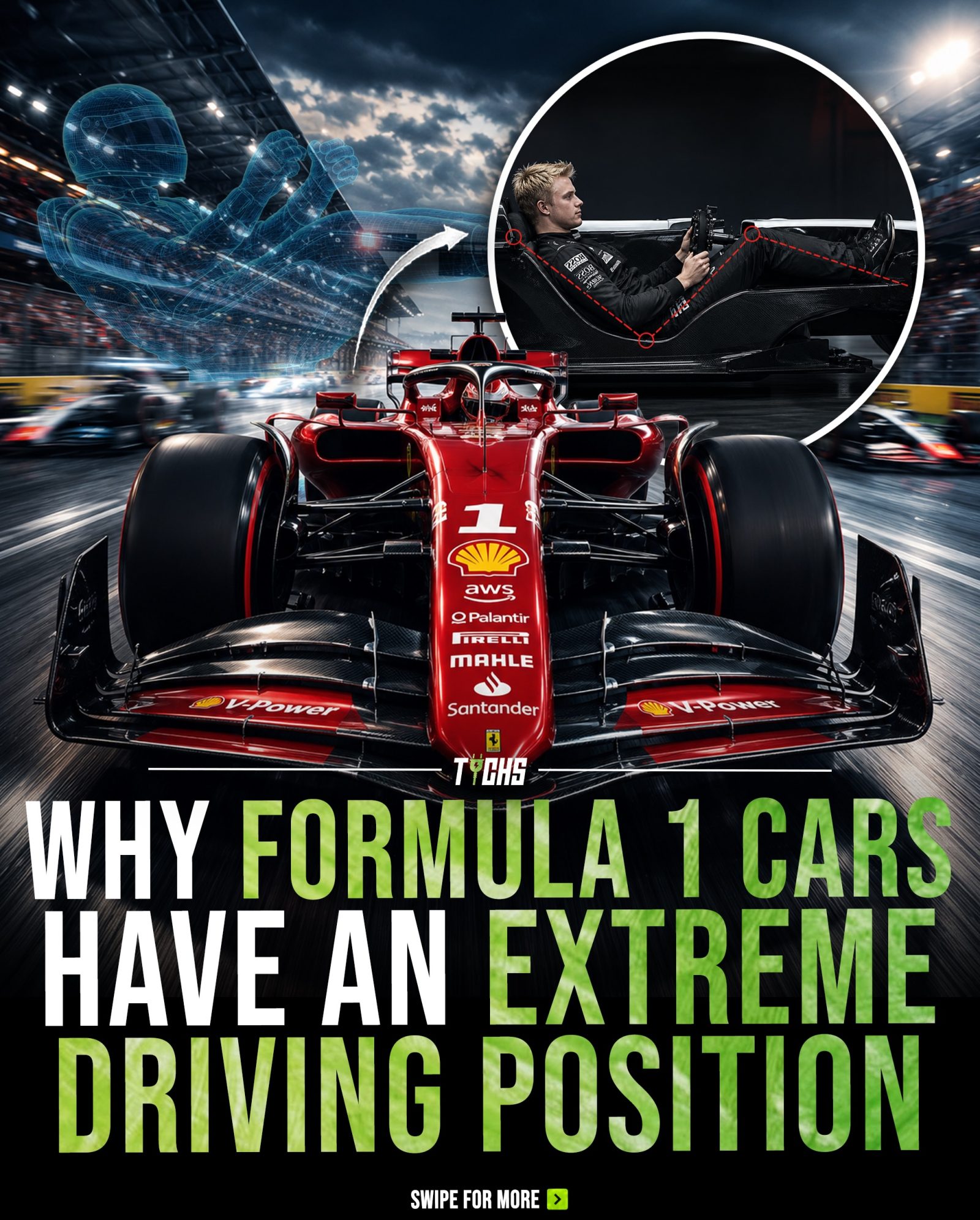
Formula 1 Driving Position: The Science Behind the Recline
Formula 1 drivers adopt a highly reclined driving position, which might look uncomfortable to the average viewer, but it's a critical feature of the car's design. With the hips positioned lower than the knees, the driver's seating is engineered to optimize performance and control, especially at high-speed corners. But why is this reclined position so important?
Why This Matters
In motorsport racing, every component of the car, including the driver's position, is optimized for speed and efficiency. The reclined position of Formula 1 drivers isn't just about comfort; it's about achieving the best possible performance. This positioning lowers the car’s center of gravity, enhances stability, and helps the driver withstand extreme G-forces. The aerodynamic efficiency and safety of the cockpit also rely heavily on this unique seating arrangement.
The Engineering Behind the Recline
Center of Gravity
One of the most significant benefits of the reclined driving position is the lowered center of gravity. This low center of gravity improves the car's handling and stability, especially during high-speed turns. The closer the center of gravity is to the ground, the less likely the car is to experience weight transfer, which can cause loss of control.
G-Force Management
High-speed racing involves extreme G-forces, which can be physically demanding on the driver. The reclined position allows the driver to better manage these forces, reducing the stress on the body. This is particularly important during braking, acceleration, and cornering, where G-forces can reach up to 5 Gs. The driver's body is supported in a way that minimizes the impact of these forces, allowing for better control and endurance.
Visibility and Control
The reclined position also provides better visibility. By positioning the driver lower in the cockpit, the view over the nose of the car is improved. This enhanced visibility allows the driver to see the track more clearly, especially during high-speed corners, overtaking maneuvers, and when navigating complex racing lines. This ergonomic design gives the driver better control over the car, allowing for quicker reactions and more precise control over the racing line.
Custom Cockpits
Every Formula 1 car cockpit is custom-built around the driver. This customization ensures that the seating position is tailored to the driver's body dimensions, providing maximum comfort, safety, and control. The seat and cockpit are designed to distribute the driver's weight evenly, reducing fatigue and muscle strain during long races. This customization also ensures that the driver can maintain the correct posture and control over the car, even under extreme conditions.
Practical Tips for Enthusiasts
While it's unlikely that enthusiasts will experience the same conditions as a professional driver, there are a few tips to consider when optimizing driving positions for your own comfort and control:
Adjust the Seat
Ensure that your seat is adjusted to the correct position. The hips should be lower than the knees, similar to the Formula 1 setup. This position helps to lower the center of gravity and improve stability.
Maintain Proper Posture
Maintain a good posture while driving. Keep your back straight and your shoulders relaxed. This will help to reduce muscle strain and fatigue, especially during long drives.
Customize Your Cockpit
If possible, customize your cockpit to suit your body dimensions. This can include adjustable seats, steering wheels, and pedals. The better your cockpit is tailored to your body, the more comfortable and controlled your driving experience will be.
Important Takeaways
The reclined driving position in Formula 1 is a critical design feature that directly impacts the car's performance:
- Center of Gravity: Lowered for better handling and stability.
- G-Force Management: Reduces physical stress on the driver.
- Visibility and Control: Improves the driver's view and control over the car.
- Customized Cockpits: Tailored to each driver's body for maximum comfort and performance.
Future Trends
The future of Formula 1 racing positions may see even more extreme designs. The integration of advanced technology, such as augmented reality and better materials, could lead to more sophisticated cockpit designs. As technology evolves, so will the ergonomics, aerodynamics, and overall performance of racing cars. The focus will continue to be on optimizing speed, control, and safety.
Conclusion
The reclined driving position in motorsport isn't just a matter of aesthetics. It deeply affects the performance, safety, and control of the car. From improving stability and G-force management to enhancing visibility and customizing the cockpit, every aspect of the driver's position is engineered for optimal racing conditions. Understanding the science behind this design can offer valuable insights for both motorsport enthusiasts and everyday drivers.
Questions readers ask
Why do Formula 1 drivers sit in such a reclined position?
Formula 1 drivers sit in a highly reclined position to lower the car's center of gravity, which enhances the car's stability and control, particularly during high-speed maneuvers. This position also helps drivers better manage the extreme G-forces experienced during races.
How does the reclined driving position improve Formula 1 car performance?
The reclined position improves Formula 1 car performance by optimizing the driver's ability to control the vehicle at high speeds. This position reduces the driver's resistance to the effects of G-forces, allowing for more precise and responsive steering and braking.
What are the benefits of a low center of gravity in Formula 1 cars?
A low center of gravity in Formula 1 cars, achieved through the reclined driving position, significantly improves the car's handling and stability. It reduces the risk of the car flipping or losing control, especially during sharp corners and abrupt changes in direction.
How does the reclined position help Formula 1 drivers manage G-forces?
The reclined position helps Formula 1 drivers manage G-forces by distributing the forces more evenly across the body, reducing the strain on the neck and spine. This allows drivers to maintain better control and focus during high-speed racing.
Why is the driver's seating position in an F1 car designed to be ergonomic?
The driver's seating position in an F1 car is designed to be ergonomic to ensure the driver can comfortably and efficiently control the car. This optimizes their performance, allows for precise control of the vehicle, and helps prevent fatigue and discomfort during long races.
Recent articles
Fresh deep dives from the latest Reels we unpacked.




Comments
Be the first to comment.