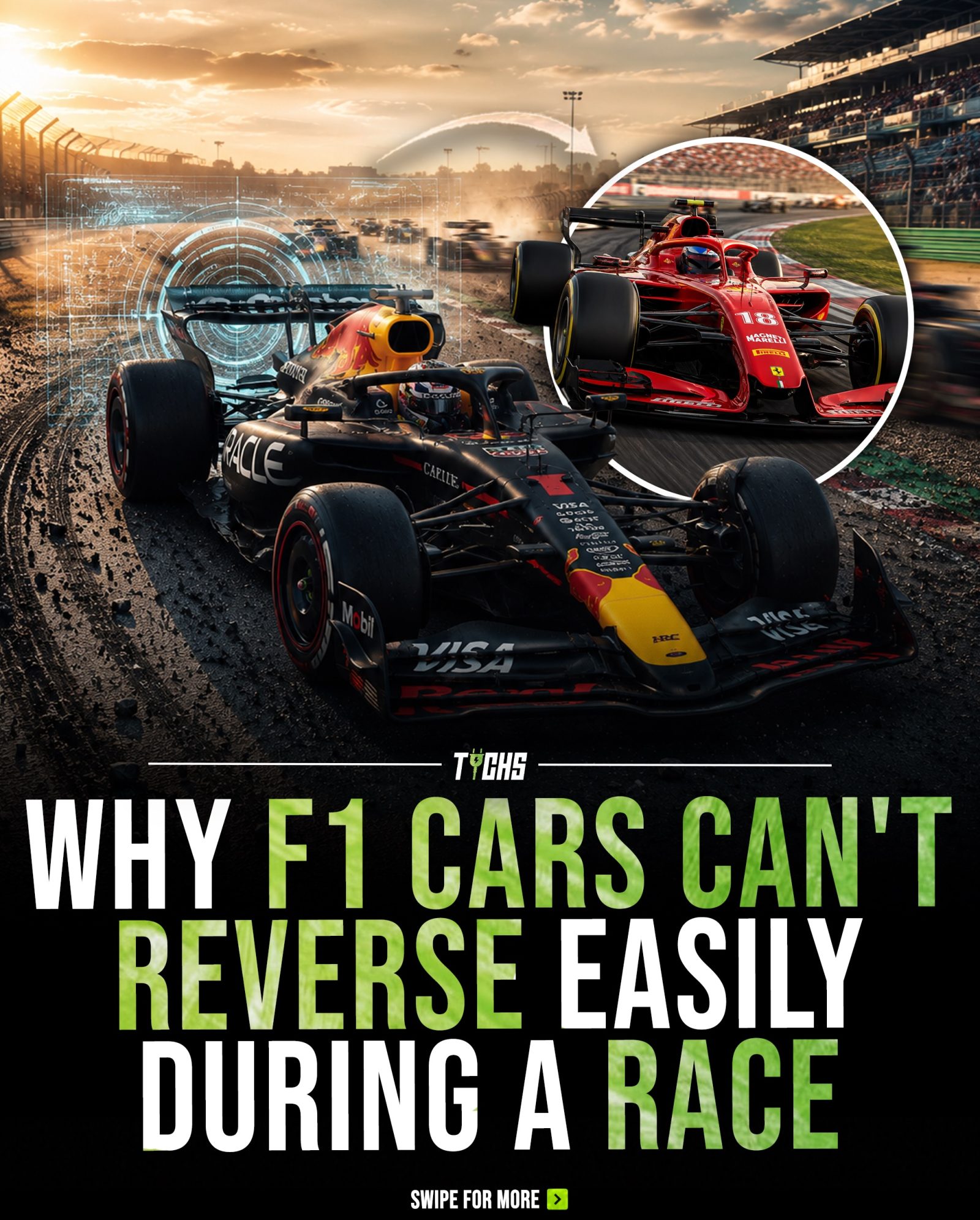
Why Formula 1 Cars Struggle to Reverse
Formula 1 cars are designed for extreme performance and speed, making them the pinnacle of motorsport engineering. However, one aspect where these high-tech machines fall short is reversing. While every Formula 1 car is equipped with a reverse gear as per FIA regulations, drivers rarely use it during races. This limitation stems from several key factors, including limited visibility, slow reverse speed, and significant safety concerns.
Context / Why This Matters
Understanding why Formula 1 cars struggle to reverse is not just about appreciating the intricacies of racing. It touches on the broader themes of design trade-offs, safety in high-speed environments, and the unique challenges faced by drivers. For fans and enthusiasts, knowing these details can enhance the viewing experience, providing a deeper understanding of the strategic decisions and risks involved in racing.
Main Discussion
Design Limitations
The primary issue with reversing in Formula 1 cars is the limited visibility for the driver. Drivers sit extremely low in the car, with the rear wing, engine cover, and mirrors providing very limited visibility behind. This design is optimized for aerodynamic efficiency and forward performance, but it severely hampers the driver's ability to see what's behind them. The rear wing, in particular, is a significant obstacle, blocking the driver's view and making accurate reversing extremely difficult.
Safety Concerns
Reversing onto the racing line can create serious risks for both the driver and approaching cars. The high speeds and close proximity of other vehicles mean that any mistake can lead to a collision. This is why drivers usually wait for a safe gap or turn the car around instead of reversing. The potential for a crash is a significant deterrent, and the risk is simply too high to justify using reverse gear frequently.
Gearbox and Speed
The gearbox in a Formula 1 car is designed for maximum forward acceleration and handling, not for reverse driving. This optimization means that the reverse gear is not as efficient or as fast as the forward gears. The slower speed in reverse makes it impractical for use in high-stakes racing situations where every second counts.
Strategic Considerations
Given the limitations and risks, drivers use the reverse gear only when absolutely necessary, such as after a spin or when the car is stuck. In such scenarios, the driver might need to back up to get the car back in the correct position to continue racing. However, these situations are rare, and drivers are trained to avoid them whenever possible.
Practical Tips for Understanding and Appreciating the Challenge
For fans and enthusiasts, here are some practical tips to better understand and appreciate the challenge of reversing in Formula 1:
Watch for Key Moments
Pay attention to key moments during races where drivers might need to reverse. These moments are rare but can provide valuable insights into the driver's decision-making process and the car's limitations.
Analyze the Driver's View
Imagine yourself in the driver's seat. Try to visualize the limited visibility and the challenges it presents. This can help you appreciate the skill and precision required to navigate the track effectively.
Understand the Physics
Understand the physics behind the car's design and how it affects reversing. Knowing the trade-offs between aerodynamic efficiency and visibility can deepen your appreciation for the engineering behind these machines.
Important Takeaways
Understanding why Formula 1 cars struggle to reverse involves recognizing the design limitations, safety concerns, and strategic considerations that drivers face. The car's design, optimized for forward performance and speed, creates significant visibility issues, making reversing dangerous and impractical. Drivers rely on the reverse gear only in critical situations, and understanding these aspects can enhance the viewing experience and appreciation for the sport.
Conclusion
The challenge of reversing in Formula 1 cars is a fascinating aspect of motorsport that highlights the unique design and safety considerations in the world of racing. By understanding the reasons behind this limitation, fans can gain a deeper appreciation for the skill and strategy involved in Formula 1. Whether you're a seasoned enthusiast or a new fan, recognizing these factors can enrich your experience and enjoyment of the sport.
Questions readers ask
Why is reversing so challenging for Formula 1 cars?
Reversing is challenging for Formula 1 cars due to several factors. The cars are designed for high-speed forward motion, which makes low-speed reverse maneuvers difficult. Additionally, the limited rear visibility and the lack of practice in reverse driving contribute to the challenge.
Why is rear visibility a concern when reversing F1 cars?
Formula 1 cars have limited rear visibility due to their aerodynamic design and the high cockpit position. This makes it difficult for drivers to maneuver safely in reverse, as they cannot see potential obstacles clearly.
How does the design of Formula 1 cars affect their ability to reverse?
The design of Formula 1 cars prioritizes speed and aerodynamic efficiency. This means that many components are not optimized for reversing, and the cars can be difficult to control at low speeds, even with a reverse gear.
What safety concerns are associated with reversing Formula 1 cars?
Reversing a Formula 1 car poses significant safety risks. The combination of limited visibility, slow and unpredictable handling, and the high-risk environment of a race track can lead to dangerous situations.
Can Formula 1 cars be modified to improve their reversing capabilities?
Modifying Formula 1 cars to improve reversing capabilities would likely compromise their performance and safety. Changes to aerodynamics or other components would affect their handling and speed. Additionally, FIA regulations are strict, and significant modifications are not allowed.
Why don't Formula 1 drivers practice reversing more to improve their skills?
Formula 1 drivers rarely practice reversing because it is not a critical skill during races. The primary focus is on optimizing forward driving skills, which are far more important for performance. Therefore, reversing is not a significant part of their training.
How do teams handle situations where an F1 car needs to reverse?
In situations where a Formula 1 car needs to reverse, such as during a pit stop or to retrieve a car from a dangerous position, teams are very careful and meticulous. They often use specialized equipment and a team of mechanics to ensure the car is moved safely without causing any damage or endangering personnel.
Recent articles
Fresh deep dives from the latest Reels we unpacked.




Comments
Be the first to comment.