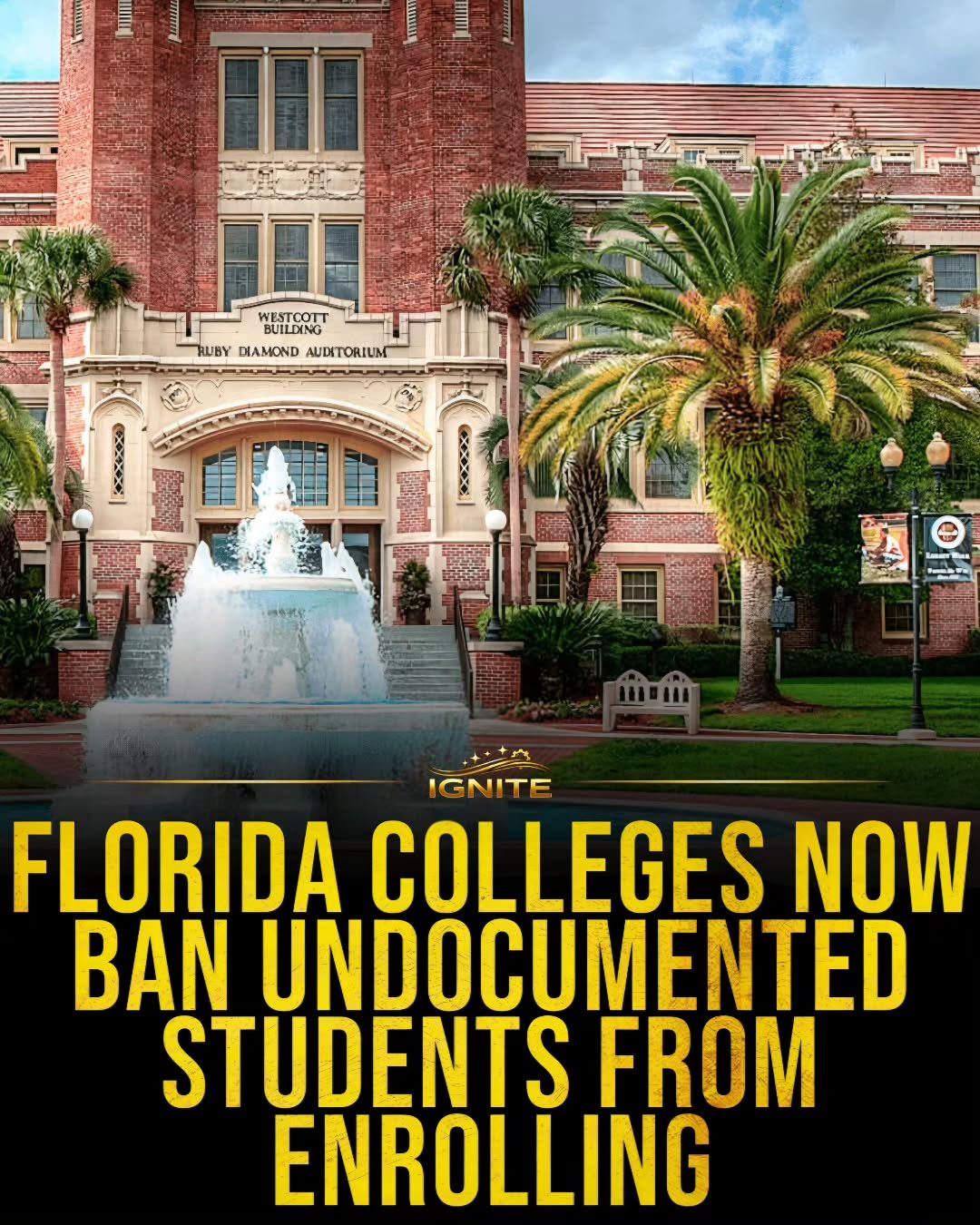
Florida Colleges Announcement: Policy Changes for Undocumented Students
Recent announcements from Florida colleges have sparked significant attention due to new policies regarding undocumented students. The Ruby Diamond Auditorium at Westcott, Florida, served as the backdrop for this critical announcement, emphasizing the gravity of the changes. Florida colleges are now banning undocumented students from enrolling, a move that has far-reaching implications for higher education access in the state.
Context / Why This Matters
Florida's new policy on undocumented student enrollment is not an isolated decision; it reflects broader debates and policy shifts occurring across the United States. Understanding the context helps illuminate the potential impact on students, educational institutions, and society at large.
Education Equality
For decades, the American educational system has strived to provide equal access to higher education for all students, regardless of immigration status. Many institutions have implemented policies to support undocumented students, offering in-state tuition rates, financial aid, and other resources. These efforts have aimed to foster a diverse and inclusive learning environment, recognizing that undocumented students contribute to the rich tapestry of American society.
Legal and Political Landscape
The new policy in Florida comes at a time when immigration and education policies are under intense scrutiny. Federal and state governments have differing stances on how to address the status of undocumented students. While some states have enacted laws to support these students, others have taken a more restrictive approach. Florida's decision aligns with the latter, adding to the complex legal and political landscape surrounding immigration and education.
Main Discussion
The decision by Florida colleges to ban undocumented students from enrolling is multifaceted, influenced by a mix of legal, political, and social factors.
Legal Implications
The legal landscape for undocumented students in Florida has become more restrictive. The new policy aligns with existing state laws that limit access to certain public benefits for undocumented immigrants. This change underscores the need for a clear legal framework that defines the rights and responsibilities of both documented and undocumented students.
Political Factors
Political considerations play a significant role in shaping education policies. Florida's decision reflects a broader political trend that emphasizes stricter immigration controls. This trend has implications for how educational institutions operate and how they support their diverse student populations.
Social and Economic Impact
The social and economic impact of this policy change cannot be overstated. Undocumented students face significant challenges in pursuing higher education, including financial constraints, lack of access to federal financial aid, and legal uncertainties. The new policy in Florida exacerbates these challenges, potentially leading to a decline in the number of undocumented students pursuing higher education in the state.
Campus Community Reactions
The announcement has sparked varied reactions within the campus community. While some students and faculty members support the policy, advocating for stricter immigration controls, others argue that it goes against the principles of inclusivity and diversity that higher education institutions strive to uphold.
Practical Tips
For undocumented students and their supporters, navigating this new policy landscape requires strategic planning and proactive measures.
Seeking Legal Advice
Undocumented students should seek legal advice to understand their options and rights. This can involve consulting with immigration attorneys or non-profit organizations that specialize in immigration law.
Exploring Alternative Pathways
Exploring alternative pathways to higher education, such as community colleges or private institutions, can be a viable option. These institutions may have more flexible policies regarding undocumented students.
Building Community Support
Building a strong support network within the campus community can provide emotional and practical support. Joining student organizations or advocacy groups focused on immigration and education issues can offer valuable resources and solidarity.
Important Takeaways
The policy change in Florida underscores the need for ongoing dialogue and advocacy for undocumented students. It highlights the importance of legal, political, and social considerations in shaping education policies.
Legal and Political Advocacy
Continued legal and political advocacy is crucial for achieving equitable policies that support undocumented students. Efforts to change state and federal laws can help ensure that all students have access to quality education, regardless of their immigration status.
Community Support and Resources
Building a supportive community and providing adequate resources are vital for undocumented students. Educational institutions, advocacy groups, and policymakers must work together to create an environment where all students can thrive.
Conclusion
The recent announcement by Florida colleges regarding the ban on undocumented student enrollment marks a significant shift in the state's educational landscape. It underscores the need for ongoing dialogue, advocacy, and support for undocumented students. By understanding the complexities and implications of this policy, we can work towards a more inclusive and supportive educational environment for all students. The Ruby Diamond Auditorium at Westcott, Florida, serves as a reminder of the importance of these discussions, highlighting the need for continued efforts to ensure that higher education remains accessible to all.
Questions readers ask
What specific changes have Florida colleges implemented regarding undocumented students?
Florida colleges have introduced a new policy that prohibits undocumented students from enrolling in their institutions. This means that undocumented students are no longer able to gain admission to these colleges.
Why is the Ruby Diamond Auditorium significant in this context?
The Ruby Diamond Auditorium at Westcott, Florida, was the location for the announcement of the new policy. This venue was chosen to underscore the importance and gravity of the changes being implemented by Florida colleges.
What are the broader implications of Florida's new policy?
The ban on undocumented students reflects ongoing debates about immigration and access to higher learning across the United States. It may influence similar policies in other states and impact the availability of higher learning opportunities for undocumented students nationwide.
How does this policy affect access to higher learning in Florida?
The new policy significantly restricts access to higher learning for undocumented students in Florida. It means that a considerable number of students who were previously able to pursue higher learning in the state may now be unable to do so.
What can undocumented students do if they are affected by this policy?
Undocumented students affected by this policy may need to explore alternative options for higher learning, such as colleges in other states that do not have similar bans. They should also consider consulting with legal and advocacy organizations that support undocumented students.
Are there any exemptions or exceptions to this new policy?
As of now, the policy does not appear to have any exemptions or exceptions. It applies broadly to all undocumented students seeking to enroll in Florida colleges. Students should check with individual institutions for the most accurate and up-to-date information.
Related deep dives
Similar reads based on topic and creator.


Recent articles
Fresh deep dives from the latest Reels we unpacked.




Comments
Be the first to comment.