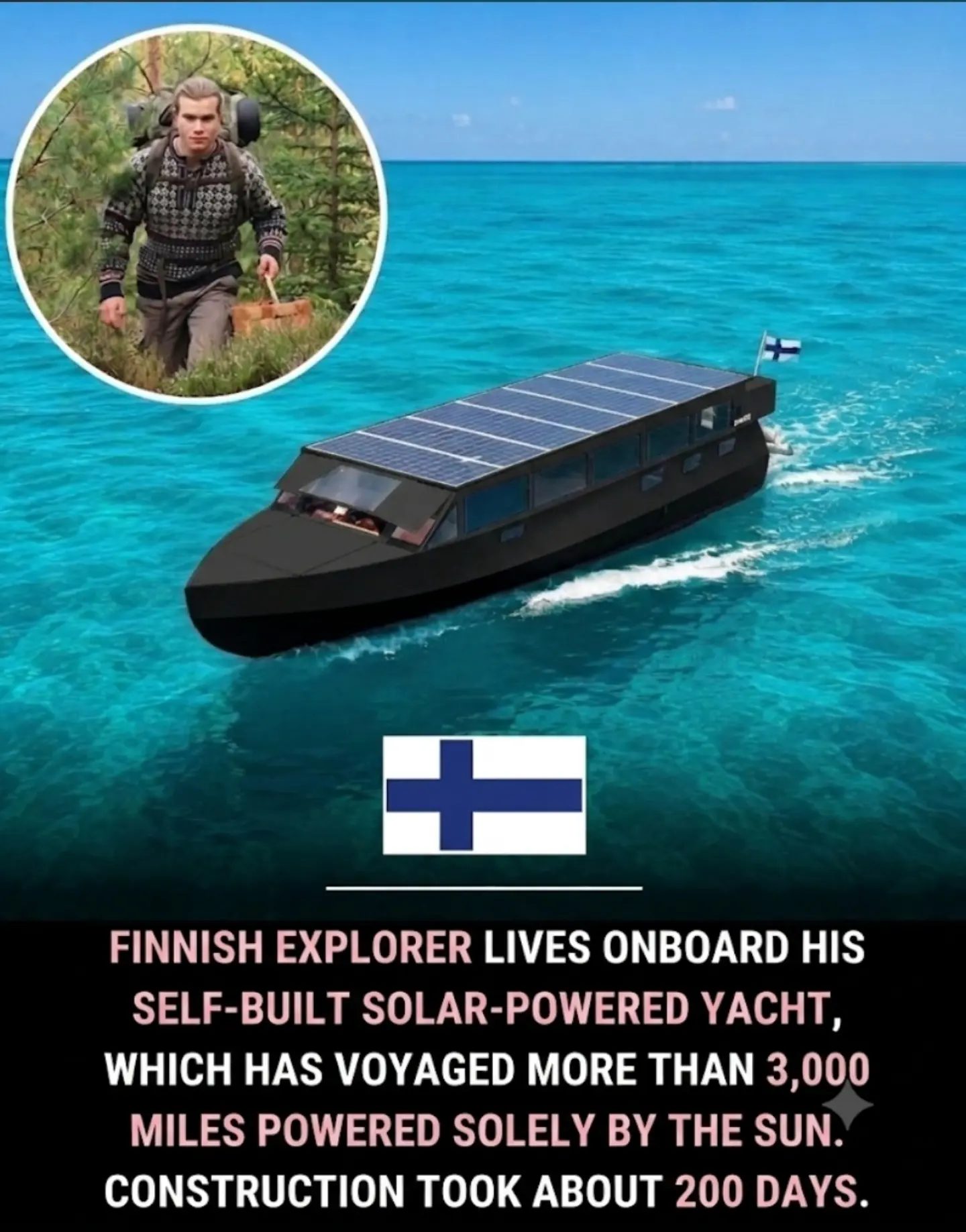
Solar-Powered Yachts: Pioneering Zero-Fuel Ocean Voyages
Finnish inventor Lukas Sjöman has made history by completing a 3,106-mile (5,000 km) journey from Finland to Spain using a yacht powered solely by solar energy. His vessel, named Helios 11, is a testament to the future of marine transportation and a challenge to traditional, fossil-fuel dependent yachts. Sjöman's voyage underscores the potential of renewable energy in maritime travel, pushing the boundaries of what is possible with solar power.
Context: The Rise of Solar-Powered Yachts
The maritime industry has long relied on fossil fuels, but the environmental impact of this dependence is driving a search for sustainable alternatives. Solar-powered yachts, like Helios 11, are at the forefront of this movement. These vessels harness the power of the sun to navigate the open ocean, reducing the carbon footprint of marine travel. As climate change becomes an increasingly urgent issue, innovations in solar technology are gaining traction as a viable solution for eco-friendly seafaring.
The Journey of Helios 11
The Builder and His Vision
Lukas Sjöman, a Finnish inventor and explorer, constructed Helios 11 with his own hands over a period of 200 days. The yacht is a marvel of engineering, equipped with rooftop solar panels that generate 6 kW of raw power. This energy is stored in a 48-volt battery backbone, providing the necessary power for electric propulsion. Sjöman's aim was not just to reach a destination but to prove that the future of marine transportation does not have to rely on fossil fuels.
The Challenges and Triumphs
The journey from Finland to Spain was far from a leisurely cruise. Sjöman navigated treacherous coastal waters, unforgiving river currents, and a maze of European canals. The voyage tested the limits of both human ingenuity and the capabilities of solar-powered technology. Despite these challenges, Helios 11 performed exceptionally, proving its reliability and resilience.
The Power of Renewable Energy
Sjöman's voyage was a high-stakes test of renewable energy against nature. Armed with solar panels and a battery system, Helios 11 traversed an entire continent without stopping for fuel. This achievement demonstrates the potential of solar energy as a primary power source for long-distance maritime travel. The yacht's success highlights the viability of renewable energy solutions in the maritime industry.
The Technology Behind Solar-Powered Yachts
Solar Panels and Energy Storage
The core of Helios 11's technology lies in its solar panels and energy storage system. The panels convert sunlight into electrical energy, which is then stored in a battery system. This stored energy powers the yacht's electric propulsion system, allowing it to navigate the open sea without the need for fossil fuels.
Battery and Propulsion Systems
The 48-volt battery backbone is crucial for storing the energy generated by the solar panels. This energy is then used to power the electric propulsion system, which drives the yacht through the water. The efficiency of this system is what allows Helios 11 to travel long distances without the need for refueling.
Practical Tips for Building and Maintaining a Solar-Powered Yacht
Design Considerations
When designing a solar-powered yacht, it's essential to prioritize energy efficiency. This involves optimizing the layout of the solar panels to maximize sun exposure and minimizing the energy consumption of onboard systems.
Energy Management
Effective energy management is crucial for the success of a solar-powered yacht. This includes monitoring the energy output of the solar panels, managing the battery's charge levels, and ensuring that the propulsion system operates efficiently.
Safety and Reliability
Safety and reliability are paramount when building a solar-powered yacht. Regular maintenance of the solar panels, battery system, and propulsion system is essential to ensure their optimal performance and longevity. It's also important to have backup power sources and emergency protocols in place.
Important Takeaways
The journey of Helios 11 and the achievements of Lukas Sjöman offer several important takeaways for the future of marine transportation:
- Solar-powered yachts are a viable and sustainable alternative to traditional, fossil-fuel dependent vessels.
- Innovations in solar technology and energy storage are key to the success of solar-powered marine travel.
- Effective energy management and regular maintenance are crucial for the reliability and longevity of solar-powered yachts.
- The future of marine transportation is moving towards renewable energy solutions, and solar power is at the forefront of this movement.
Conclusion
Lukas Sjöman's historic journey with Helios 11 is a testament to the potential of solar-powered yachts. It demonstrates that renewable energy can power long-distance maritime travel, reducing the carbon footprint of the industry. As the world seeks sustainable solutions for transportation, solar-powered yachts offer a promising path forward. The success of Helios 11 paves the way for future innovations, challenging traditional yachts and inspiring a new era of eco-friendly marine travel.
Questions readers ask
What inspired Finnish inventor Lukas Sjöman to create the *Helios 11* solar yacht?
Lukas Sjöman was driven by the desire to demonstrate the potential of solar energy in marine transportation and to challenge the industry's reliance on fossil fuels. His goal was to showcase a sustainable alternative to traditional yachts and inspire others to consider renewable energy solutions.
How does the *Helios 11* solar yacht generate power?
The *Helios 11* is equipped with advanced solar panels that convert sunlight into electrical energy. This energy powers the yacht's propulsion system and onboard electronics, making it entirely independent of fossil fuels.
How long did it take for Lukas Sjöman to complete his 3,106-mile solar-powered voyage?
The exact duration of Lukas Sjöman's journey from Finland to Spain is not specified in the article. However, sailing 3,106 miles using only solar power is a significant achievement that highlights the yacht's efficiency and the potential of solar energy for long-distance travel.
What are the benefits of using solar energy for maritime travel?
Solar energy for maritime travel offers several benefits, including reduced carbon emissions, lower operational costs, and decreased reliance on fossil fuels. Additionally, solar-powered yachts can operate silently, reducing noise pollution, and have the potential for extended voyages due to the abundance of sunlight.
How does the *Helios 11* compare to traditional fossil-fuel dependent yachts?
The *Helios 11* stands out from traditional yachts by eliminating the need for fossil fuels, which reduces carbon emissions and lowers operational costs. The solar yacht also offers a quieter and more environmentally friendly sailing experience, highlighting the advancements in renewable energy technology.
What challenges might Lukas Sjöman have faced during his solar-powered voyage?
Some potential challenges during the voyage could have included navigating through weather conditions that limited sunlight availability, ensuring the solar panels remained efficient, and managing power consumption to match the energy generated by the solar panels.
Recent articles
Fresh deep dives from the latest Reels we unpacked.




Comments
Be the first to comment.