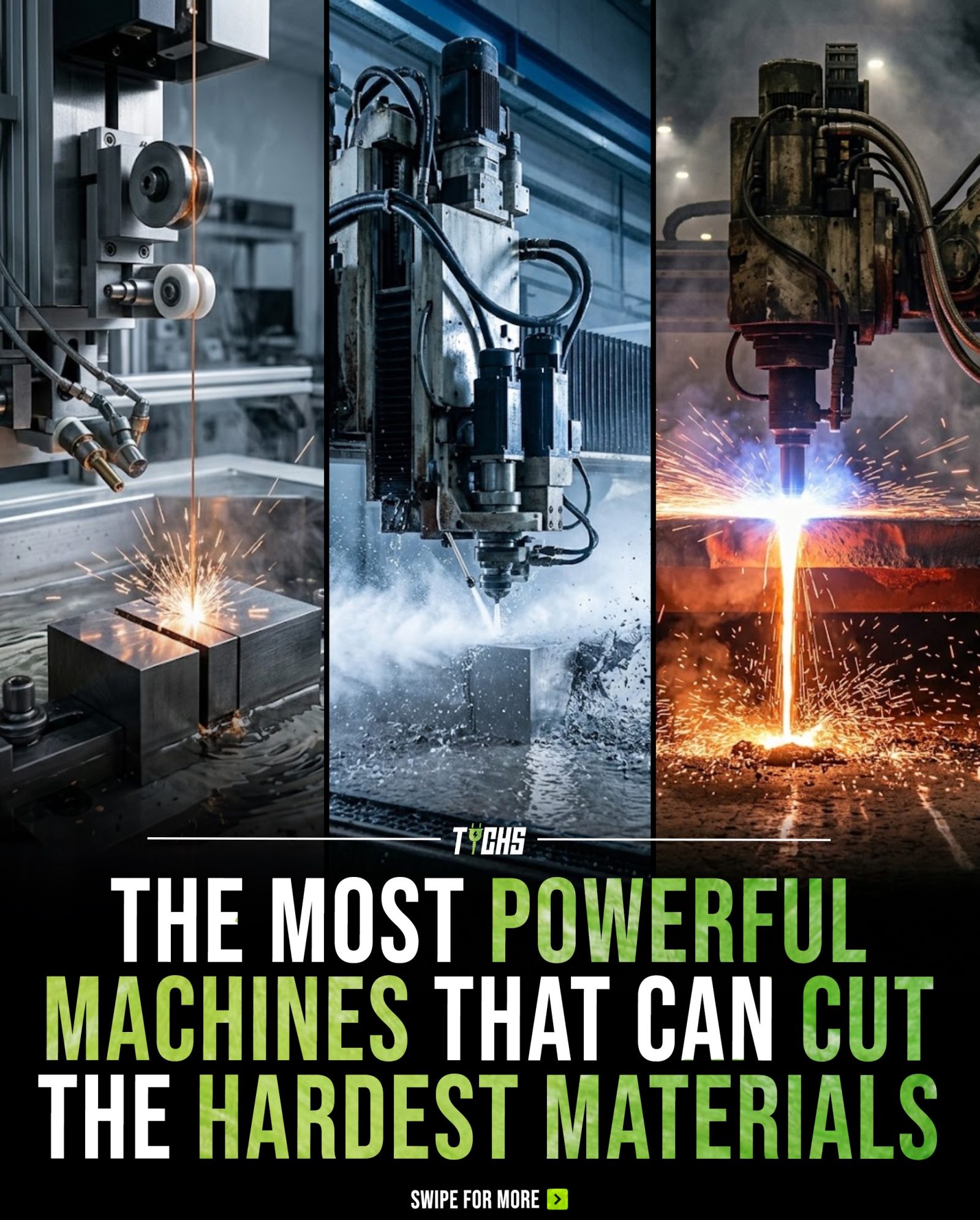
Industrial Cutting Machines
Industrial cutting machines are the backbone of modern manufacturing, capable of slicing through the hardest materials with astonishing precision. These machines utilize a variety of technologies, including extreme pressure, heat, electricity, vibrations, and even ion-level technology, to achieve cuts that were once thought impossible. From waterjets and plasma cutters to specialized systems like diamond wire cutters and focused ion beam technology, these machines are essential for industries ranging from aerospace to medical device manufacturing.
Why This Matters
Industrial cutting machines are crucial for several reasons. They enable the production of complex components with microscopic precision, which is vital for industries that require high levels of accuracy and quality. Whether it's aerospace parts, electronics, or medical devices, these machines ensure that the final products meet stringent standards. Additionally, the versatility of these machines allows for the cutting of a wide range of materials, from metals to advanced composites, making them indispensable in modern manufacturing.
Main Discussion
Types of Industrial Cutting Machines
CNC Machines
Computer Numerical Control (CNC) machines are a cornerstone of industrial manufacturing. These machines use pre-programmed software to control cutting tools, ensuring precise and repeatable cuts. CNC machines can cut through various materials, including metals, plastics, and composites. The most powerful CNC machines can handle the hardest materials with ease. CNC machines are often used for creating aerospace parts, medical devices, and other high-precision components.
Waterjet Cutters
Waterjet cutters use high-pressure water streams to cut through materials. These machines are highly versatile and can cut a wide range of materials, including metals, glass, and composites. Waterjet cutters are particularly useful for cutting materials that are difficult to cut with traditional methods, such as those that are heat-sensitive. They achieve this by using extreme pressure, precisely targeting the material. The precision of waterjet cutters is often in the range of ±0.05 mm, making them suitable for applications that require high accuracy.
Plasma Cutters
Plasma cutters use thermal energy to cut through thick metals. These machines use a plasma torch to melt the material, creating a precise cut. Plasma cutters are known for their ability to cut through thick metals with precision around ±0.5-1.0 mm. The thermal melt technology used in plasma cutters allows for efficient and fast cutting of materials like steel and aluminum. This makes them ideal for industrial applications that require cutting thick metal sheets.
Wire EDM
Wire Electrical Discharge Machining (EDM) uses spark erosion to cut through conductive materials. This process involves passing an electrical current through a thin wire, which erodes the material to create precise cuts. Wire EDM is particularly useful for creating complex shapes and small details. The precision of wire EDM is often in the range of ±0.01 mm, making it suitable for applications that require microscopic precision.
Electrochemical Machining (ECM)
Electrochemical machining (ECM) uses electrochemical reactions to cut through materials. This process involves passing an electrical current through an electrolyte, which dissolves the material to create precise cuts. ECM is particularly useful for cutting hard metals and advanced materials. The precision of ECM is often in the range of ±0.01 mm, making it suitable for applications that require microscopic precision.
Fiber Lasers
Fiber lasers use focused laser beams to cut through materials. These machines are known for their precision and ability to cut through a wide range of materials, including metals, plastics, and composites. Fiber lasers achieve microscopic precision by using laser beams that are focused to a very narrow point. This allows for precise cutting with minimal heat-affected zones. Laser cutting machines can cut materials with a precision of ±0.01-0.05 mm, making them suitable for applications that require high accuracy.
Diamond Wire Cutters
Diamond wire cutters use a thin wire coated with diamond particles to cut through materials. This process involves passing the wire through the material, which cuts through it with precision. Diamond wire cutters are particularly useful for cutting hard and brittle materials, such as glass and ceramics. The precision of diamond wire cutters is often in the range of ±0.01 mm, making them suitable for applications that require high accuracy.
Ultrasonic Machining
Ultrasonic machining uses high-frequency vibrations to cut through materials. This process involves using a vibrating tool to erode the material, creating precise cuts. Ultrasonic machining is particularly useful for cutting hard and brittle materials, such as ceramics and glass. The precision of ultrasonic machining is often in the range of ±0.01 mm, making it suitable for applications that require microscopic precision.
Focused Ion Beam Technology
Focused ion beam (FIB) technology uses a beam of ions to cut through materials. This process involves focusing the ion beam to a very small point, which erodes the material to create precise cuts. FIB technology is particularly useful for cutting materials at the nanoscale, making it ideal for applications in electronics and medical devices. The precision of FIB technology is often in the range of ±0.01 mm, making it suitable for applications that require microscopic precision.
Practical Tips
When working with industrial cutting machines, there are several practical tips to keep in mind to ensure optimal performance and precision:
Safety First
Always follow safety protocols when operating industrial cutting machines. This includes wearing appropriate personal protective equipment (PPE), such as safety glasses, gloves, and ear protection. Additionally, ensure that the machine is properly grounded and that all safety guards are in place.
Regular Maintenance
Regular maintenance is crucial for the proper functioning of industrial cutting machines. This includes cleaning the machine, checking for wear and tear, and lubricating moving parts. Regular maintenance can help prevent breakdowns and ensure that the machine operates at its best.
Proper Setup
Proper setup is essential for achieving precise cuts. This includes aligning the cutting tool with the material, ensuring that the material is securely fastened, and setting the correct parameters for the cutting process. Proper setup can help prevent errors and ensure that the final product meets the required specifications.
Use High-Quality Tools
Using high-quality cutting tools can significantly improve the precision and efficiency of the cutting process. This includes using sharp blades, high-quality wires, and precision-focused laser beams. High-quality tools can help achieve better results and reduce the risk of errors.
Calibration
Regular calibration of the machine is essential for maintaining precision. This includes calibrating the cutting tool, the material positioning, and the machine's software. Regular calibration can help ensure that the machine operates at its best and that the final product meets the required specifications.
Training
Proper training is crucial for operating industrial cutting machines safely and effectively. This includes understanding the machine's controls, the cutting process, and safety protocols. Proper training can help prevent accidents and ensure that the machine operates at its best.
Important Takeaways
Industrial cutting machines are essential for modern manufacturing, enabling the production of complex components with high precision. From CNC machines and waterjet cutters to specialized systems like diamond wire cutters and focused ion beam technology, these machines offer a wide range of capabilities. By understanding the different types of industrial cutting machines and their applications, manufacturers can choose the right tool for the job and achieve the best results.
Conclusion
Industrial cutting machines are the workhorses of modern manufacturing, capable of slicing through the hardest materials with astonishing precision. Whether it's aerospace parts, electronics, or medical devices, these machines are essential for producing high-quality components. By understanding the different types of industrial cutting machines and their applications, manufacturers can choose the right tool for the job and achieve the best results.
Questions readers ask
What types of materials can industrial cutting machines handle?
Industrial cutting machines can handle a wide range of materials, from the hardest metals like titanium and stainless steel to softer materials like plastics and composites. The specific material a machine can cut depends on the technology it uses, such as waterjets for thick metals, plasma cutters for conductive materials, and laser cutters for precise, detailed work.
How do waterjet cutters achieve such precise cuts?
Waterjet cutters use an extremely high-pressure stream of water, often mixed with an abrasive, to cut through materials. This non-thermal process allows for precise, detail-oriented cutting without altering the material's properties, making it ideal for industries requiring high precision, like aerospace and medical device manufacturing.
What is the difference between plasma cutting and laser cutting?
Plasma cutting machines use a high-velocity jet of ionized gas to cut through conductive materials, like metals. Laser cutters, on the other hand, use a high-powered laser beam to melt, burn, or vaporize materials. Laser cutting is generally more precise and can handle complex, intricate designs, while plasma cutting is often faster and more cost-effective for thicker materials.
Why are CNC cutting systems important in modern manufacturing?
CNC (Computer Numerical Control) cutting systems are crucial because they automate the cutting process, ensuring consistent and precise cuts. They can handle complex designs and are programmable, allowing for quick and efficient production changes. CNC machines are used in various industries, from aerospace to medical device manufacturing, for their reliability and high level of accuracy.
What are the advantages of using high-pressure cutting techniques?
High-pressure cutting techniques, such as those used in waterjet cutters, offer several advantages. They can cut through extremely thick and hard materials, produce precise and detailed cuts, and do not cause heat distortion or mechanical stresses. These techniques are ideal for materials that are sensitive to heat or require high precision.
Recent articles
Fresh deep dives from the latest Reels we unpacked.




Comments
Be the first to comment.