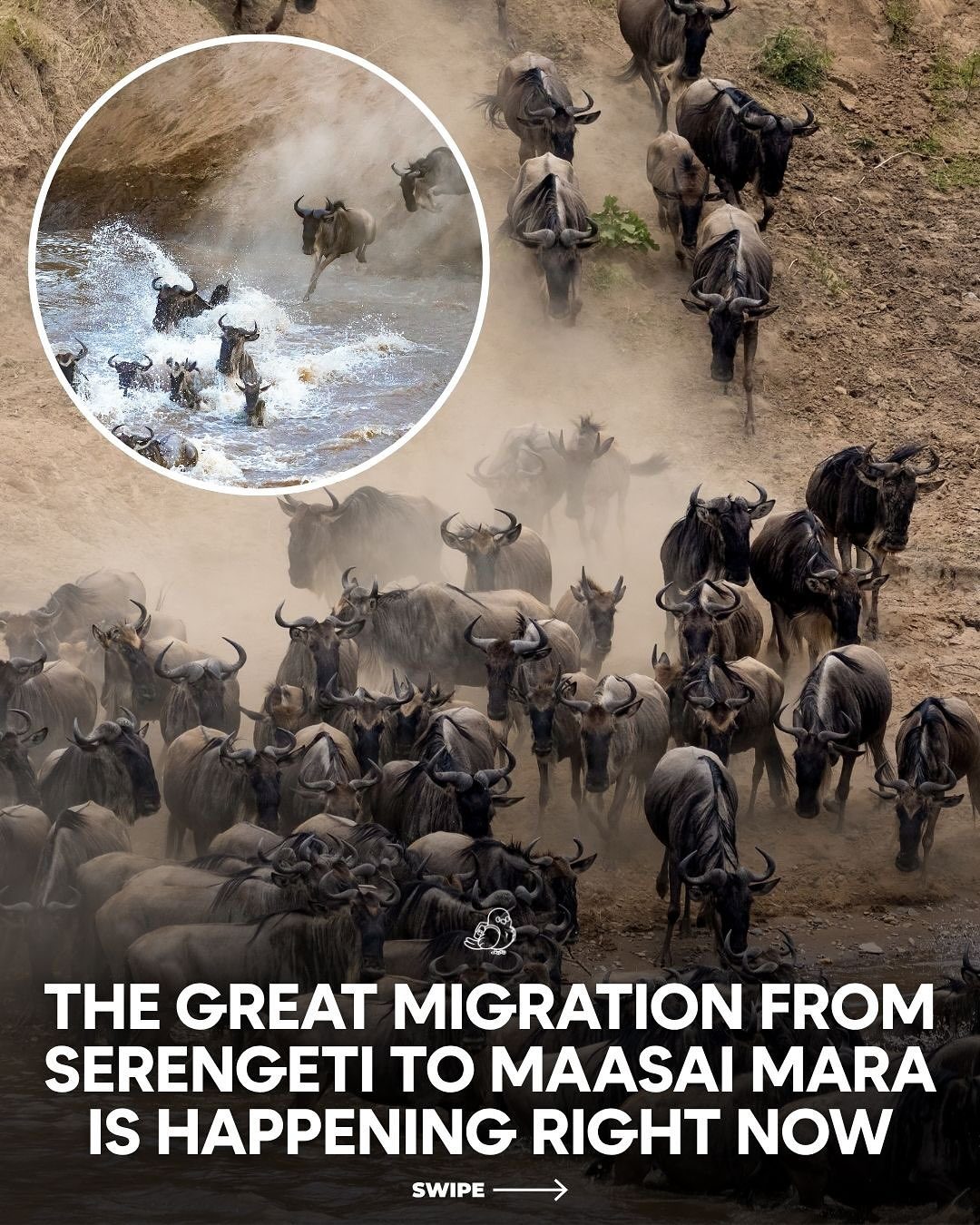
The Great Migration
The Great Migration is a monumental wildlife spectacle that occurs annually between the Serengeti in Tanzania and the Maasai Mara in Kenya. This natural phenomenon involves over 1.5 million wildebeest, along with hundreds of thousands of zebras and gazelles, traversing over 1,000 kilometers in search of fresh grazing lands. The journey is fraught with challenges, including river crossings, encounters with predators, and the constant struggle for survival. Remarkably, this extraordinary event is happening right now, offering a real-time glimpse into the powerful and ancient rhythms of nature.
Why This Migration Matters
The Great Migration is more than just a wildlife event; it is a testament to the resilience and adaptability of nature. This annual journey is a critical part of the ecosystem, as it involves the movement of a vast number of herbivores and their predators. This constant movement ensures the health of the grasslands, prevents overgrazing, and supports a diverse range of species. Understanding the dynamics of this migration can provide insights into the broader ecological processes that sustain life in these regions.
The Journey and Its Challenges
The migration route is treacherous and unpredictable. The herds must cross several rivers, including the Grumeti and Mara rivers, which are often infested with crocodiles. These river crossings are not only dangerous but also crucial for the animals' survival, as they provide access to new pastures. The herds also face threats from predators such as lions, cheetahs, and hyenas, which prey on the weak and young.
Crossing Rivers
River crossings are perhaps the most dramatic and dangerous part of the migration. The herds must navigate swift currents and avoid predators lurking in the water. These crossings often involve thousands of animals at once, creating a chaotic and exhilarating spectacle. The wildebeest, known for their keen sense of direction, lead the way, followed by zebras and gazelles. These crossings are not only a survival test but also a sight to behold, underscoring the raw power of nature.
The Role of Predators
Predators play a crucial role in the ecosystem during the migration. Lions, cheetahs, and hyenas take advantage of the large herds to hunt, ensuring that only the strongest animals survive. These predators help maintain the balance of the ecosystem by culling the weak and injured, thereby preventing the spread of diseases and ensuring the overall health of the herd. The presence of predators also keeps the herds moving, as they constantly seek safer grounds.
The Cyclical Nature
The Great Migration is a cyclical event that follows the rains. The herds move in a clockwise direction, following the rains and the growth of fresh grass. This cyclical movement ensures that the grasslands are not overgrazed, allowing them to regenerate and support the herds in the following years. The migration also supports the biodiversity of the region, as it brings a variety of species together in a constant flux of movement and interaction.
The Great Migration Route
The Great Migration route is a vast and diverse landscape that encompasses several key areas. From the Serengeti in Tanzania to the Maasai Mara in Kenya, the herds traverse vast plains, woodlands, and river valleys. Each of these areas plays a crucial role in the migration, providing different resources and challenges.
The Serengeti
The Serengeti is the starting point of the migration. The herds gather in the southern Serengeti during the wet season, where they give birth to their young. The southern Serengeti is characterized by its short grass plains, which provide abundant grazing for the herds. This period is also known as the "baby boom," where thousands of wildebeest calves are born within a short span of time, adding to the herd's strength and numbers.
The Western Corridor
As the dry season approaches, the herds move northward, crossing the Grumeti River and entering the Western Corridor. This area is characterized by its woodlands and river valleys, which provide a different landscape and resources. The herds must navigate through the dense vegetation and cross the river, facing challenges from both predators and the environment.
The Maasai Mara
Finally, the herds move into the Maasai Mara in Kenya, where they complete the migration cycle. The Maasai Mara is characterized by its open grasslands and river valleys, providing ample grazing and water for the herds. This area is also home to a variety of predators, making it a critical part of the ecosystem. The herds stay in the Maasai Mara during the dry season, before moving back to the Serengeti as the rains return.
Practical Tips for Witnessing the Great Migration
Witnessing the Great Migration is a once-in-a-lifetime experience, and planning a trip to see it requires careful consideration. Here are some practical tips to make the most of your journey.
Best Times to Visit
The best time to witness the Great Migration depends on what you want to see. If you're interested in the river crossings, the best time to visit is between July and October, when the herds are crossing the Mara River. If you want to see the wildebeest calving, the best time to visit is between January and March, when the herds are in the southern Serengeti. However, the migration is a continuous process, and there is always something to see, no matter the time of year.
Choosing the Right Safari
Choosing the right safari is crucial for a successful trip. There are several safari options available, from budget to luxury, and each offers a unique experience. Consider your preferences, budget, and the sights you want to see when choosing a safari. Opt for experienced guides who know the migration routes and can provide insights into the behavior of the animals.
Booking Accommodation
Accommodation options in the Serengeti and Maasai Mara range from campsites to luxury lodges. Booking in advance is recommended, especially during peak migration seasons. Choose a location that aligns with your itinerary and offers easy access to the migration routes.
Essential Gear
Packing the right gear is essential for a comfortable and enjoyable safari. Essential items include comfortable walking shoes, binoculars, a good camera with a zoom lens, sunscreen, a hat, and insect repellent. Also, bring layers of clothing, as temperatures can vary throughout the day, especially during the early morning and late afternoon game drives.
Important Takeaways
The Great Migration is a powerful reminder of the resilience and adaptability of nature. This annual journey involves millions of animals moving across vast landscapes, facing numerous challenges, and maintaining the balance of the ecosystem. Witnessing this spectacle offers a unique opportunity to connect with nature and appreciate the delicate balance of life in the wild.
Conservation Efforts
Conservation efforts play a crucial role in preserving the Great Migration. Protecting the habitats of the animals involved, reducing human-wildlife conflicts, and promoting sustainable tourism are all essential for ensuring the continuation of this natural wonder. By supporting conservation initiatives, travelers can contribute to the preservation of this remarkable phenomenon.
Sustainable Tourism
Sustainable tourism practices are essential for maintaining the health of the ecosystems involved in the Great Migration. This includes choosing eco-friendly accommodations, minimizing waste, and respecting the wildlife and local communities. Sustainable tourism ensures that future generations can also witness this incredible event.
Conclusion
The Great Migration is a breathtaking and awe-inspiring natural phenomenon that showcases the raw power and beauty of nature. From the vast plains of the Serengeti to the lush valleys of the Maasai Mara, this annual journey is a testament to the resilience and adaptability of wildlife. Whether you witness it from the comfort of your home or embark on a thrilling safari, the Great Migration is an experience that will leave you with a deeper appreciation for the natural world.
Questions readers ask
When does the Great Migration from the Serengeti to the Maasai Mara typically occur?
The Great Migration is an annual event, but the timing can vary slightly each year. Generally, the wildebeest begin their journey from the Serengeti to the Maasai Mara around July and continue through to October, with the river crossings—especially the famous Mara River crossing—occurring during August and September.
What are the main challenges faced by the animals during the Great Migration?
The animals face numerous challenges during their journey, including navigating treacherous river crossings, enduring harsh environmental conditions, and avoiding predators such as lions, cheetahs, and crocodiles. These obstacles make the migration a constant test of survival and resilience.
How can I witness the Great Migration in 2023?
To witness the Great Migration in 2023, plan a safari trip to either the Serengeti in Tanzania or the Maasai Mara in Kenya during the peak migration months of July to October. Many safari operators offer guided tours specifically designed to follow the migration, ensuring you have the best chance to see the animals in action. It is recommended to plan ahead and book your trip early.
What other animals accompany the wildebeest during the Great Migration?
Alongside the over 1.5 million wildebeest, the migration includes hundreds of thousands of zebras and gazelles. These herbivores travel together, each species playing a role in the dynamic of the migration, such as zebras helping to clear paths through the grass and alerting the group to potential dangers.
What is the significance of the Mara River crossing during the Great Migration?
The Mara River crossing is one of the most dramatic and iconic moments of the Great Migration. The wildebeest, along with zebras and gazelles, must navigate the swift waters and steep banks of the Mara River, facing the risk of predation from crocodiles and other animals. This crossing is a thrilling spectacle that showcases the animals' determination and instinct for survival.
What happens to the animals after they complete the Great Migration?
After completing their journey to the Maasai Mara, the animals spend several months grazing and resting in the lush plains. By December, they begin their journey back to the Serengeti, starting a new cycle of the Great Migration. This continuous movement ensures the animals have access to fresh grazing lands and water throughout the year, maintaining the delicate balance of the ecosystem.
Related deep dives
Similar reads based on topic and creator.




Recent articles
Fresh deep dives from the latest Reels we unpacked.




Comments
Be the first to comment.