Smallest Cars Ever Built
The smallest cars ever produced are more than just curiosities; they are testaments to engineering ingenuity and practical design in the face of limited space and resources. These miniature marvels have left an indelible mark on automotive history, offering valuable insights into the evolution of urban mobility.
Why This Matters
These iconic small cars are a fascinating niche in automotive history. Their design and impact are notable for many reasons. They represent a time when efficient use of space and resources was critical. They also highlight the creativity and ingenuity of engineers in crafting vehicles that were both practical and innovative. Their legacy is evident in modern urban vehicles, where compact, fuel-efficient cars are increasingly popular.
Main Discussion
The Peel P50
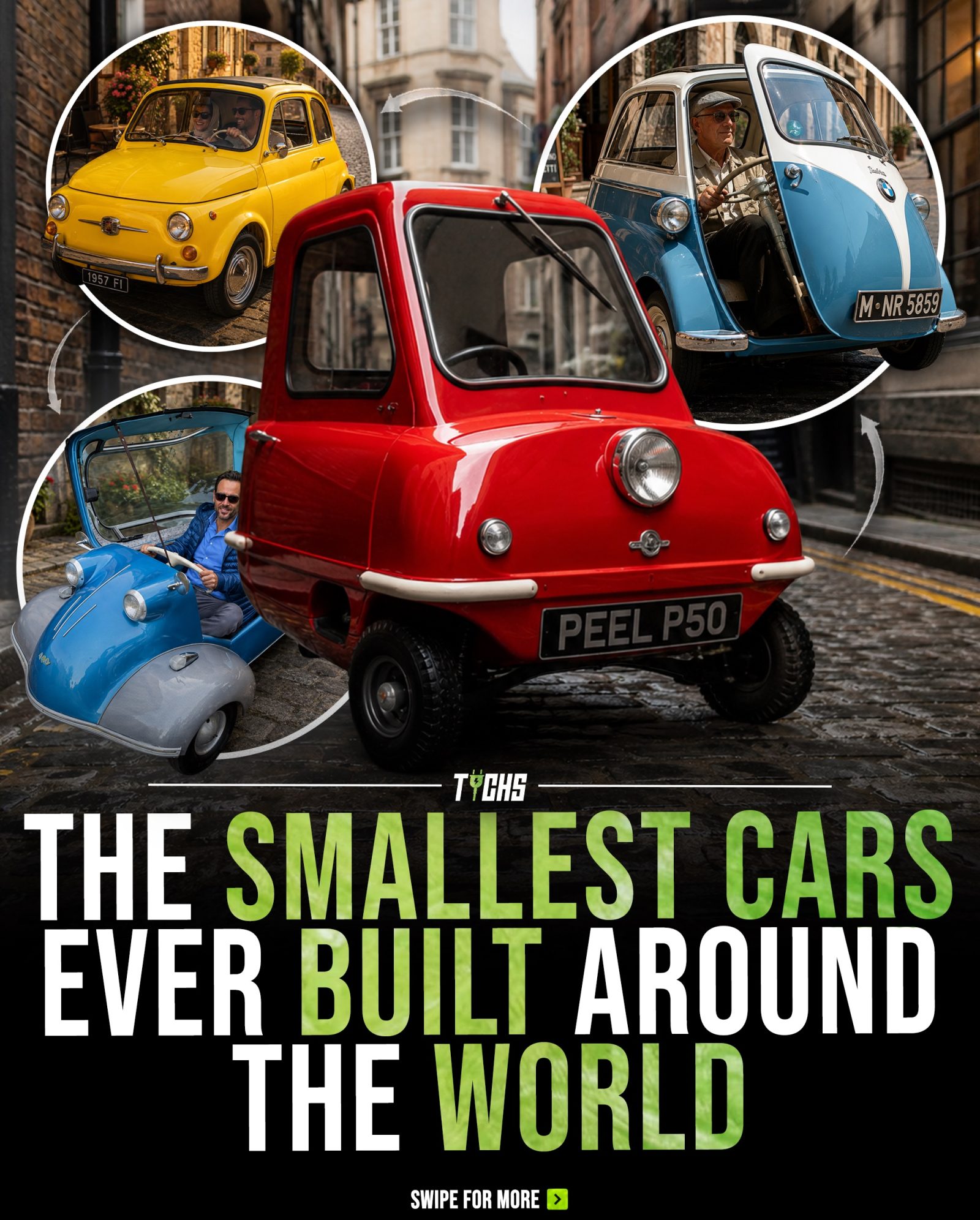
Among the smallest cars ever built, the Peel P50 holds a special place. The Peel P50, with a length of approximately 1.37 meters, is often considered the smallest production car ever made. The Peel P50 is not only a testament to the idea that great things can come in small packages, but it is also a symbol of British engineering prowess. Introduced in the 1960s, the Peel P50 was designed for efficiency and practicality, making it ideal for navigating the narrow streets of urban environments. The Peel P50's unique design features a three-wheeled layout, which further enhanced its maneuverability. By showcasing the capabilities of small cars, the Peel P50 helped shape the future of urban mobility.
The Messerschmitt KR200
Originally designed as a microcar, the Messerschmitt KR200 was another notable example of compact engineering. With a length of 2.82 meters, the KR200 was larger than the Peel P50 but still remarkably small by today's standards. The KR200 was developed in post-WWII Germany, where resources were scarce and fuel efficiency was a top priority. The KR200's design was innovative, featuring a unique bubble canopy that gave it a distinctive appearance. The KR200's impact on automotive design cannot be overstated, as it demonstrated the possibilities of creating efficient, space-saving vehicles.
The Peel Trident and Other Iconic Models
While the Peel P50 and Messerschmitt KR200 are often the first to come to mind when discussing the smallest cars, other models like the Peel Trident also deserve recognition. The Peel Trident, a successor to the P50, added four-wheeled stability to the Peel design. Designed for everyday use, the Peel Trident showcased the potential of small, efficient cars in urban environments. Other notable mentions include the BMW Isetta, Fiat 500, Subaru 360, and the original Mini. These cars, while slightly larger than the Peel P50 and Messerschmitt KR200, embody the same principles of efficiency and practicality. Their impact on automotive design and urban mobility is undeniable.
The Evolution of Urban Mobility
The smallest cars ever built have played a crucial role in the evolution of urban mobility. In densely populated cities, where space is at a premium, compact cars offer a practical solution. These cars maximize efficiency, allowing more vehicles to navigate narrow streets and park in limited spaces. Their designs have influenced modern urban vehicles, which prioritize fuel efficiency and compact dimensions. The principles established by these small cars continue to shape the development of electric and autonomous vehicles, which are increasingly important in the context of sustainable urban mobility.
Practical Tips
If you're considering a miniature car, here are some practical tips to guide you:
Assess Your Needs
Before choosing a small car, assess your specific needs. Consider factors like cargo space, passenger capacity, and fuel efficiency. While these cars are efficient, they may not be suitable for all driving scenarios. For instance, a Peels P50 or Trident would not be suitable for long-distance driving or family outings.
Maintenance and Reliability
The maintenance requirements and reliability of small cars can vary widely. Research the specific model you are considering to understand its maintenance needs and reliability. Some older models, like the Peel P50, may require more frequent maintenance due to their age and rarity.
Driving Experience
The driving experience in a small car can be unique. These cars often offer a different feel compared to larger vehicles. For example, the Peel P50's three-wheeled design provides a distinctive handling experience. Be prepared for a more agile but potentially less stable ride in some compact models.
Consider Modern Options
While classic small cars are fascinating, modern compact cars offer improved safety features and overall performance. Consider the modern equivalent if you're looking for a practical solution to urban driving.
Important Takeaways
The smallest cars ever built, such as the Peel P50, Messerschmitt KR200, and Peel Trident, represent a significant chapter in automotive history. These cars embody the principles of efficiency, practicality, and innovation. Their impact on urban mobility is profound, and their legacy continues to influence modern automotive design. For anyone interested in compact, efficient vehicles, these iconic models offer valuable insights and inspiration.
Conclusion
The story of the world's smallest cars is one of ingenuity and practicality. From the Peel P50 to the Messerschmitt KR200, these vehicles have shown that great engineering does not always come in a large package. Their designs, having stood the test of time, continue to inspire modern automotive innovations. Whether you're a history enthusiast or a practical driver, the smallest cars ever built offer a wealth of knowledge and inspiration. Their legacy is a testament to the ever-evolving landscape of urban mobility and the enduring appeal of efficient, clever design.
Questions readers ask
What makes the Peel P50 and Messerschmitt KR200 stand out in automotive history?
The Peel P50 and Messerschmitt KR200 are notable for their extremely compact size and innovative design, making them some of the smallest production cars ever built. The Peel P50, for instance, is recognized as the smallest car ever produced, while the Messerschmitt KR200 showcases unique design features like a bubble canopy, reflecting the engineering ingenuity of the era.
How did tiny cars impact urban mobility?
Tiny cars like the Peel P50 and Messerschmitt KR200 significantly influenced urban mobility by offering practical solutions for navigating congested city streets and limited parking spaces. Their compact size made them ideal for short trips and easy to park, inspiring modern car design to prioritize efficiency and space-saving features.
What engineering challenges did manufacturers face when creating the smallest cars?
Designing the smallest cars involved overcoming significant engineering challenges. Manufacturers had to ensure that these miniature vehicles met safety standards, provided basic comfort, and delivered reliable performance despite their limited size and resources. This included creative solutions for fuel efficiency, stability, and ergonomic design.
How do historic tiny cars influence modern automotive design?
Historic tiny cars have laid the groundwork for contemporary compact car design, emphasizing the importance of efficient use of space and resources. Modern urban vehicles often borrow design elements from these iconic tiny cars, such as minimalistic layouts, lightweight materials, and innovative storage solutions, to meet the demands of today's busy urban environments.
What are some of the most iconic tiny cars in history?
Some of the most iconic tiny cars include the Peel P50, known as the smallest car ever built, and the Messerschmitt KR200, famous for its unique bubble canopy. Other notable examples include the Isetta, a bubble car produced by several manufacturers, and the BMW Isetta, which also featured a front-hinge door design.
Why were tiny cars more popular in the past compared to today?
Tiny cars were particularly popular in the past due to post-war resource scarcity and the need for efficient, affordable transportation. Today, while compact cars remain popular, larger vehicles have gained traction due to advancements in safety features, increased fuel efficiency, and consumer preferences for more spacious interiors.
Recent articles
Fresh deep dives from the latest Reels we unpacked.




Comments
Be the first to comment.