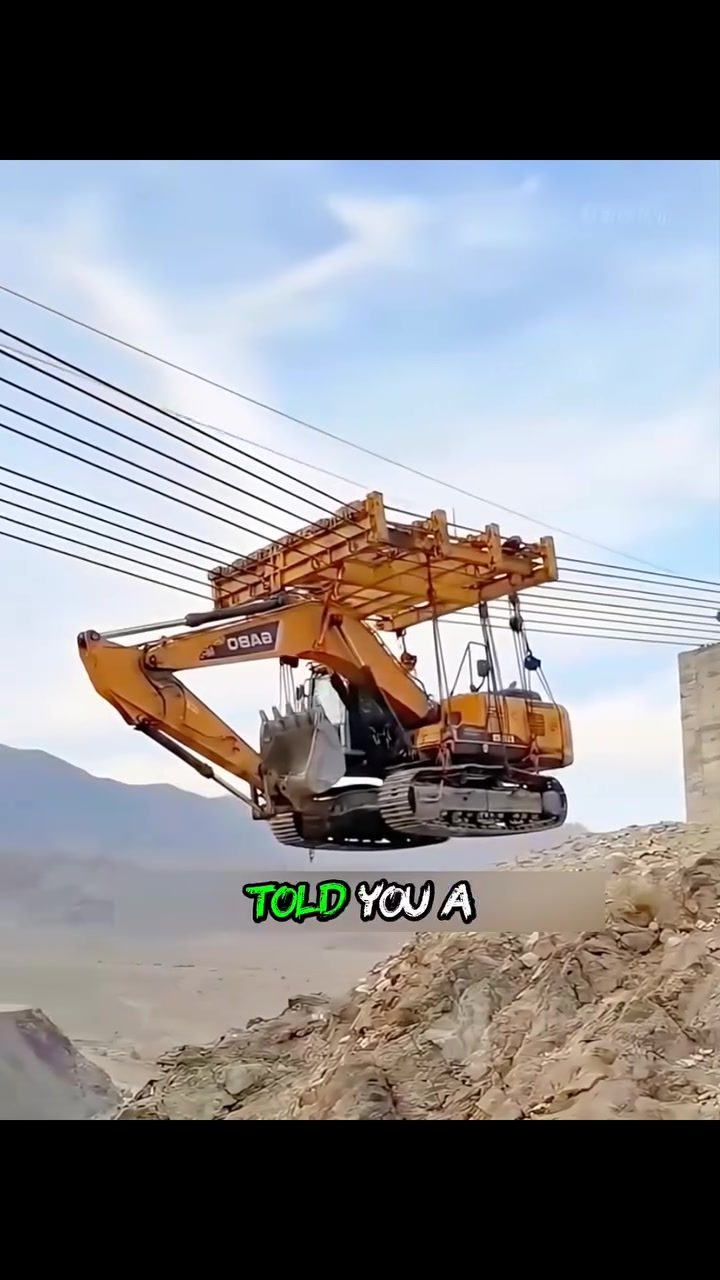
Moving Massive Machines Through Mountainous Terrain: The Bai Heitan Megadam Project
The sheer scale and complexity of moving heavy machinery through challenging terrain is a testament to human ingenuity and innovation. In the case of the Bai Heitan Megadam project in China, engineers have employed an extraordinary solution to transport heavy equipment: giant cable cranes. These cranes provide a reliable and efficient means to move excavators and other construction equipment across mountainous, valley-laden terrain.
Why This Matters
In environments where traditional roads are impractical or impossible to construct, alternative transportation methods become crucial. The Bai Heitan Megadam project exemplifies how innovative engineering solutions can overcome these challenges, ensuring the construction process remains on track despite the rugged landscape.
The Incredible Engineering Feat
The Role of Cable Cranes
Cable cranes play a pivotal role in this project. Suspended by thick steel cables, these cranes act like aerial cargo trucks, capable of lifting and transporting equipment weighing up to 60 tons. This includes concrete trucks, excavators, and other essential machinery. These cranes are not only a marvel of engineering but also a lifeline for the construction process.
The Bai Heitan Megadam Project
The Bai Heitan Megadam project in China serves as a prime example of how these cable cranes are utilized. Seven giant cable cranes operate around the clock, creating an aerial transport network that enables the continuous flow of materials and equipment. This setup helps pour more than 8 million cubic meters of concrete, ensuring the dam's construction proceeds smoothly.
The OSAB Excavator
One of the key pieces of equipment featured in this project is the OSAB excavator. These excavators, known for their robustness and efficiency, are instrumental in the dam's construction. The ability to transport these excavators and other heavy machinery through mountainous valleys showcases the engineering prowess required for such a massive undertaking.
The Aerial Transport Network
The aerial transport network created by these cranes is a remarkable feat. By lifting and transporting equipment directly to the construction site, the cranes eliminate the need for road construction in difficult terrain. This not only saves time and resources but also ensures a steady supply of materials and equipment, keeping the project on schedule.
Practical Tips for Engineering in Rugged Terrain
Assess the Terrain Thoroughly
Before embarking on any construction project in rugged terrain, it's essential to conduct a comprehensive assessment of the landscape. Identify the challenges and potential obstacles, and develop a plan that leverages available resources and technology.
Utilize Advanced Equipment
Invest in advanced equipment designed for challenging terrain. Cable cranes, like those used at the Bai Heitan Megadam project, are a prime example. These cranes can handle heavy loads and navigate difficult landscapes, making them indispensable for large-scale projects.
Innovative Transport Solutions
Exploring innovative transport solutions can significantly enhance the efficiency and feasibility of construction in rugged terrain. Whether it's aerial cranes, specialized vehicles, or other advanced methods, finding the right transport solution can make a substantial difference in project outcomes.
Regular Maintenance and Monitoring
Ensure regular maintenance and monitoring of all equipment. Rugged terrain can be harsh on machinery, and regular upkeep is crucial to maintain their performance and longevity. This includes inspecting cables, ensuring machinery is in working order, and addressing any issues promptly.
Important Takeaways
Managing construction projects in mountainous and rugged terrain requires a blend of innovative engineering solutions and strategic planning. The Bai Heitan Megadam project in China demonstrates the effectiveness of using giant cable cranes to transport heavy machinery, showcasing how human ingenuity can overcome seemingly insurmountable challenges.
The integration of advanced equipment and innovative transport solutions is key to the success of such projects. By leveraging technology and engineering prowess, projects like the Bai Heitan Megadam project can set new standards for construction in challenging landscapes.
Conclusion
The Bai Heitan Megadam project in China is a remarkable example of how innovative engineering solutions can transform the construction process in rugged terrain. By utilizing giant cable cranes and advanced equipment, engineers have created an efficient and reliable transport network, ensuring the project's success. This project not only provides a valuable case study for similar endeavors but also underscores the potential of human ingenuity in overcoming complex challenges.
Questions readers ask
What are giant cable cranes and how do they function?
Giant cable cranes are large-scale cranes that use a complex system of cables and pulleys to transport heavy loads across long distances. They function by suspending loads from a cable that is strung between two or more fixed points, allowing for efficient and precise movement of materials and equipment over challenging terrain.
Why are traditional roads impractical for the Bai Heitan Megadam project?
The Bai Heitan Megadam is located in a rugged, mountainous landscape with deep valleys, making it difficult and costly to construct traditional roads. The terrain's complexity and the need for continuous movement of heavy machinery and materials necessitate alternative transportation methods like giant cable cranes.
What kind of equipment is transported using giant cable cranes at the Bai Heitan Megadam?
The giant cable cranes at the Bai Heitan Megadam are primarily used to transport heavy excavation equipment and other construction machinery. This includes excavators, bulldozers, and other large tools essential for the dam's construction.
What are the benefits of using cable cranes in such projects?
Cable cranes offer several advantages, including the ability to transport heavy loads over difficult terrain, reducing the need for extensive road construction, and minimizing environmental impact. They also provide flexibility in movement, allowing for precise positioning of equipment and materials where needed.
How do giant cable cranes contribute to the efficiency of the Bai Heitan Megadam project?
By enabling the efficient transport of heavy equipment and materials, giant cable cranes help maintain the project's timeline and reduce costs associated with delays and alternative transportation methods. They ensure a steady supply of construction tools and materials, which is crucial for the project's progress.
Recent articles
Fresh deep dives from the latest Reels we unpacked.




Comments
Be the first to comment.