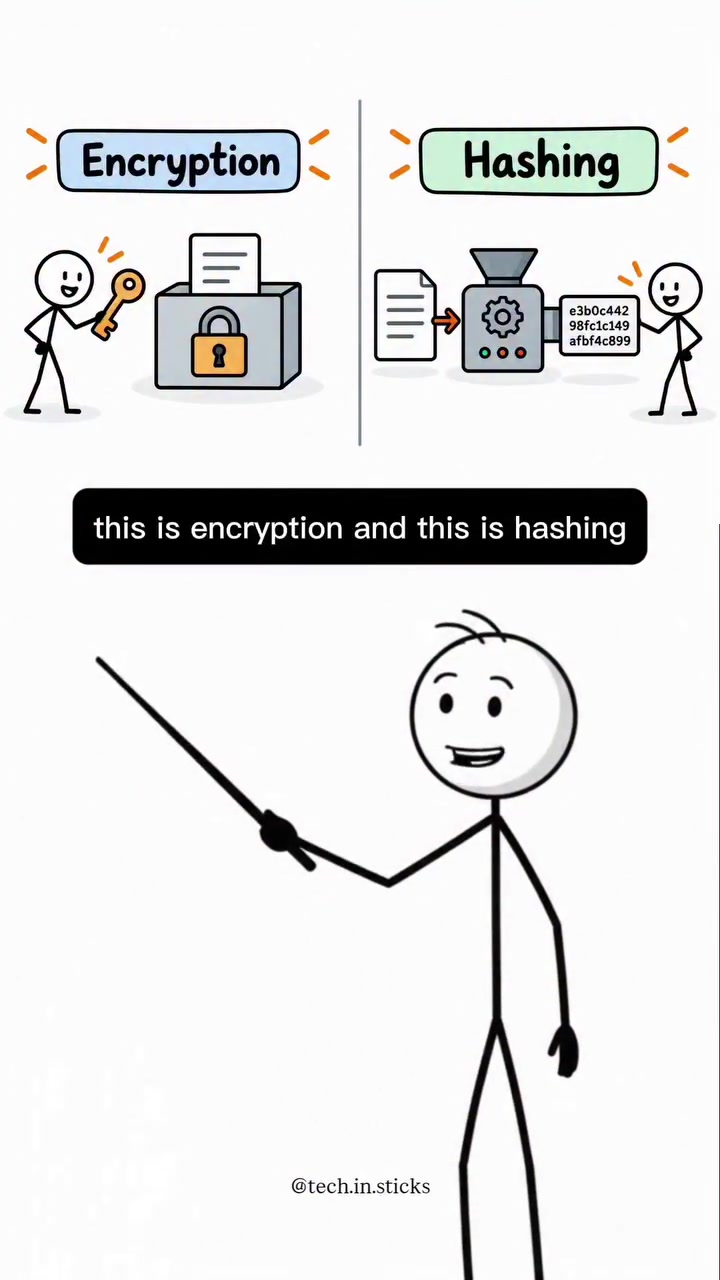
When data is at risk, encryption and hashing stand guard, transforming private information. Neither method is more secure than the other, but each serves a different purpose in keeping information safe.
Encryption's Lock and Key
So, what are encryption and hashing? They are two methods that transform data to increase security, but they do so in very different ways. Encryption turns a readable message or file into an unreadable format, then uses a key to unlock the encrypted message Data becomes unreadable when encrypted, much like a locked box. This is known as ciphertext. Encryption uses complex algorithms, or mathematical formulas, to transform a message. When the intended recipient receives the encrypted file, they must have the right key or password to unlock or decrypt the message. These keys are often very large numbers, meaning there are countless possible combinations. This algorithm will output readable text, such as the original message, only if the right key is used. Because of this key-based process, encryption is reversible. Without the key, the encrypted information becomes unintelligible.
Hashing's One-Way Transform
Hashing, on the other hand, is more like a one-way valve. The word "hash" means to chop up or mix, which is what a hashing algorithm does. A hash function takes an input, like a message or data file, and transforms it into a fixed-size string of characters. Like encryption, a hash function uses a specific algorithm. Unlike encryption, hashing is a one-way street. Once hashed, the message is scrambled in a way that cannot be undone. One key property of hashing is its uniqueness. Any small change to the original data results in a completely different hash. This is known as the avalanche effect. Hashing is used in various situations, such as password verification. Instead of storing a plain text password, websites store the hash. When a user enters their password, the hash is generated and compared to the stored one. Another common use case is checking data integrity. If the hash of a downloaded file matches the expected hash, then the file has not been tampered.
Hashing and Encryption in action
How encryption and hashing protect data
Both encryption and hashing are crucial for protecting data, but they serve different purposes. Encryption is used to protect data stored on computers and transmitted over networks. It ensures that only authorized parties can access the information. Common examples are HTTPS websites, encrypted emails, and file storage. Hashing is used to verify data integrity and authenticate information. If the data has been tampered, the hash will not match, which alerts users to potential corruption or interference.
Choosing the right method
Encryption and hashing are often used together, leveraging the strengths of both. For example, hashing is used to verify data integrity in encrypted files. The hash is generated before encryption, then encrypted and stored alongside the data. When the data is decrypted, the hash is recalculated and compared to the stored hash. If they match, the data has not been tampered. Hashes can also be stored on a blockchain to provide an immutable record. This ensures the data has not been altered, thereby providing a secure and transparent way to share information.
Decrypt Graphically
If hashing is a one-way street, what happens when someone tries to decrypt it? Technically, hashing is not decrypted. It cannot be undone. Attempting to decipher a hash is known as a brute-force attack, which involves trying every possible key or password. However, because hashes are generated from fixed-size outputs, it is computationally infeasible to reverse a hash.
Hashing speeds
Hashing algorithms are designed to be fast, making them suitable for real-time applications. The speed of a hashing algorithm depends on the specific algorithm used and the hardware it is running on. Some algorithms, like MD5 and SHA-1, are faster but less secure.
Realistic Levels of Security
For example, a strong hash will output a large, fixed-size string of characters, making it extremely difficult to reverse. Additionally, a hashed password will look different from the original password, which reduces the risk of password theft.
Data Security in the Real World
If you're looking to encrypt or hash data, you have several options, depending on your needs.
- Encryption Tools: Use software solutions like AES (Advanced Encryption Standard) for files or GPG (GNU Privacy Guard) for email.
- Hashing Algorithms: Use SHA-256 or SHA-3 for hashing passwords and verifying data integrity. For password verification, employ a function like PBKDF2, bcrypt, or scrypt, which are designed to be computationally expensive, making brute-force attacks less feasible.
Cracking and Crumpling Hashes
Open-source tools like John the Ripper can "crack" some hashes, especially if the hashing algorithm is weak or the original data is easily guessable. For example, the MD5 algorithm is considered weak and is not recommended for use in security applications. With tools like that in the public sphere, what makes hashes secure? Strong hashing algorithms, such as SHA-256, make it computationally infeasible to find a different input that produces the same hash. This collision resistance is a key property of secure hashing algorithms. Hashing, along with encryption, is essential for protecting data. By understanding how they work, you can choose the right method for your needs. Use encryption to keep data confidential and hashing to ensure its integrity.
Questions readers ask
What is the difference between encryption and hashing?
Encryption and hashing both transform data to enhance security, but they do so in distinct ways. Encryption uses a key to lock and unlock data, making it reversible, while hashing scrambles information permanently in a one-way process.
How does encryption work to protect data?
Encryption turns readable data into an unreadable format using complex algorithms. A key or password is needed to decrypt and make the data readable again. This ensures that only authorized parties can access the information.
Why is hashing described as a one-way process?
Hashing is a one-way process because once data is hashed, it cannot be converted back to its original form. This is useful for verifying data integrity and authenticating information, as any change in the original data results in a completely different hash.
Can encryption be used to verify data integrity like hashing?
Encryption itself does not verify data integrity. However, hashing can be used in conjunction with encryption to ensure data has not been tampered with. The hash is generated before encryption, then encrypted and stored alongside the data. Upon decryption, the hash is recalculated and compared to the stored hash.
Which is more secure, encryption or hashing?
Neither method is inherently more secure than the other; they serve different purposes. Encryption protects data by making it unreadable without the correct key, while hashing ensures data integrity and authenticity by providing a unique, permanent transformation of the data. They are often used together for comprehensive data protection.
How does hashing help in password verification?
When you create a password, the website stores a hashed version of it. When you log in, the entered password is hashed and compared to the stored hash. If they match, the password is correct. This way, even if the stored hashes are compromised, the actual passwords remain secure.
Are there any real-world examples where both encryption and hashing are used together?
Yes, a common example is in secure file storage or data transmission. The data is first hashed to ensure integrity, then encrypted to protect its confidentiality. During decryption, the hash is recalculated and compared to the original hash to verify that the data hasn't been tampered with.
Related deep dives
Similar reads based on topic and creator.




Recent articles
Fresh deep dives from the latest Reels we unpacked.




Comments
Be the first to comment.