Code Review Best Practices for Software Development
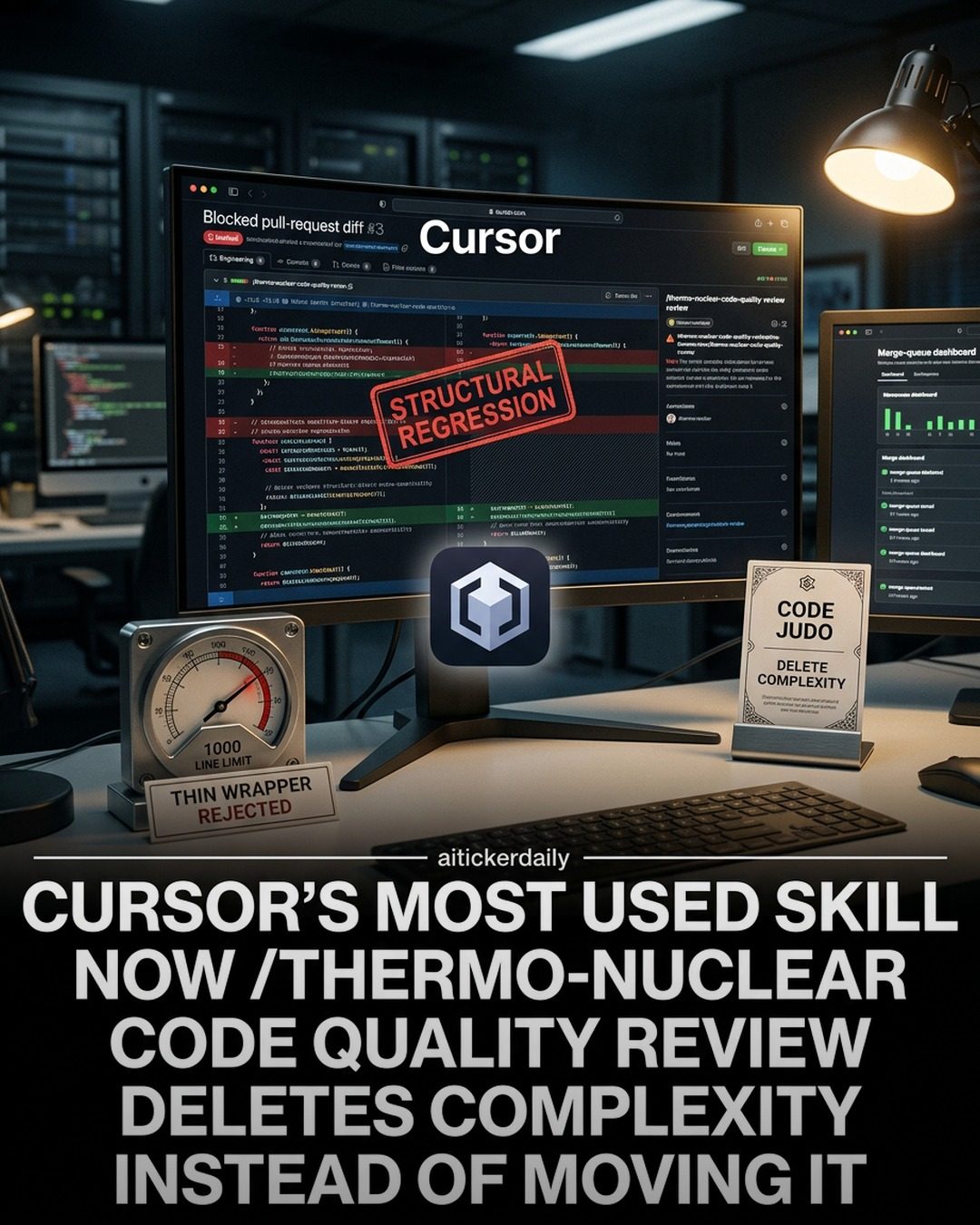
Thermonuclear code quality review. It’s a mouthful, but it captures the essence of an ultra-strict maintainability gate that prioritizes deleting complexity over rearranging it. This approach is essential for keeping code clean, manageable, and efficient.
Context / Why this Matters
In software development, code reviews are a critical part of the development process. They help maintain code quality, ensure standards are met, and prevent bugs. However, not all code reviews are created equal. The thermonuclear code quality review takes this process to the next level, focusing on eliminating complexity rather than merely rearranging it. This approach is particularly relevant for maintaining large codebases and ensuring long-term sustainability.
Main Discussion
The Concept of Deleting Complexity
Eliminating complexity is at the heart of the thermonuclear code quality review. This means that instead of simply moving complex code around, the goal is to remove it entirely. This approach aims to make whole branches, helpers, modes, or layers disappear, rather than spreading the same complexity around.
Complexity in code can lead to numerous issues, including increased maintenance costs, higher likelihood of bugs, and difficulty in onboarding new developers. By focusing on deleting complexity, developers can create more maintainable and understandable codebases.
Refactoring for Deletion
Refactoring is a key part of the thermonuclear code quality review process. However, it’s important to approach refactoring with a specific goal in mind: eliminating complexity. This means looking for opportunities to remove entire branches or layers of complexity, rather than just rearranging the code.
For example, consider a piece of code that has several conditional statements. Instead of rearranging these conditionals, the goal should be to eliminate unnecessary conditions and simplify the control flow. This can often be achieved by refactoring the code to use more expressive constructs or by eliminating one-off booleans and nullable modes that complicate the control flow.
Avoiding Spaghetti Grow
One of the key goals of the thermonuclear code quality review is to avoid spaghetti growth in the codebase. Spaghetti code is characterized by complex, tangled code that is difficult to follow and maintain. This type of code often arises from ad-hoc conditionals and scattered special cases.
To avoid spaghetti growth, developers should aim to create modular, well-structured code. This means breaking down complex problems into smaller, manageable pieces and avoiding the temptation to add new ad-hoc conditionals or special cases.
Blocking Large File Sprawl
Another important aspect of the thermonuclear code quality review is blocking large file sprawl. This means setting a limit on the size of individual files and ensuring that files do not become too large and unwieldy. Large files can be difficult to manage and understand, leading to increased maintenance costs and a higher likelihood of bugs.
By setting a line limit on files, developers can ensure that the codebase remains manageable and that individual files do not become too complex. This approach also encourages developers to refactor large files into smaller, more manageable pieces.
Flagging Thin Wrappers and Leaked Logic
Thin wrappers and leaked logic are common issues in codebases that can lead to complexity and maintainability problems. Thin wrappers are functions or classes that add little value and often just pass through to another function or class. Leaked logic occurs when business logic is exposed in the wrong part of the codebase, leading to a tangled and difficult-to-understand codebase.
By flagging thin wrappers and leaked logic, developers can identify and eliminate these issues, leading to a cleaner and more maintainable codebase. This approach involves looking for opportunities to refactor thin wrappers into more meaningful abstractions and ensuring that business logic is encapsulated in the appropriate parts of the codebase.
Rejecting PRs That Work But Get Messier
One of the key aspects of the thermonuclear code quality review is rejecting pull requests (PRs) that work but get messier. This means that even if a PR fixes a bug or adds a new feature, it should not introduce additional complexity or make the codebase more difficult to understand.
To ensure that PRs meet this standard, developers should carefully review each PR and assess its impact on the overall codebase. This involves looking for opportunities to simplify the code, eliminate unnecessary complexity, and ensure that the codebase remains manageable and understandable.
The Approval Bar
The thermonuclear code quality review process sets a high bar for approval. PRs must meet strict criteria to be approved, including eliminating complexity, avoiding spaghetti growth, and ensuring that the codebase remains manageable. This high standard helps to maintain a clean, efficient, and understandable codebase, even as it grows and evolves over time.
Practical Tips
Implementing thermonuclear code quality reviews in your development process requires a disciplined approach. Here are some practical tips to help you get started:
Set Clear Guidelines
Establish clear guidelines for what constitutes acceptable and unacceptable complexity in your codebase. This includes setting limits on file sizes, identifying types of complexity to eliminate, and defining standards for refactoring.
Use Automated Tools
Automated tools can help identify and flag issues in your codebase, such as thin wrappers, leaked logic, and large file sizes. Incorporate these tools into your development workflow to catch issues early and ensure that your codebase remains clean and maintainable.
Encourage a Culture of Code Quality
Foster a culture within your development team that prioritizes code quality and maintainability. Encourage continuous learning and improvement, and provide opportunities for developers to refine their skills in code review and refactoring.
Regularly Review and Refinement
Code reviews should be a regular part of your development process. Set aside dedicated time for thorough code reviews and ensure that all team members are involved in the process. Regular reviews help catch issues early and ensure that the codebase remains clean and efficient.
Important Takeaways
Thermonuclear code quality reviews are essential for maintaining a clean, efficient, and understandable codebase. By focusing on deleting complexity, avoiding spaghetti growth, and setting a high bar for PRs, developers can ensure that their codebase remains sustainable and manageable. Regular reviews, clear guidelines, and a culture of code quality are key to implementing this approach effectively.
Conclusion
Code quality is paramount in software development. The thermonuclear code quality review approach emphasizes deleting complexity rather than simply rearranging it. By adopting this strategy, you can prevent spaghetti growth, reduce maintenance costs, and keep your codebase manageable. Embrace these best practices to achieve a cleaner, more efficient codebase that stands the test of time.
Questions readers ask
What are the primary benefits of adopting an ultra-strict code review process?
Adopting an ultra-strict code review process helps to eliminate complex code, reduce maintenance costs, minimize bugs, and make the codebase more accessible to new developers. This approach ensures that the code remains clean and manageable over time, which is crucial for large and evolving projects.
How does eliminating complexity in code reviews differ from rearranging it?
Eliminating complexity involves deleting intricate or overly complicated code, rather than simply reorganizing it. This approach ensures that the codebase is not just rearranged, but genuinely simplified. It reduces the likelihood of bugs and improves the overall maintainability of the code.
What role does an ultra-strict code review play in onboarding new developers?
An ultra-strict code review process simplifies the codebase, making it easier for new developers to understand and contribute to the project. By eliminating unnecessary complexity, the onboarding process becomes smoother, as new team members can quickly grasp the code's structure and logic.
What are some specific techniques to reduce code complexity during a code review?
Techniques to reduce code complexity include deleting redundant code, simplifying algorithms, and breaking down complex functions into smaller, more manageable components. Code reviewers should look for opportunities to eliminate unnecessary abstractions and ensure that each piece of code has a single, clear purpose.
How can an effective code review process help in minimizing bugs?
An effective code review process, particularly one that focuses on eliminating complexity, can significantly reduce the number of bugs in your codebase. By ensuring that code is simple and easy to understand, reviewers can more easily spot potential issues and vulnerabilities. This leads to fewer bugs and a more stable codebase.
What are the key considerations for implementing ultra-strict code review guidelines in a team?
When implementing ultra-strict code review guidelines, it's essential to ensure that all team members understand the importance of simplicity and maintainability. Establish clear guidelines for what constitutes complex code and provide training on best practices for simplifying code. Regularly review and update these guidelines to adapt to the evolving needs of the project.
How does an ultra-strict code review process contribute to long-term code quality improvement?
An ultra-strict code review process contributes to long-term code quality improvement by consistently eliminating complexity. This proactive approach ensures that the codebase remains clean and manageable, making it easier to update, debug, and extend. Over time, this leads to a more robust and efficient codebase that can better support the project's evolving needs.
Recent articles
Fresh deep dives from the latest Reels we unpacked.




Comments
Be the first to comment.